
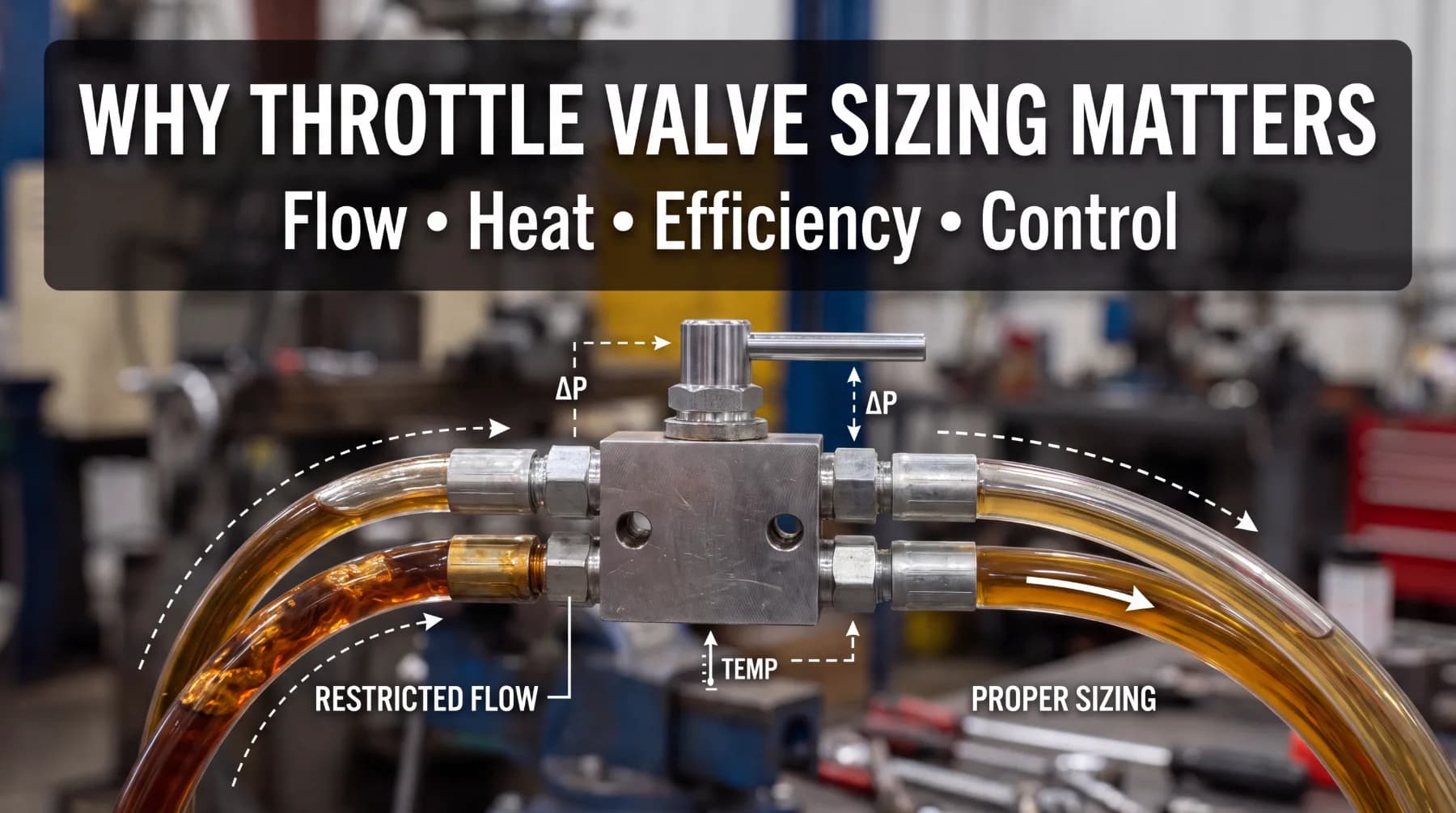
Throttle valve sizing rarely gets the attention it deserves, yet it quietly shapes how well an entire hydraulic system performs. This small component controls how oil flows to the actuators, and getting its size right is the difference between smooth, predictable operation and a system that runs slow, hot, and inefficient. Choose a valve too small and you starve the system of flow. Choose one too large and precise control slips away. Understanding how valve sizing affects flow, performance, heat, and controllability helps you build or maintain a hydraulic system you can rely on. This guide explains why throttle valve sizing matters, so you can match the valve to the work it needs to do.
How Throttle Valve Size Affects Hydraulic Oil Flow
Throttle valve sizing sits at the heart of how a hydraulic system moves oil, because the size of the valve determines how much fluid can pass through it at a given pressure. Every hydraulic system is designed around a required flow rate, the volume of oil that must reach the actuators to move them at the intended speed. The throttle valve either supports that flow or restricts it, and its physical size is what decides which. A valve with the right internal dimensions lets oil pass freely enough to meet the system's demands while still providing the control the throttle function exists to deliver.
The relationship between size and flow is direct. A larger opening allows more oil to pass at a given pressure, while a smaller opening allows less. This is why sizing must be matched to the flow the system actually needs. When the valve is appropriately sized, the system achieves its required flow rate without unnecessary restriction, meaning oil reaches the actuators at the volume and pressure the design intended.
An appropriately sized throttle valve supports the system in several ways:
- Meeting the required flow rate so actuators move at their designed speed.
- Avoiding unnecessary restrictions that would waste pressure and energy.
- Maintaining control by regulating flow without choking the system.
Getting this balance right is the foundation of dependable hydraulic performance. A valve that passes the correct volume of oil at the operating pressure allows the whole system to work as designed, delivering steady, predictable movement. When the valve is sized to the flow the application demands, oil moves efficiently from pump to actuator, and the system responds the way the operator expects on every cycle. That is precisely what makes correct sizing the starting point for reliable hydraulic operation.
Why an Undersized Throttle Valve Can Reduce System Performance
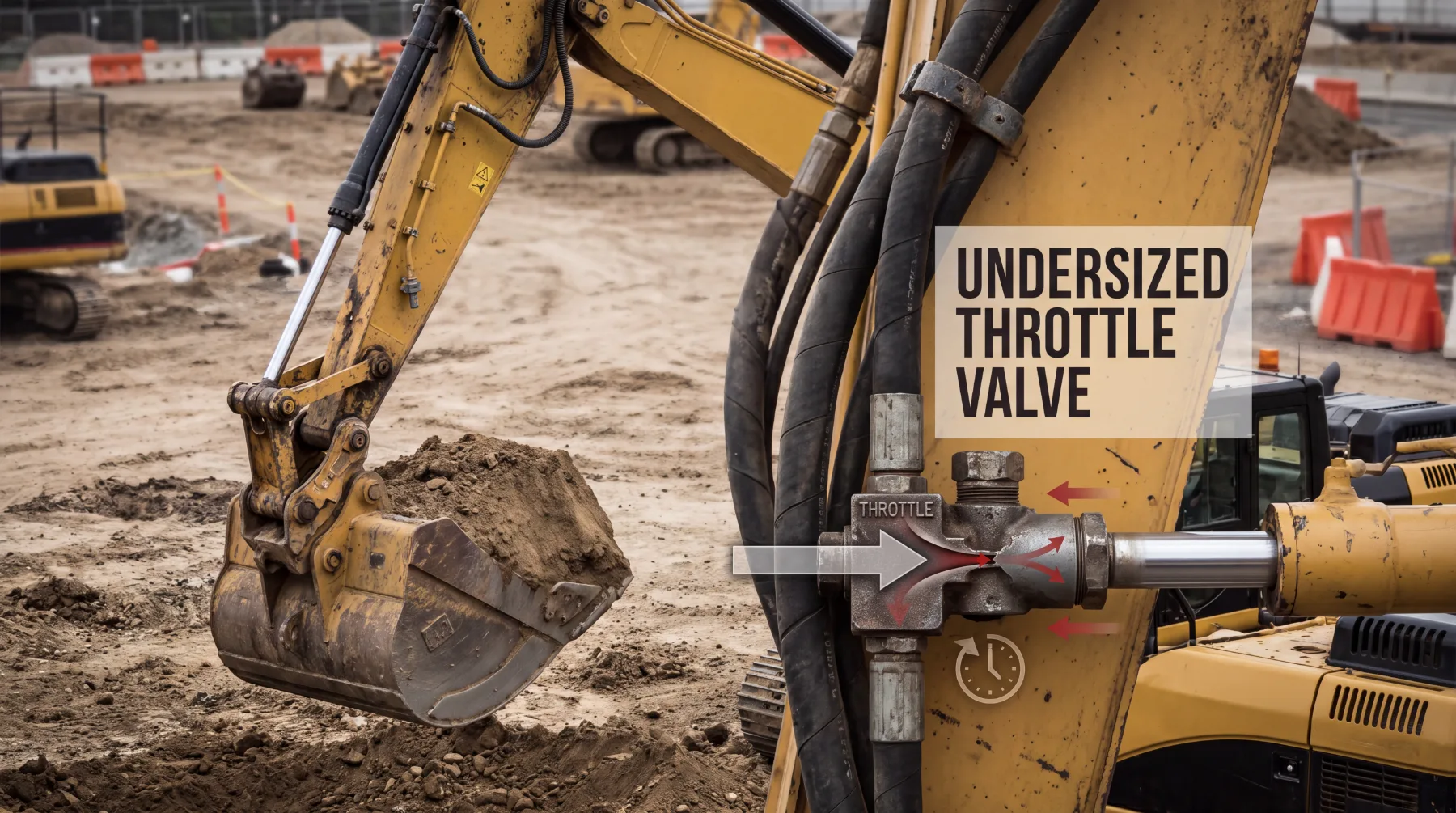
An undersized throttle valve creates problems that ripple through the entire hydraulic system, and the trouble starts with restriction. When a valve is too small for the flow the system needs, it chokes the passage of oil, forcing the fluid through an opening that cannot accommodate the required volume. This restriction creates an excessive pressure drop across the valve, meaning the pressure on the downstream side falls well below what the system was designed to deliver. That lost pressure is energy the system can no longer put to work.
The consequences show up quickly in how the machine performs. With flow restricted and pressure reduced, the actuators receive less oil than they need, so their movement slows. A cylinder that should extend smoothly may instead crawl, and a motor that should turn at full speed may lag. This sluggish response undermines productivity and makes the system feel weak and unresponsive.
An undersized valve tends to produce several related problems:
- Slower actuator movement as restricted flow limits the oil reaching cylinders and motors.
- Reduced efficiency as energy is lost to pressure drop rather than useful work.
- Increased heat generation as the restricted flow converts pressure energy into heat.
Each of these issues compounds the others. Reduced efficiency means the system works harder to accomplish the same task, and the heat generated by forcing oil through too small an opening adds further strain. Over time, elevated temperatures can degrade the oil and stress components throughout the system. An undersized throttle valve is therefore not a minor mismatch but a genuine drag on performance, robbing the system of the speed, efficiency, and cool operation it depends on. Sizing the valve correctly avoids these losses and keeps the system performing as intended.
How Oversized Throttle Valves Can Affect Flow Control
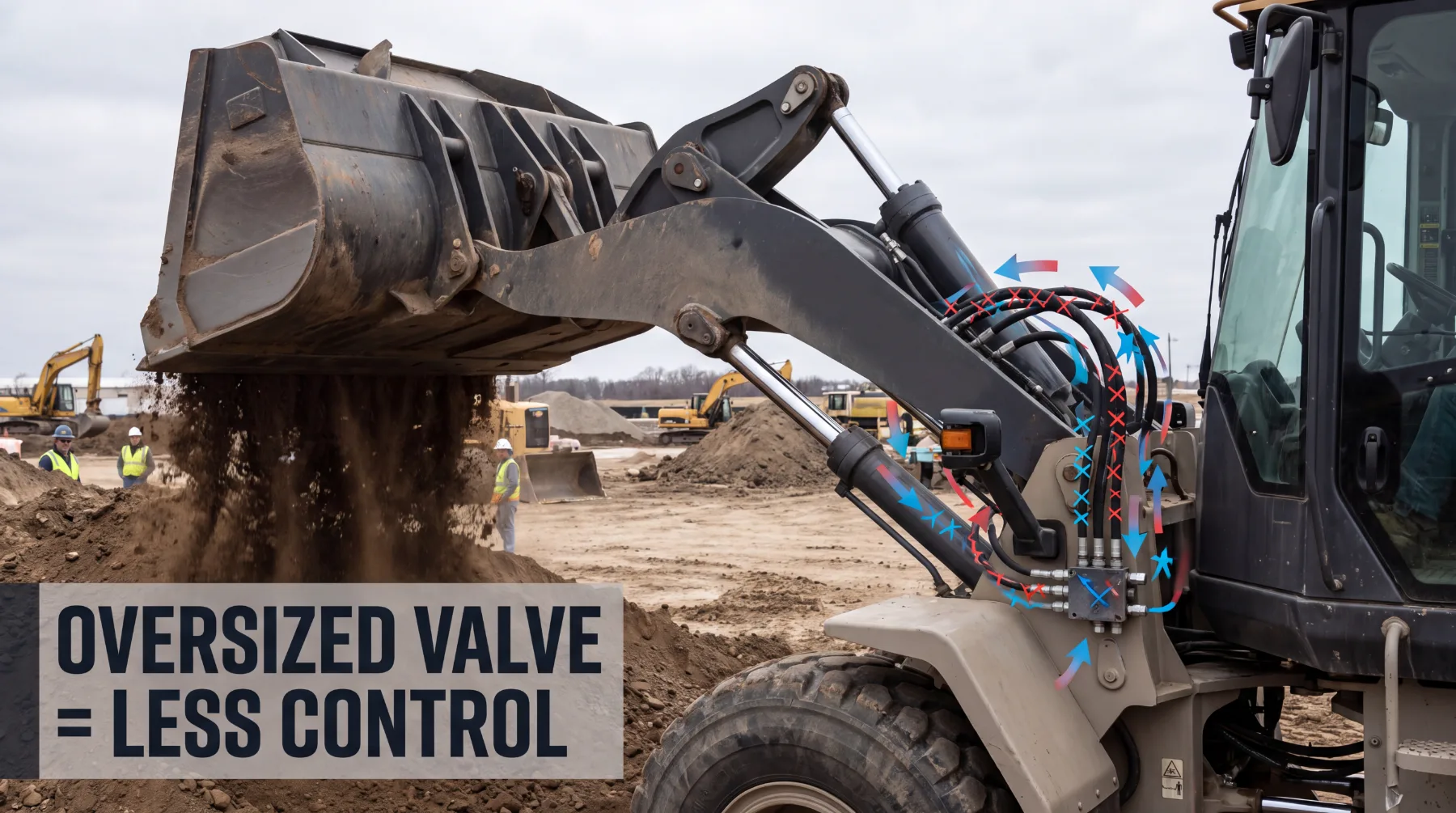
If an undersized valve restricts too much, it might seem that a larger valve is always the safer choice. That is not the case. An excessively large throttle valve introduces its own problems, and they center on control. When a valve provides far more flow capacity than the system requires, precise flow adjustment becomes considerably more difficult. The whole point of a throttle valve is to regulate flow, and an oversized valve makes that regulation clumsy and imprecise.
The reason lies in how the valve responds to adjustment. With an oversized valve, a large portion of the flow the system needs passes through with only a small movement of the valve. This means that a tiny change in the valve setting produces a large change in flow, leaving the operator with very little room to fine-tune the result. Achieving a specific, steady flow rate becomes a matter of finding a narrow sweet spot rather than adjusting smoothly across the valve's range. Fine control, which is exactly what a throttle valve should provide, slips away.
This matters because many hydraulic applications depend on precise, repeatable flow to control actuator speed accurately. An oversized valve makes that precision hard to achieve, leading to movement that is difficult to set and hold consistently. Proper sizing solves the problem by balancing flow capacity against controllability. A valve sized to the system's actual flow requirements uses more of its adjustment range to regulate that flow, giving the operator smooth, predictable control over the full range of settings. The goal is not maximum flow capacity but the right capacity, matched to what the system needs, so that adjustment stays precise and the actuators respond exactly as commanded. That balance between capacity and control is what correct sizing delivers.
How Throttle Valve Sizing Affects Hydraulic Heat
Heat is one of the most damaging forces in a hydraulic system, and throttle valve sizing has a direct influence on how much of it the system generates. When oil is forced through an undersized or overly restrictive valve, the energy that should have moved the actuators is instead converted into heat. This happens because the restriction creates a pressure drop, and the energy lost across that drop does not simply disappear. It turns into heat within the oil as the fluid is squeezed through an opening too small for the flow it must carry.
The effect is easy to underestimate but costly over time. A valve that restricts flow more than necessary acts as a constant source of heat generation whenever the system runs. As the oil temperature climbs, several problems follow. Hot oil loses viscosity, which can compromise lubrication and reduce the efficiency of the whole system. Elevated temperatures also accelerate the breakdown of the oil and can stress seals, hoses, and other components that were never meant to run hot. In a system already struggling with restriction, this added heat compounds the performance losses.
Correct sizing addresses the problem at its source. When the throttle valve is sized to the flow the system requires, it minimizes unnecessary pressure losses, which in turn limits the energy converted into heat. A properly sized valve passes oil without forcing it through excessive restriction, so less energy is wasted and hydraulic temperatures stay under control. This keeps the oil within its intended operating range, preserving its properties and protecting the components that depend on it. Managing heat through correct valve sizing is therefore not just about efficiency but about the long-term health of the system. A valve matched to the flow keeps the system running cooler, cleaner, and more dependably over its service life.
Why Throttle Valve Sizing Should Match System Requirements
Everything about throttle valve performance comes back to a single principle: the valve must be sized to match the requirements of the system it serves. There is no universally correct valve size, because the right choice depends on the specific demands of the application. Sizing a valve well means understanding what the system needs and selecting a valve that meets those needs precisely, rather than guessing or defaulting to a convenient size.
Several factors determine the correct size, and each one shapes the decision:
- Required flow rate, the volume of oil the system must move to operate as designed.
- Operating pressure, which affects how much oil passes through the valve at a given setting.
- Actuator speed, since the speed at which cylinders and motors must move sets the flow they require.
- Application, the nature of the work and the precision of control it demands.
These factors work together to define what the valve must do. A system that needs high flow to move actuators quickly requires a valve sized to pass that volume without restriction, while an application demanding fine, precise control needs a valve whose adjustment range suits careful regulation. Operating pressure influences how flow behaves through the valve, and the actuator speed the application requires sets the target flow the valve must deliver. Matching the valve to all of these ensures it neither restricts the system nor sacrifices control.
When the throttle valve is matched to the system's real requirements, the result is smooth, predictable hydraulic performance. The actuators move at their intended speed, flow adjustment stays precise, efficiency is preserved, and heat is kept in check. The dependable approach is to define the system's flow rate, operating pressure, actuator speed, and application demands first, then choose a valve sized to meet them. Sizing this way gives the system the balance of flow capacity and controllability that reliable hydraulic operation depends on.
Conclusion
Throttle valve sizing is a small detail with an outsized effect on how a hydraulic system performs. The size of the valve determines how much oil flows through it, so an appropriately sized valve meets the system's required flow rate without unnecessary restriction. Get it wrong in either direction and the consequences follow quickly. An undersized valve restricts flow, causing excessive pressure drop, slower actuators, reduced efficiency, and unwanted heat, while an oversized valve makes precise flow control difficult to achieve. Correct sizing also keeps hydraulic temperatures under control by minimizing the pressure losses that convert energy into heat. Above all, the valve must match the system's required flow rate, operating pressure, actuator speed, and application. Match the valve to these requirements, and your hydraulic system will deliver the smooth, predictable, and efficient performance that dependable operation demands.
Frequently Asked Questions
**1. How does throttle valve size affect hydraulic oil flow?
**Throttle valve sizing determines how much hydraulic oil can pass through the valve at a given pressure, which makes it central to how the whole system moves fluid. Every hydraulic system is designed around a required flow rate, the volume of oil the actuators need to move at their intended speed. A larger valve opening allows more oil to pass at a given pressure, while a smaller opening allows less. When the valve is appropriately sized, the system achieves its required flow rate without unnecessary restriction, so oil reaches the actuators at the volume and pressure the design intended. This lets the system work as planned, delivering steady, predictable movement. Sizing the valve to the flow the application actually needs is the foundation of dependable hydraulic performance.
**2. What happens if a throttle valve is too small?
**An undersized throttle valve restricts the flow of oil, forcing fluid through an opening that cannot handle the required volume. This creates an excessive pressure drop across the valve, meaning downstream pressure falls below what the system was designed to deliver, and that lost pressure is energy the system can no longer use. The effects appear quickly. Actuators receive less oil than they need, so their movement slows, with cylinders crawling and motors lagging. Efficiency drops because energy is lost to pressure drop rather than useful work, and the restriction converts pressure energy into heat. These problems compound one another, since the system works harder while running hotter. Over time, elevated temperatures can degrade the oil and stress components, which is why correct sizing is so important.
**3. Can a throttle valve be too large?
**Yes. An excessively large throttle valve creates problems with flow control. When a valve provides far more capacity than the system requires, precise flow adjustment becomes difficult, which defeats the purpose of a throttle valve. The issue is how the valve responds to adjustment. With an oversized valve, much of the flow the system needs passes through with only a small movement of the valve, so a tiny change in the setting produces a large change in flow. This leaves the operator very little room to fine-tune the result, turning adjustment into a search for a narrow sweet spot rather than smooth regulation across the valve's range. Many applications depend on precise, repeatable flow to control actuator speed, so an oversized valve makes consistent movement hard to set and hold. Proper sizing balances flow capacity with controllability.
**4. How does throttle valve sizing affect hydraulic system heat?
**When oil is forced through an undersized or overly restrictive valve, energy that should have moved the actuators is converted into heat instead. The restriction creates a pressure drop, and the energy lost across that drop turns into heat within the oil as the fluid is squeezed through too small an opening. A valve that restricts flow more than necessary acts as a constant heat source whenever the system runs. As oil temperature climbs, it loses viscosity, which compromises lubrication and reduces efficiency, and the elevated temperatures accelerate oil breakdown while stressing seals and hoses. Correct sizing addresses this at the source. A properly sized valve minimizes unnecessary pressure losses, limiting the energy converted into heat and keeping hydraulic temperatures under control, which protects both the oil and the components that depend on it.
**5. What factors determine the correct throttle valve size?
**The correct valve size depends on the specific demands of the application, so several factors must be considered together. The required flow rate defines the volume of oil the system must move to operate as designed. Operating pressure affects how much oil passes through the valve at a given setting. Actuator speed matters because the speed at which cylinders and motors must move determines the flow they require. Finally, the application itself, including the precision of control it demands, shapes the choice. A system needing high flow requires a valve sized to pass that volume without restriction, while one needing fine control needs a valve whose adjustment range suits careful regulation. The dependable approach is to define the flow rate, operating pressure, actuator speed, and application demands first, then choose a valve sized to meet them for smooth, predictable performance.