
How to Choose a Skid Steer Loader for Construction, Landscaping, and Property Work
A buyer-focused guide to sizing a skid steer loader, comparing hydraulic needs, reviewing lift capacity, and choosing attachments for real jobsite work.

Start with the work, not the machine
The right skid steer depends on the daily jobs you need to finish. A landscaping crew may care about width, turf impact, bucket work, and grading control. A contractor may need lift height, breakout force, hydraulic performance, and attachment compatibility.
Before comparing models, list the material you move, the weight you lift, the gates or access points you pass through, and the attachments you expect to run.
Compare rated operating capacity and lift path
Rated operating capacity helps buyers understand what the loader can handle repeatedly. Lift path matters too. Vertical lift machines support loading and pallet work, while compact machines can be excellent for ground-level hauling and cleanup.
Match attachments early
Skid steer attachments make the platform valuable. Buckets, forks, augers, grapples, rippers, sweepers, and land levelers can turn one machine into a daily production tool.
When buying, confirm coupler style, hydraulic needs, weight, width, and the work cycle for each attachment.
Equipment Match Support
Need fitment or delivery guidance?
Send your machine model, attachment needs, delivery ZIP code, and unloading details so support can prepare the right quote path.
Frequently Asked Questions
What is the best skid steer size for tight residential work?↓
A compact or mini skid steer is usually better for narrow access, landscaping, small lots, and property work because it is easier to transport and maneuver.
Should I choose a skid steer based on horsepower or hydraulic flow?↓
Both matter. Horsepower affects general machine output, while hydraulic flow is critical for attachments such as augers, grapples, trenchers, and sweepers.
Keep Reading
Related Guides & Articles
 Skid Steer Guides
Is a Mini Skid Steer Worth It for Landscaping?
A landscaping buyer guide for deciding when a mini skid steer makes sense for grading, mulch, soil, planting, cleanup, and tight-access property work.
 Skid Steer Guides
How Much Can a Mini Skid Steer Lift?
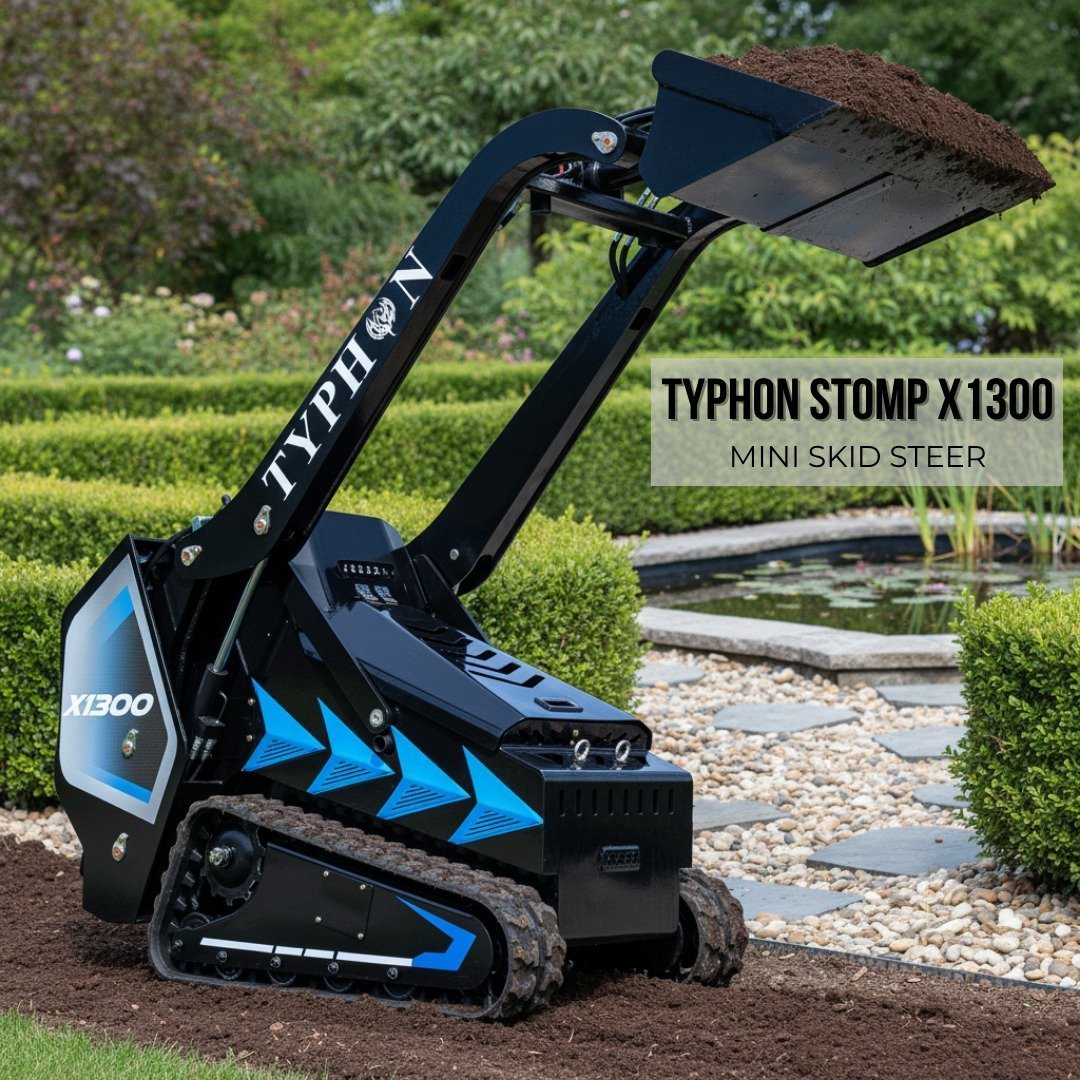
Understand mini skid steer lift capacity, rated operating capacity, bucket height, dump reach, lift path, and how the TYPHON STOMP 509 and X1300 compare.
 Equipment Comparisons
Skid Steer vs Mini Excavator: Which One Should You Buy?
Compare a skid steer and mini excavator by digging, loading, grading, attachments, transport, property work, and ownership priorities.