
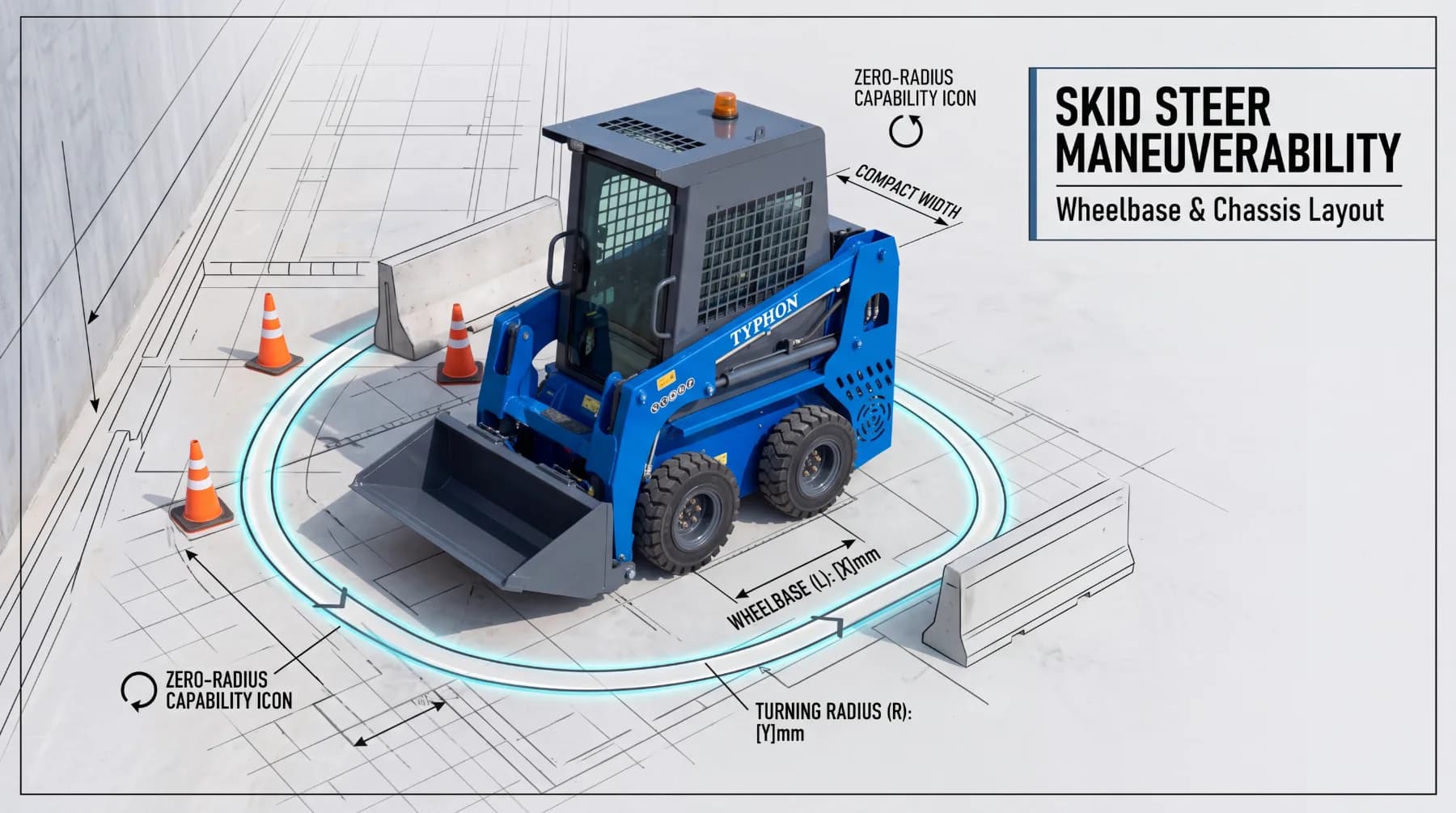
Maneuverability is one of the qualities that makes a skid steer so valuable, letting it work in spaces where larger machines simply cannot fit. Yet how well a skid steer turns, positions, and handles a load is not accidental. It comes down to two closely related aspects of the machine's design: its wheelbase and its chassis layout. These fundamentals shape how tightly the machine turns, how steadily it carries a load, and how confidently it works around buildings, obstacles, and congested sites. Understanding why wheelbase and chassis layout affect maneuverability helps you judge a machine by what truly matters for your work and choose one that performs where space is tight. This guide breaks down how these design factors influence handling, so you can select and operate a skid steer with real confidence.
How Wheelbase Influences Skid Steer Maneuverability
Wheelbase, the distance between the front and rear axles, is one of the most influential factors in how a skid steer handles. As a general rule, a shorter wheelbase allows the machine to turn more tightly and respond more quickly, which is exactly what confined spaces demand. With less distance between the axles, the machine occupies a smaller turning footprint and can pivot within a tighter area. For work in narrow aisles, around structures, or on cramped jobsites, that shorter wheelbase translates directly into the agility operators rely on to get material exactly where it needs to go.
Responsiveness follows the same logic. A shorter-wheelbase machine tends to react promptly to the operator's inputs, changing direction with less hesitation and making the quick, repeated adjustments that tight work requires. This nimble feel is a defining trait of compact skid steers, letting an operator work efficiently in spaces where a larger, longer machine would struggle to position itself at all. When you are constantly turning, backing, and repositioning in a small footprint, that quick response saves time on every cycle.
Wheelbase does more than govern turning, though; it also shapes stability and how easily the machine changes direction. There is a genuine balance at work here. A longer wheelbase spreads the machine's weight over a greater distance, which can contribute to a steadier, more planted feel, particularly when handling loads. A shorter wheelbase, while more agile, concentrates that footprint into a smaller area. Manufacturers weigh these characteristics deliberately when designing a machine, matching wheelbase to the machine's intended work. The result is that the wheelbase is never chosen in isolation. It reflects a considered trade-off between the tight, responsive maneuverability that confined work needs and the stability that safe, controlled operation requires across the machine's full range of tasks.
The Role of Chassis Layout
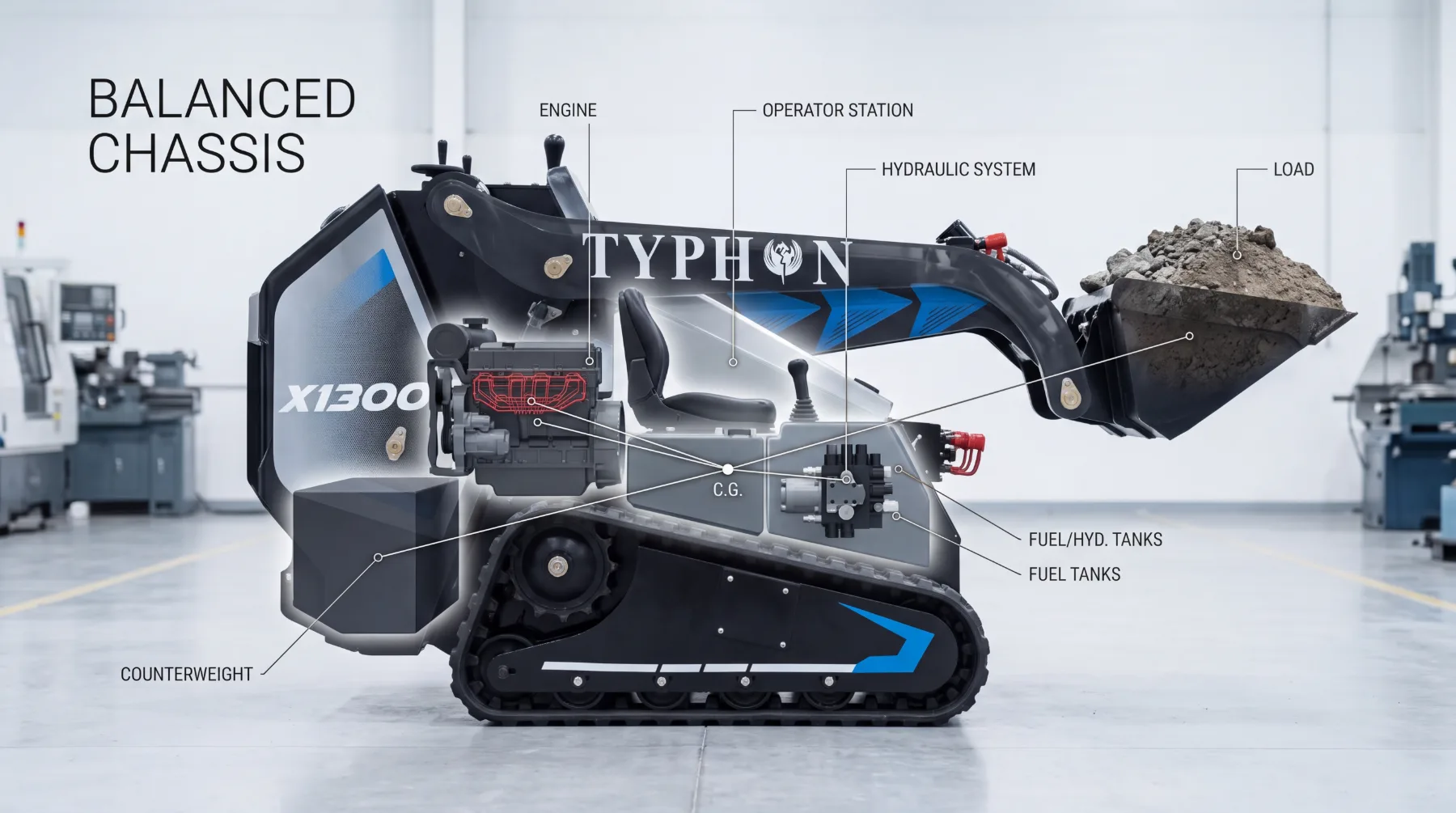
If the wheelbase sets the machine's turning footprint, the chassis layout determines how well that machine carries and balances its own weight. The chassis layout refers to where the major components sit: the engine, the hydraulic system, the operator station, the fuel and hydraulic tanks, and the counterweight. The position of each of these components affects the machine's weight distribution, and weight distribution in turn shapes overall handling. A skid steer that carries its mass in a balanced, deliberate arrangement behaves predictably and feels planted, while a poorly balanced machine can feel unsettled, especially under load.
The engine and its associated components are typically among the heaviest elements on the machine, and their placement matters a great deal. On many skid steers, this weight is positioned toward the rear, where it acts as a counterbalance to loads carried at the front by the loader arms and attachment. This is a purposeful design choice, because the material a skid steer lifts sits ahead of the machine, and rearward weight helps offset that forward load to keep the machine steady. The operator station, hydraulic components, and tanks are all positioned with this balance in mind, contributing to a distribution that supports both stability and control.
A well-balanced chassis delivers a valuable combination: it can improve stability while still maintaining responsive maneuverability. These two goals might seem to pull in opposite directions, but thoughtful component placement lets a machine achieve both. When weight is distributed sensibly across the chassis, the skid steer stays firmly grounded during work yet remains quick and controllable when turning and repositioning. This is why chassis design is such an important part of maneuverability. It is not only about how small or agile the machine is, but about how intelligently its weight is arranged so the operator gets steady, confident handling in every task, from turning in a tight space to lifting a load at the front.
Turning Performance in Tight Spaces
The defining feature of how a skid steer turns is its use of differential wheel speeds. Rather than steering with a turning axle like a car, a skid steer changes direction by driving the wheels on each side at different speeds, or even in opposite directions. Speed up the wheels on one side and slow or reverse those on the other, and the machine pivots. This skid-steering action is what gives the machine its name, and it is precisely what allows a skid steer to rotate within a remarkably small area, turning almost in place where a conventionally steered machine would need far more room.
This ability to rotate in a tight footprint is what makes skid steers so effective on space-limited jobsites. An operator can spin the machine to face a new direction without needing to drive forward and back through a wide arc, which is invaluable when working close to buildings, fences, landscaping, or stacked materials. The machine can reorient itself in the space it already occupies, then move off in the new direction, keeping work flowing even in genuinely cramped conditions.
Wheelbase and chassis dimensions influence how effectively this turning ability plays out in practice. Consider how the machine's proportions shape its performance around obstacles:
- Wheelbase determines the length of the machine's turning footprint, with a shorter wheelbase allowing a tighter rotation within a smaller area.
- Overall width affects how the machine fits through gates, doorways, and narrow passages between obstacles.
- Chassis dimensions together define the total space the machine needs to turn and reposition without contacting nearby structures.
Because these dimensions work together, a compact, well-proportioned skid steer can maneuver around buildings, navigate narrow jobsites, and work close to obstacles with far more freedom than a larger machine. The differential steering provides the mechanism for tight rotation, while the wheelbase and chassis dimensions determine just how tight that rotation can be. Together they give the skid steer its signature ability to work productively where space is at a premium.
Stability During Loading and Carrying
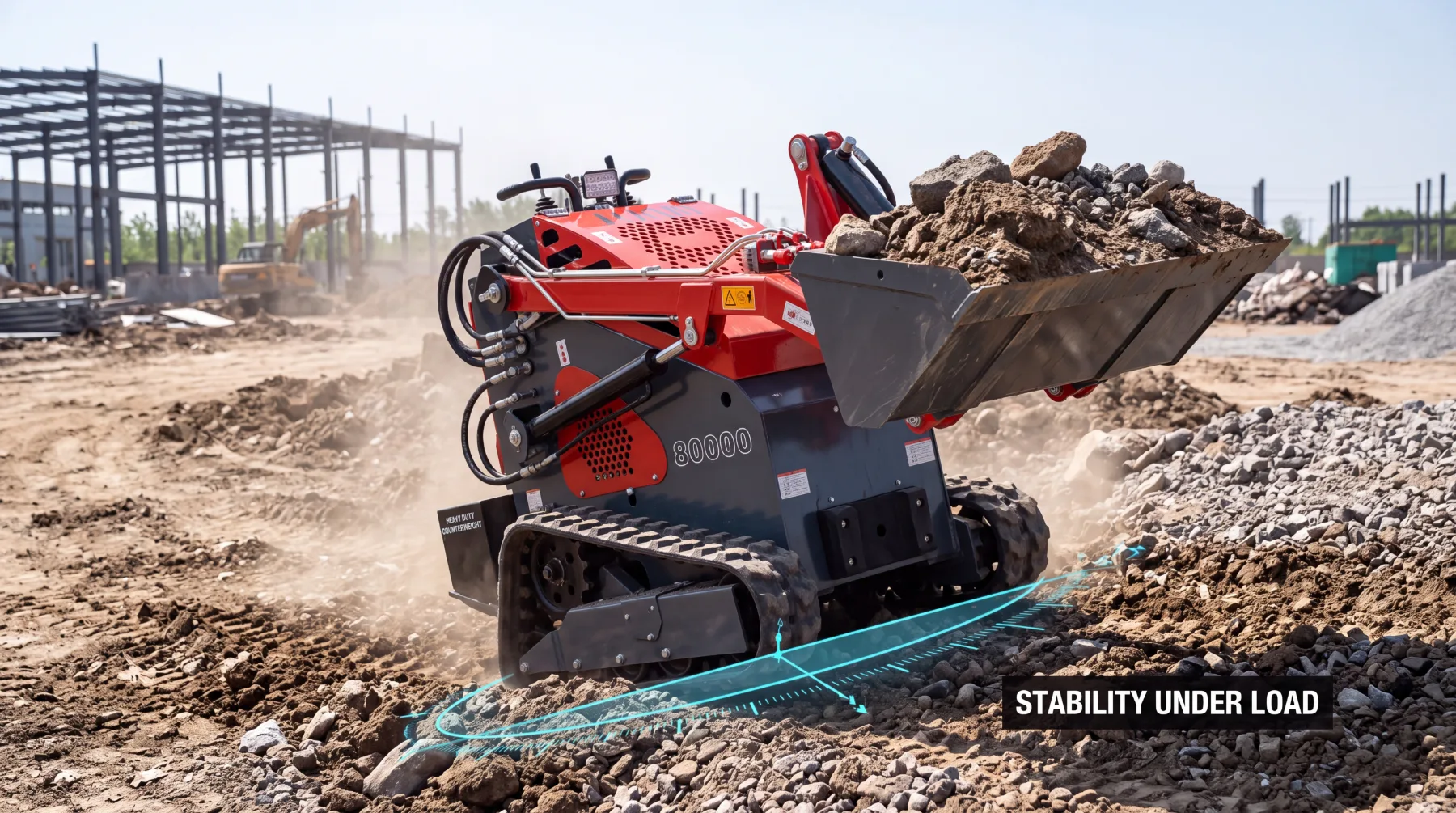
Maneuverability means little if the machine cannot stay steady while handling a load, and this is where wheelbase and chassis layout prove their worth again. When a skid steer lifts or carries material, the weight of that load sits at the front of the machine, ahead of the wheels, on the loader arms and attachment. This forward weight shifts the machine's balance, and how the skid steer manages that shift depends heavily on its wheelbase and the way its own mass is distributed across the chassis. Proper weight distribution is what keeps the machine stable while maneuvering with an attachment.
Wheelbase plays a clear role here. A longer wheelbase provides a more extended base of support, which can help the machine stay planted when carrying a load, distributing the combined weight of the machine and its load over a greater distance. This contributes to steadier handling during lifting and carrying, particularly when the load is heavy or raised. The trade-off, as noted earlier, is that a longer wheelbase reduces some of the tight agility a shorter one provides, which is why the balance between the two is chosen to suit the machine's intended work.
Chassis layout matters just as much when a load enters the picture. The rearward placement of heavy components such as the engine and counterweight is what allows the machine to offset the forward weight of a load. When material is lifted at the front, that rear mass acts as a counterbalance, helping keep the machine grounded and controlled rather than tipping forward. A well-designed chassis, with its weight arranged to account for the loads the machine will handle, maintains stability throughout the lifting and carrying cycle. This lets the operator maneuver confidently with an attachment loaded, moving material around the site without the machine feeling unsettled. Stability and maneuverability come together here: a machine that is properly balanced can carry a load and still turn and position with the control that safe, productive work requires.
Choosing a Skid Steer for Maneuverability
When maneuverability is a priority for your work, the smart approach is to consider several design factors together rather than fixating on any single specification. Wheelbase, overall width, operating weight, chassis design, and turning characteristics all contribute to how a machine handles, and the right combination of these is what makes a skid steer genuinely effective in space-limited applications. Weighing them as a whole ensures you choose a machine that turns tightly, fits your spaces, and stays stable under the loads you handle.
Start with the dimensions and characteristics that most directly govern how the machine moves in tight conditions. Consider the following together:
- Wheelbase, which shapes how tightly the machine turns and how quickly it responds, with a shorter wheelbase favoring agility in confined areas.
- Overall width, which determines whether the machine fits through the gates, doorways, and narrow passages your work involves.
- Operating weight, which influences both stability and how the machine performs on your ground and with your loads.
- Chassis design, which governs weight distribution and the balance between steadiness and responsiveness.
- Turning characteristics, which reflect how effectively the machine rotates and repositions in a small footprint.
These factors interact, so a wise choice balances them against your specific needs. A landscaping operation working around finished surfaces, tight garden access, and narrow gates may prioritize a compact machine with a short wheelbase and modest width for maximum agility. A construction application handling heavier loads on a congested site may value a machine that balances tight turning with the wheelbase and weight distribution needed for stable lifting. There is rarely a single best machine, only the best match for the work at hand.
The dependable approach is to define your tightest working spaces and your typical loads first, then look for a skid steer whose wheelbase, width, weight, and chassis design suit both. Matching these characteristics to your real conditions gives you a machine that maneuvers confidently where you need it to, delivering the productive, responsive performance that space-limited landscaping, construction, and similar work demands.
Conclusion
Wheelbase and chassis layout sit at the heart of how well a skid steer maneuvers. Wheelbase shapes how tightly the machine turns and how quickly it responds, with a shorter wheelbase favoring agility and a longer one contributing to stability. Chassis layout determines how the machine's weight is distributed, and thoughtful placement of the engine, hydraulics, operator station, and counterweight delivers both steady handling and responsive control. The skid steer's differential steering lets it rotate within a small footprint, while its wheelbase and overall dimensions decide just how tight that rotation can be around buildings and obstacles. The same factors govern stability when lifting and carrying, since proper weight distribution keeps the machine planted with a load at the front. Choosing well means weighing wheelbase, width, operating weight, chassis design, and turning characteristics together against your real working conditions. Match the machine to your spaces and loads, and it will reward you with the dependable, confident maneuverability that tight jobsites require.
Frequently Asked Questions
**1. How does wheelbase affect a skid steer's maneuverability?
**Wheelbase is the distance between the front and rear axles, and it strongly influences how a skid steer handles. As a general rule, a shorter wheelbase allows the machine to turn more tightly and respond more quickly, because less distance between the axles means a smaller turning footprint and quicker reaction to the operator's inputs. This makes shorter-wheelbase machines especially well suited to confined spaces, narrow aisles, and work around structures, where agility matters most. Wheelbase also affects stability and how easily the machine changes direction. A longer wheelbase spreads the machine's weight over a greater distance, which can provide a steadier, more planted feel, particularly under load, while a shorter wheelbase trades some of that stability for tighter agility. Manufacturers balance these characteristics deliberately, matching wheelbase to the machine's intended work so it delivers both the maneuverability and the stability its tasks require.
**2. Why does chassis layout matter for handling?
**Chassis layout refers to where the major components sit, including the engine, hydraulic system, operator station, tanks, and counterweight. The position of these components determines the machine's weight distribution, which directly shapes how it handles. A skid steer with its mass arranged in a balanced, deliberate way behaves predictably and feels planted, while a poorly balanced machine can feel unsettled, especially under load. The engine and related components are among the heaviest elements, and they are often positioned toward the rear to counterbalance loads carried at the front by the loader arms. This is purposeful, since the material a skid steer lifts sits ahead of the machine, and rearward weight helps offset it. A well-balanced chassis can improve stability while maintaining responsive maneuverability, letting the machine stay grounded during work yet remain quick and controllable when turning and repositioning.
**3. How does a skid steer turn in such a small space?
**A skid steer turns using differential wheel speeds rather than a steering axle like a car. It drives the wheels on each side at different speeds, or even in opposite directions, to change direction. By speeding up the wheels on one side while slowing or reversing those on the other, the machine pivots, sometimes almost in place. This skid-steering action gives the machine its name and allows it to rotate within a remarkably small area where a conventionally steered machine would need much more room. This ability is what makes skid steers so effective on space-limited sites, since the operator can reorient the machine without driving through a wide arc. Wheelbase and chassis dimensions influence how tight that rotation can be, with a shorter wheelbase and compact proportions allowing the machine to turn and reposition in a smaller footprint around buildings, obstacles, and narrow passages.
**4. How do wheelbase and chassis layout affect stability when carrying a load?
**When a skid steer lifts or carries material, the load sits at the front of the machine, ahead of the wheels, which shifts the machine's balance forward. How well the machine manages that shift depends on its wheelbase and weight distribution. A longer wheelbase provides a more extended base of support, distributing the combined weight of the machine and load over a greater distance, which helps the machine stay planted and steady during lifting and carrying. Chassis layout matters just as much, because the rearward placement of heavy components such as the engine and counterweight offsets the forward weight of the load. This counterbalance helps keep the machine grounded rather than tipping forward when material is raised at the front. A well-designed chassis with proper weight distribution maintains stability throughout the lifting and carrying cycle, letting the operator maneuver confidently with an attachment loaded.
**5. What should I look for in a skid steer when maneuverability is a priority?
**When maneuverability matters most, consider several factors together rather than focusing on one specification. Wheelbase shapes how tightly the machine turns and how quickly it responds, with a shorter wheelbase favoring agility. Overall width determines whether the machine fits through the gates, doorways, and narrow passages your work involves. Operating weight influences both stability and how the machine performs with your loads and on your ground. Chassis design governs weight distribution and the balance between steadiness and responsiveness, while turning characteristics reflect how effectively the machine rotates in a small footprint. These factors interact, so the best choice balances them against your needs. A landscaping operation working around tight access may prioritize a compact, short-wheelbase machine, while a construction application handling heavier loads may value a balance of tight turning and stable lifting. Define your tightest spaces and typical loads first, then match the machine to both.