
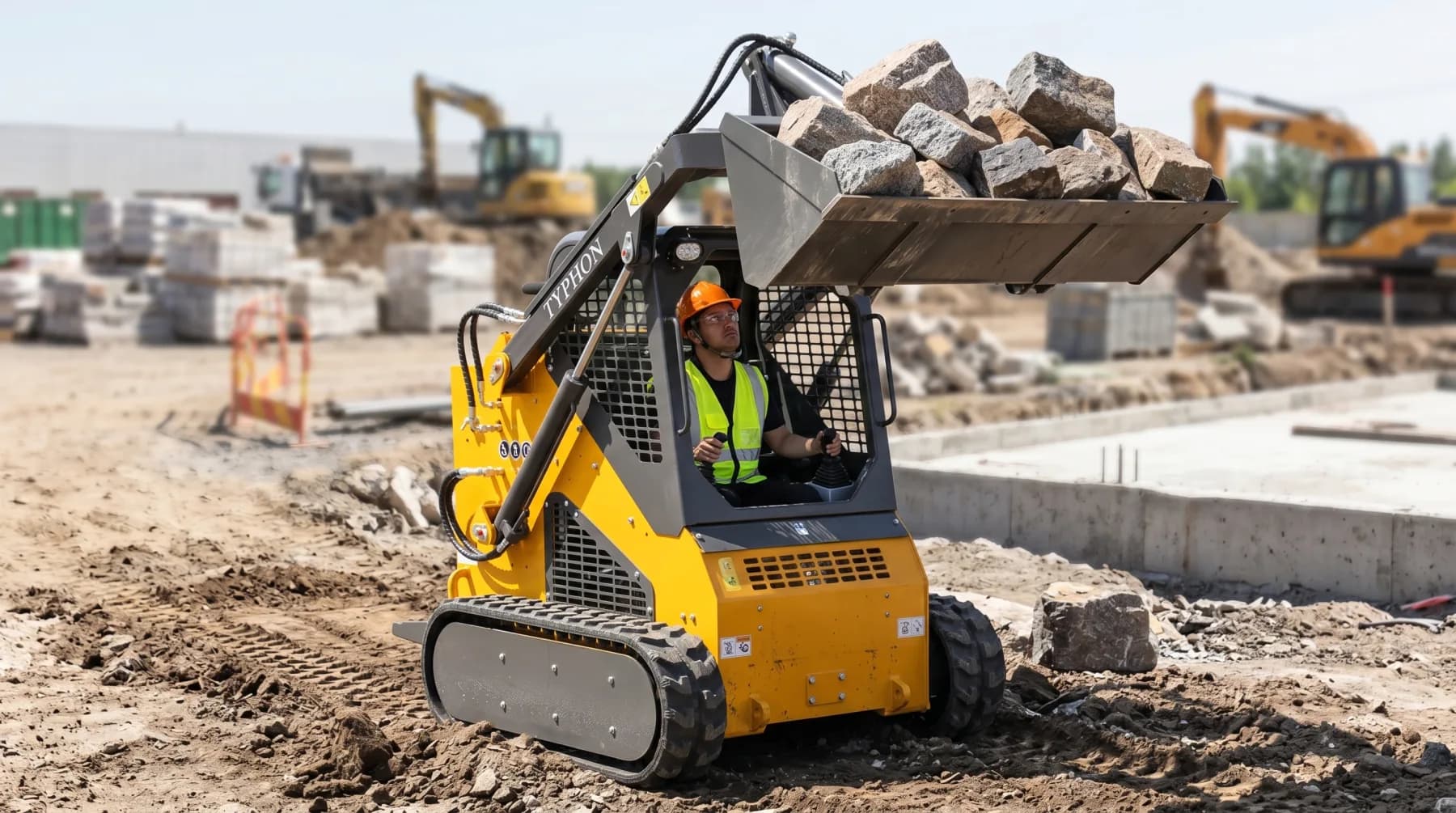
A skid steer that isn't able to lift as much as it once could is more than just a small irritation. It indicates that a crucial component of your equipment needs maintenance, slows down your work, and puts stress on your team. Both your production and your bottom line suffer when a laden bucket finds it difficult to rise or the loader arms become slow under weight.
Fortunately, a few typical hydraulic or mechanical problems are nearly invariably the cause of reduced lifting force. The majority of these issues are simple to identify, and many of them may be resolved on your own with simple equipment and diligent observation.
The most important thing is to know where to start and what to rule out. Low hydraulic fluid, a clogged filter, a malfunctioning hydraulic pump, or worn-out lift cylinders are typically the cause of the problem. A malfunctioning pressure relief valve that allows pressure to escape too soon may also be the reason.
You can identify small problems before they become costly repairs by taking the time to troubleshoot these parts. Restoring the hydraulic pressure of your skid steer guarantees that your machine can safely handle large loads, maintains the efficiency of your job site, and safeguards your equipment investment.
Low Hydraulic Fluid Levels or Poor Fluid Condition

Your skid steer lifts using hydraulic power, and that lifting capacity depends entirely on having clean fluid filled to the correct level. When the fluid runs low or starts to break down, your machine’s lifting force is one of the first things to suffer, immediately making your daily tasks feel sluggish and inefficient.
Low fluid levels mean the hydraulic pump cannot pull in enough volume to generate full system pressure, causing the lift arms to move slowly or fail entirely under heavy loads. At the same time, old or contaminated fluid creates its own serious problems. As hydraulic fluid ages and undergoes extreme heat, it loses its viscosity, which reduces its ability to transfer power efficiently. Furthermore, when dirt, debris, or water enters the system, it acts like sandpaper, accelerating internal wear on every component it touches.
Keeping an eye out for these specific warning signs can help you pinpoint a fluid issue before it causes permanent damage:
- Low Sight Glass Readings: Checking the fluid level on the dipstick or sight glass while parked on level ground reveals a low fluid line.
- Discolored or Milky Fluid: Healthy fluid is clear to amber, while a dark brown color indicates it is burnt, and a milky appearance means water has leaked inside.
- Gritty Texture: Feeling a gritty residue when wiping the dipstick signals that metal shavings or dirt are actively circulating through the system.
- Temperature Sensitivity: Noticing sluggish lifting that only slightly improves once the machine warms up is a classic sign of degraded fluid quality.
Addressing these issues early is critical, because ignoring dirty or low fluid will quickly starve your hydraulic pump and lead to total system failure. If the fluid level is just low, top it off with the exact type your manufacturer specifies, making sure never to mix different fluid types. However, if the fluid looks dark, milky, or dirty, you need to schedule a full fluid and filter change right away. Staying on top of these basic service intervals is the single easiest way to restore your lifting power and protect your entire hydraulic system from costly wear.
Worn or Damaged Hydraulic Components
If your fluid checks out, the next place to look is the hydraulic components that actually create and apply lifting force. Over time and under heavy use, these mechanical parts naturally wear out and lose their ability to hold high pressure. The hydraulic pump, lift cylinders, and control valves all play a critical role in lifting heavy buckets. A worn pump cannot generate the pressure it once did, while cylinders with damaged internal seals let fluid slip past the piston instead of pushing it up, causing the loader arms to drift down under weight or rise weakly. Similarly, worn valves leak internally and bleed off vital system pressure that should be going directly to the lift function.
Paying close attention to how your machine behaves under pressure will help you pinpoint which specific component is failing. For instance, if you watch your lift arms slowly sink or creep downward when you try to hold a heavy load in mid-air, you are likely dealing with leaking cylinder seals. You should also listen carefully for any unusual whining, growling, or knocking noises coming from the pump, which often signals serious internal wear. Additionally, take note of whether the lifting power is weak across all functions or just one. When only a single function struggles, it typically points to a specific cylinder or valve rather than a total pump failure. You can also feel for excessive heat around the pump body or valve blocks, as high heat is a clear sign of internal fluid leakage and friction.
Catching these component failures early allows you to plan the right repairs before your skid steer stops lifting completely. Cylinder seals are a common wear item, and resealing a leaking cylinder is a standard repair that successfully restores lost lifting force in many cases. On the other hand, complex pump and valve block issues usually require the help of a qualified technician who owns the specialized gauges to test system pressure accurately. If you suspect worn components are causing your sluggish performance, having the system professionally pressure-tested is the best way to pinpoint the exact culprit before you spend money replacing expensive parts.
Hydraulic Leaks Reducing System Pressure
A hydraulic system can only function properly when it remains completely sealed. Any leak in the system allows fluid and vital pressure to escape, and even a small leak can rob your skid steer of meaningful lifting power over time. Leaks typically happen in two ways. External leaks are easy to spot because fluid visibly drips from hoses, loose fittings, or cylinders, leaving oily stains behind. Internal leaks are much harder to find because fluid secretly bypasses worn seals or valves inside the system without ever reaching the ground, quietly draining away the hydraulic pressure required to lift your bucket. Both issues directly lower the total force available at the loader arms.
You can trace pressure drops and catch leaks early by adding these quick checks to your maintenance routine:
- Inspect Rods and Connections: Check hoses, fittings, and cylinder rods daily for any wet, oily film or active dripping.
- Scan Parking Spots: Look closely for fresh puddles or dark stains on the ground where the machine sits overnight.
- Monitor the Reservoir: Track your fluid levels regularly. A reservoir level that keeps dropping without any visible external dripping strongly points to an internal leak.
- Track Fade Under Load: Watch for lifting performance that steadily fades the longer you run the machine, which happens when pressure escapes as the oil gets hot.
Taking care of these leaks immediately ensures your hydraulic system maintains the steady pressure needed for heavy lifting. You should tighten loose fittings and replace any cracked, worn, or bulging hoses right away, as damaged hoses can burst suddenly and create a severe safety hazard. For suspected internal leaks, a professional pressure test will confirm exactly where the system is losing force. Addressing leaks early is the best way to protect your workflow, because a small drip ignored today often turns into a major, expensive repair tomorrow.
Overloaded Buckets and Exceeding Rated Capacity

Sometimes your skid steer isn't broken at all; it is simply being asked to lift more weight than it was built to handle. Overloading is a highly common reason a machine seems to lose its lifting power. Every skid steer is engineered with a specific rated operating capacity, which is the maximum weight it can safely carry. When you pack a bucket with dense, wet materials like packed soil or heavy gravel, you can blow past that limit fast. When you do, the hydraulic system strains, the lift arms move at a crawl, and the rear wheels can lift off the ground, accelerating wear on your entire undercarriage.
Figuring out if weight is your primary issue requires comparing your load against your machine's factory limits. You should check the rated operating capacity in your operator's manual and know that number by heart. Pay attention to whether your lifting trouble only shows up when dealing with overfilled buckets. If the rear of your skid steer feels light or the front end dips when you try to raise the loader arms, you are definitely overloading it. If your lift speed returns to normal with lighter materials, the issue is weight, not a mechanical failure.
Keeping your skid steer working efficiently means adjusting your daily operation to match the machine's true capabilities. You must always match your load to the rated capacity, remembering that wet material weighs far more than dry material. Operating within these limits keeps your hydraulic pressure stable, prevents sudden tipping accidents, and protects your crew.
Engine Performance Issues Affecting Hydraulic Output
Your hydraulic system can only perform as well as the engine that drives it. The engine powers the hydraulic pump, so any drop in engine performance directly reduces the power available to lift heavy loads. When the engine cannot reach or hold its proper RPM, the hydraulic pump cannot spin fast enough to build full system pressure. The result is weak, sluggish lifting, even when your fluid levels and hydraulic components are in perfect shape. Clogged filters, fuel delivery problems, and air intake restrictions are common culprits that quietly sap engine power.
You can determine if the engine is the root cause by watching how the machine responds under a load. Listen closely for the engine bogging down or losing RPM the moment you engage the lift arms. You should also watch for black exhaust smoke, rough idling, or hard starting, which are all classic signs of engine trouble. Check the air filter, fuel filter, and fuel quality, since restrictions here choke engine performance. If you notice that lift power and overall machine drive power drop at the same time, the issue points to the engine rather than the hydraulics alone.
To fix this, start with basic maintenance by replacing dirty air and fuel filters and ensuring you are using fresh fuel. If the engine still struggles after a filter change, have a professional check the fuel injectors and governor settings to restore full power to your pump.
Conclusion
Lost lifting power on a skid steer almost always comes down to one of five core issues: low or degraded hydraulic fluid, worn components, pressure-bleeding leaks, overloaded buckets, or an engine that simply can't drive the pump at full power.
When noticing your machine is having a hard time processing, the best approach is to check through each part. The owner can start checking like peering at the sight glass or verifying your load weight before jumping into expensive component replacements or calling in a technician for deep repairs.
Restoring your lifting performance now is not the only benefit of being proactive with regular fluid changes, filter replacements, and operating within your machine's rated capability. It actively prolongs the life of your equipment, maintains the safety of your workers, and keeps your job site productive. By spending a few minutes troubleshooting today, a small issue can avoid becoming a significant financial loss later on.
Request a quote or Visit TYPHON