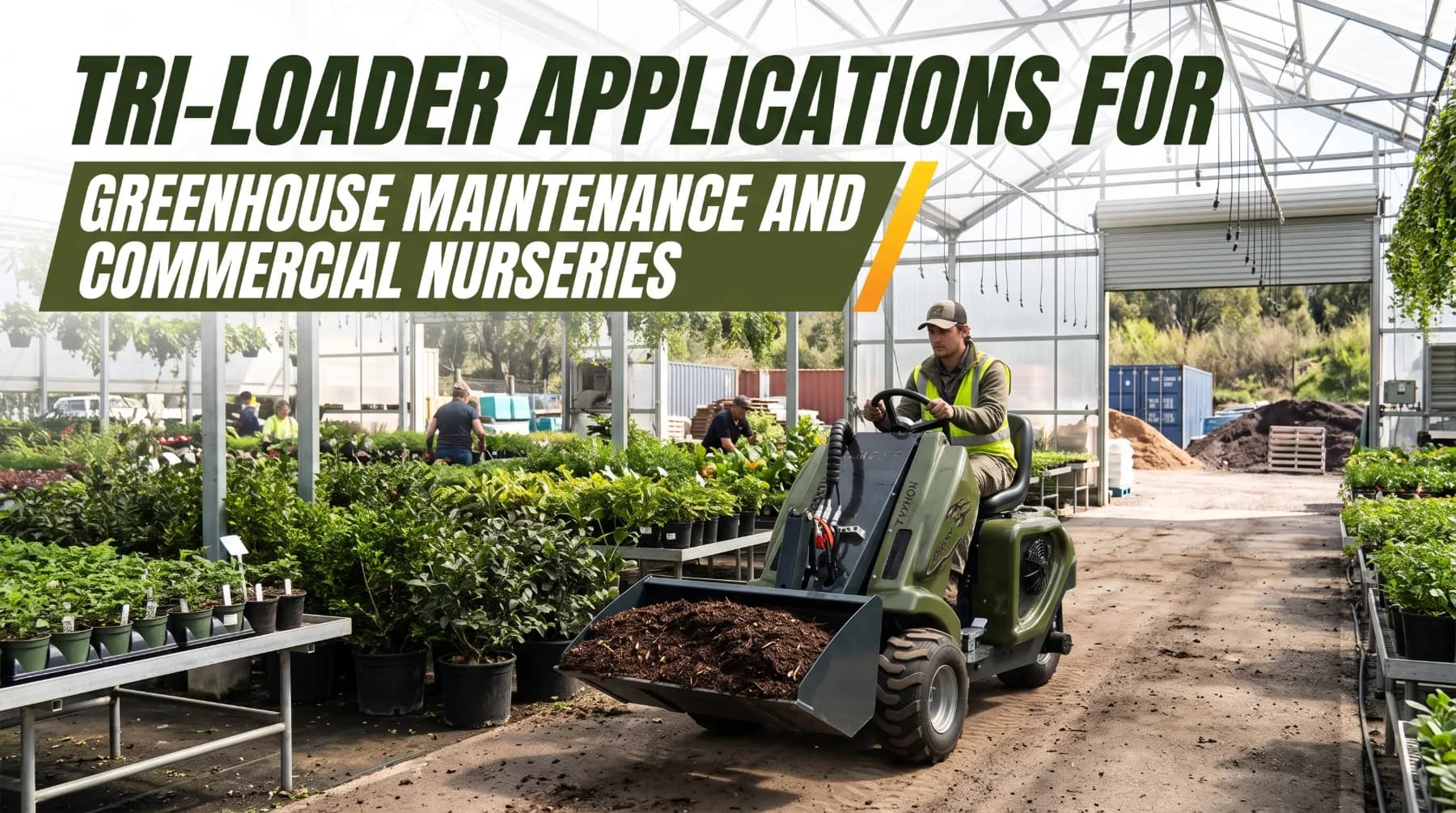
Greenhouses and commercial nurseries move a lot of material every season. Potting soil arrives in bulk and must reach the potting line. Compost and bark mulch travel from storage bays to propagation houses. Finished containers move from growing areas to shipping docks. Outdoor beds need fresh topsoil, and grounds crews clear spent media, prunings, and debris after every production cycle. Much of this work happens in narrow aisles, on soft or wet ground, and close to fragile crops and busy staff.
Hand carts and wheelbarrows can only go so far. Over a full season, manual handling slows production, adds labor costs, and puts physical strain on crews. Larger loaders and tractors often cannot fit between benches or turn inside a greenhouse bay. Compact tri-loaders fill that gap. Their small footprint, steady control, and range of compatible attachments let one machine move soil, growing media, containers, and landscaping materials through spaces where bigger equipment cannot work.
A compact machine does not suit every space or task on its own merits, though. A tri-loader supports greenhouse and nursery work only when its dimensions, attachments, surface conditions, and load requirements match the work area. A bucket of saturated potting mix can weigh far more than it looks. An aisle that fits the machine may leave no room to turn. Freshly irrigated ground can lose traction and bearing strength within minutes. A careless turn can crush a bench of seedlings, snap an irrigation line, or catch a worker in a blind spot.
Moving Soil and Growing Media
Material handling is a common task for tri-loaders in nurseries and growing operations. Soil, compost, peat-based mixes, bark, perlite blends, and mulch need to move between storage areas, potting lines, greenhouses, and planting locations. Each material has different handling requirements that affect productivity and safety.
Bucket capacity shows how much material fits inside, but it does not indicate the load's weight. Dry bark and peat-based mixes are often lightweight, while wet compost, topsoil, sand, and gravel can be much heavier. Rain and irrigation can also increase material weight, so estimate the load using supplier information and compare it with the machine's rated capacity. Reduce the bucket fill when handling wet or dense materials.
During travel, distribute material evenly and keep the bucket low to maintain stability and visibility. Avoid carrying loads that block the operator's view, and stop if the machine shows signs of overloading, such as the rear lifting or reduced lifting performance. Remove material buildup only when the machine is parked, the bucket is lowered, and the engine is off.
Key takeaway: Check material weight and moisture, stay within rated capacity, and carry the bucket low while traveling.
Safe Operation Around Workers
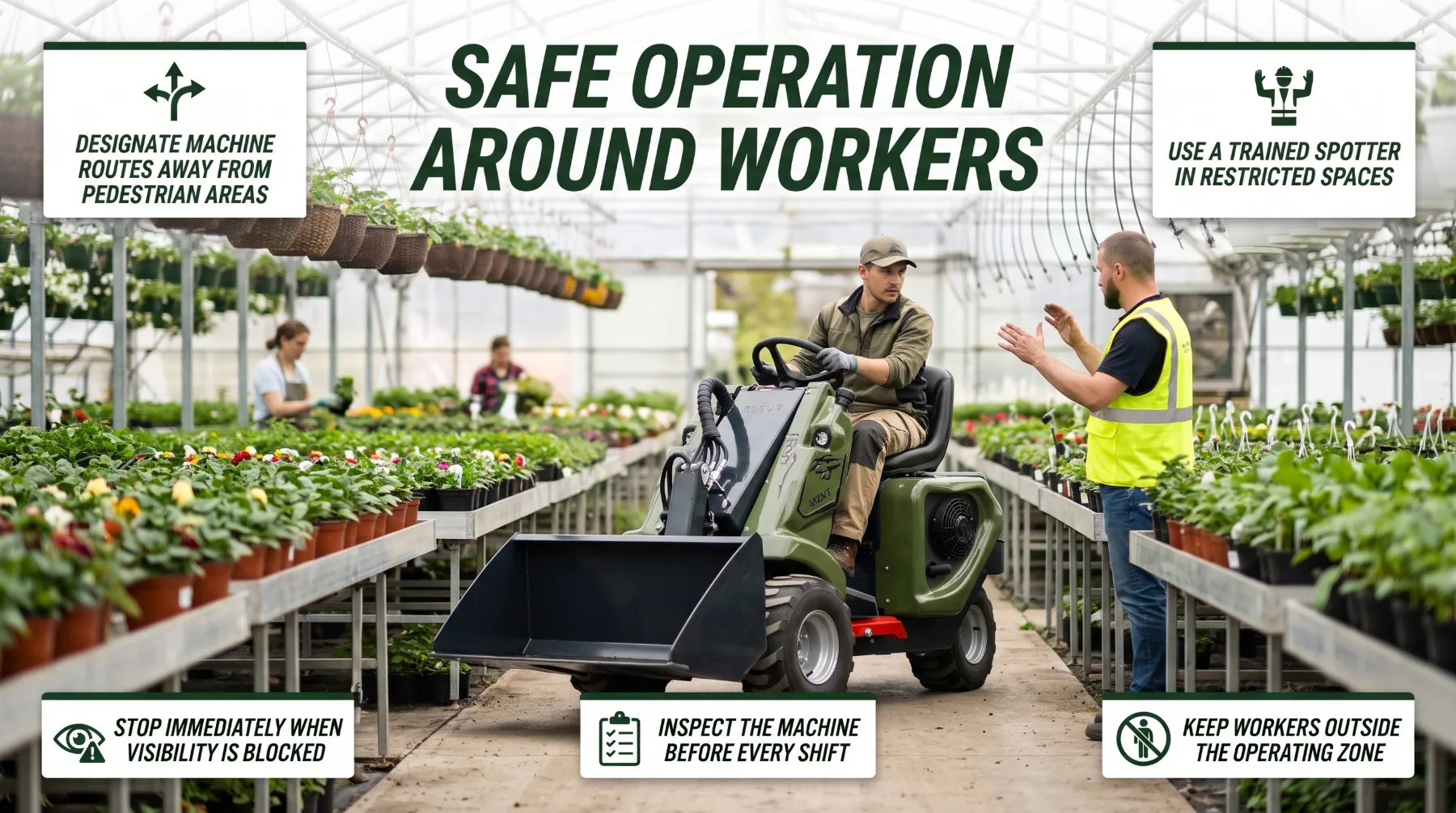
Nurseries and greenhouses are busy workplaces where staff water plants, prepare orders, move containers, and work in narrow aisles. Workers may be bending down or facing away from traffic, making it difficult to notice moving machinery. Safe tri-loader operation depends on clear travel routes, good visibility, and communication.
Separate machine routes from pedestrian areas wherever possible, mark travel lanes, and keep workers away from active loading and unloading zones. Schedule major material movements when fewer people are nearby. In narrow aisles or areas with limited visibility, use a trained spotter who remains visible and stands outside the machine's travel path.
Stop whenever a load, tall plants, benches, or structures block the operator's view. Lower the load, wait for assistance, or reposition the machine before continuing. Keep workers away from the attachment, turning area, and spaces between the machine and nearby structures. Before each shift, inspect the brakes, steering, tires or tracks, controls, attachment locks, horn, lights, alarms, and seat belt.
Key takeaway: Keep workers clear of operating areas, use a spotter when visibility is limited, and stop whenever the travel path is not clearly visible.
Working Between Greenhouse Rows
Greenhouses often have narrow aisles surrounded by benches, irrigation hoses, heating pipes, support posts, hanging baskets, and plant containers. A tri-loader needs enough space to travel and turn without damaging plants, equipment, or structures. Planning the route before entering helps prevent collisions and delays.
Measure door openings, aisle widths, overhead clearance, turning areas, and floor transitions before operating inside. Allow enough room for the machine and its attachment, and check that the floor can support the loaded equipment, especially around drainage grates, ramps, covered trenches, and soft ground. Remove loose pots, hoses, and tools from the travel path before starting work.
Travel slowly, make gradual turns, and approach benches or bins carefully. Watch the entire machine, including its rear and attachment edges, when turning in tight spaces. Check that ventilation is suitable for the machine's power source because combustion-engine exhaust can create dangerous carbon monoxide levels in enclosed spaces.
Key takeaway: Check clearances, floor strength, and ventilation before entering, then operate slowly to protect people, plants, and greenhouse equipment.
Nursery Stock and Plant Handling
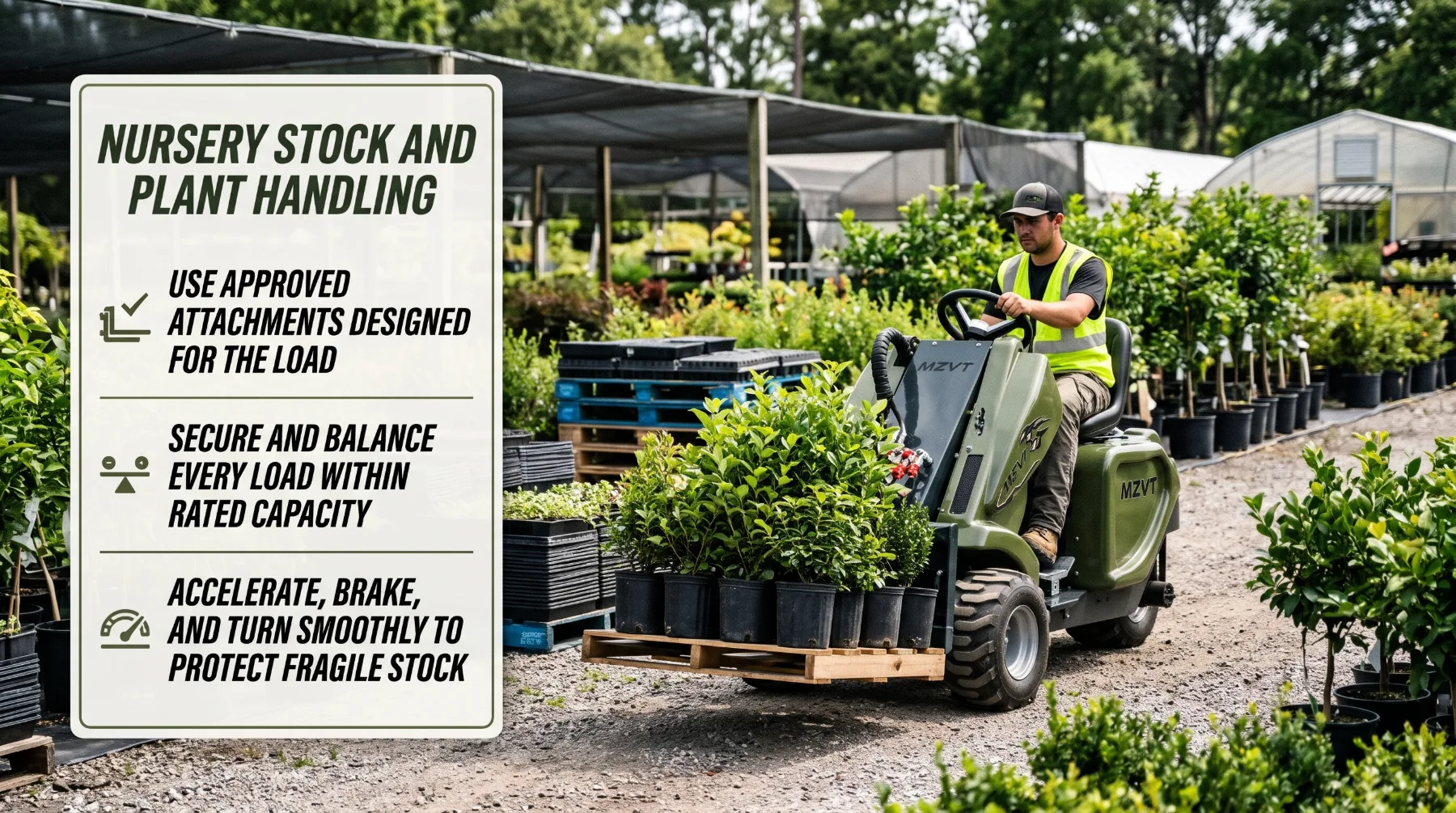
Moving live plants requires careful handling because containers can tip, root balls can crack, and branches or flowers can break during transport. Tri-loaders can help move nursery stock efficiently when the attachment is suitable for the load and the travel route is clear.
Use manufacturer-approved attachments such as pallet forks, material carriers, or specialized plant handlers designed for the task. Avoid balancing loose pots in a bucket or placing unsecured containers on forks. Center the load, keep containers upright, avoid tall stacks, and check the weight of wet pots and large root balls before lifting.
Protect foliage by leaving enough space between plants and nearby objects. Carry loads low while traveling, accelerate gradually, brake gently, and take wide turns to prevent plants from shifting or falling. At the destination, stop fully and lower the load onto a level, stable surface before backing away.
Key takeaway: Use suitable approved attachments, secure loads within rated capacity, and move smoothly to prevent plant damage.
Soil Preparation and Grounds Maintenance
Outdoor nursery areas require regular soil movement, mulch spreading, debris removal, bed preparation, and path maintenance. Tri-loaders can support these tasks, but rain and irrigation can change ground conditions quickly, affecting traction and stability.
Before traveling, check for mud, standing water, loose gravel, and soft areas where the machine could sink. Reduce speed on slippery surfaces and avoid slopes when traction is uncertain. If the machine begins sinking or leaving deep ruts, stop and reassess the route rather than trying to power through.
Heavy equipment can compact soil, reducing airflow and water movement around plant roots. Use designated travel paths, avoid driving over planting beds, and postpone work when the soil is too wet. Before digging or moving heavy equipment near buried irrigation pipes, drainage lines, or electrical services, confirm their locations.
Key takeaway: Check ground conditions before operating, stay on designated routes, and avoid wet planting beds to reduce soil damage and instability.
Attachment Compatibility and Capacity
Tri-loaders use different attachments to handle materials, plants, and other nursery tasks. Selecting the right attachment improves efficiency, while an incompatible or poorly secured attachment can cause equipment damage, dropped loads, or injuries.
Use only attachments approved for the specific machine model, and inspect the mounting plate, pins, and locking parts before installation. Make sure the attachment locks fully according to the manufacturer's instructions, then test it in a clear area before starting work. Never operate with damaged or improperly secured attachment components.
Both attachment weight and material weight count toward the machine's capacity. Loads carried farther forward can also affect balance, so follow the manufacturer's capacity information for the exact machine and attachment combination. For hydraulic attachments, confirm that the flow, pressure, and couplers are compatible. Release hydraulic pressure according to the approved procedure before connecting or disconnecting lines, and never use bare hands to check for leaks.
Key takeaway: Use compatible, securely locked attachments and keep the combined attachment and load weight within the machine's rated capacity.
Conclusion
Tri-loaders can help greenhouse and nursery operations move materials and maintain growing areas with less manual effort and greater consistency. That value depends on matching the machine to the work. Accounting for the density and moisture of soil and growing media keeps every bucket within rated capacity, while a low carry position preserves the operator's view. Measuring aisles, doors, overhead clearance, and turning areas before entering a greenhouse, and confirming floor strength and ventilation, protects benches, irrigation systems, structures, and crops. Approved attachments, stable loads, and smooth driving keep nursery stock intact from growing area to shipping dock. Outdoors, careful assessment of traction and bearing strength, along with disciplined route use, prevents bogged machines and long-term soil compaction. Correct attachment selection, secure mounting, and capacity checks protect both the machine and the people around it. Above all, clear separation between machine routes and pedestrians, trained spotters, and a firm rule to stop when visibility is blocked keep every worker safe. When you plan each task with these practices in mind, your tri-loader becomes a reliable partner in protecting plants, maintaining facilities, and keeping production moving season after season.
FAQs
Can a tri-loader operate inside a greenhouse?
Only if the machine's dimensions, ventilation requirements, turning space, and surface conditions are suitable for the facility. Measure door openings, aisle widths, overhead clearance, and turning areas against the machine's full width and height, including the attachment. Confirm that the floor, drainage grates, and any in-floor heating systems can carry the machine's wheel loads. Combustion engines produce exhaust that can build up in enclosed spaces, so confirm the facility's ventilation and the machine's power source suit indoor use, following the manufacturer's guidance and site air quality requirements.
What materials can a tri-loader move in a nursery?
It may move soil, compost, mulch, pots, and other compatible materials within its rated capacity. Bulk materials such as topsoil, compost, bark, and growing media are typically handled with an approved bucket, while palletized containers, flats, and bagged products require approved forks or carriers. Material weight varies widely with density and moisture, so estimate each load, reduce fill levels for wet or dense materials, and keep the combined weight of the attachment and load within the machine's rating.
How can plant damage be reduced?
Use a planned route, maintain clearance, and travel slowly around benches, irrigation lines, and stored plants. Clear aisles of loose pots and hoses before travel, mark items that must remain in place, and use a spotter where benches or tall plants create blind spots. When moving stock, use approved attachments, secure and balance the load, avoid tall stacks, and accelerate, brake, and turn smoothly. Outdoors, keep the machine on designated paths and off planting beds to prevent root damage and soil compaction.
Should loads be carried high to clear nursery beds?
Keep loads low during travel and raise them only when needed for placement or unloading. A raised load lifts the machine's center of gravity, reduces stability on uneven or soft ground, and blocks the operator's view of workers and obstacles. If a route requires carrying loads high to clear beds or benches, choose a different route or method instead. Travel to the destination with the load low, stop fully, confirm the area is clear, and then raise the load for placement.