
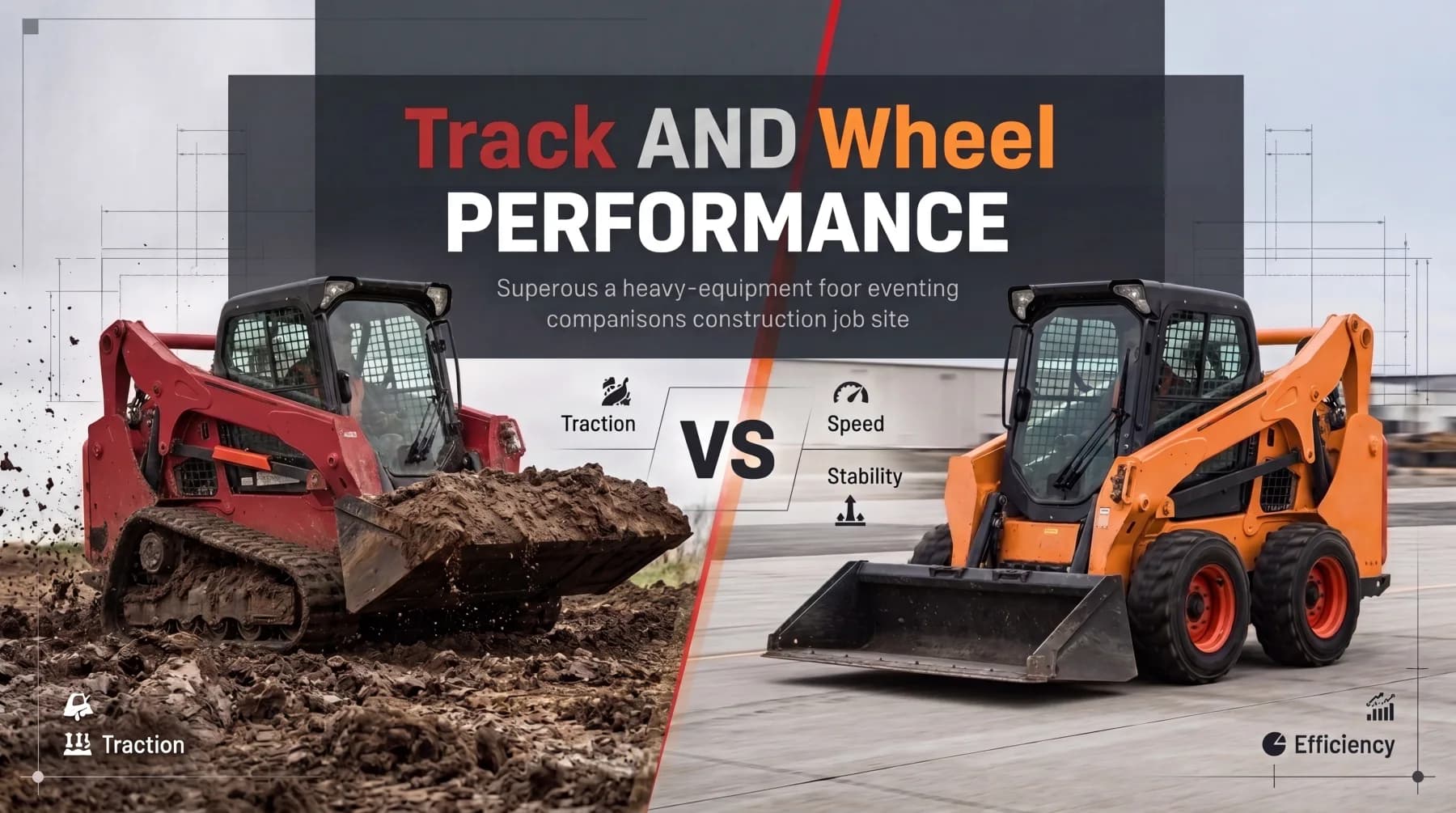
Choosing between a tracked and a wheeled skid steer shapes how efficiently and safely your work gets done. Both machines share the same compact frame, quick attachment changes, and impressive versatility, yet the way they meet the ground sets them apart in ways that matter for every job. A machine that thrives on muddy construction sites may struggle on polished concrete, while one built for speed on pavement can bog down in soft soil. Understanding these differences helps you match the right machine to your conditions, protecting your productivity and your budget. This guide compares traction and stability, ground pressure, speed and efficiency, maintenance costs, and how to choose the right skid steer for your work.
Traction and Stability on Different Terrain
The way a skid steer meets the ground determines how well it grips, balances, and stays under control, and this is where tracked and wheeled machines diverge most clearly. Tracked skid steers run on continuous rubber tracks that spread contact across a long, wide surface. That broad footprint grips loose and slippery ground far better than tires, letting the machine dig in and pull with confidence on mud, wet soil, sand, and loose gravel. On slopes and uneven terrain, tracks keep more of the machine planted at all times, giving operators a stable, sure-footed platform even when the surface fights back.
Wheeled skid steers take a different approach, relying on four tires to carry the machine. On firm, level ground like pavement, compacted soil, and finished surfaces, those tires deliver excellent grip and precise control. They roll smoothly and hold their line without difficulty, making wheeled machines a natural fit for hard, prepared sites. On soft or slippery ground, however, tires can spin, sink, and lose traction, leaving the machine stuck where a tracked model would keep working.
Undercarriage design drives these differences directly, and knowing how each performs helps you match the machine to the ground:
- Mud and soft soil: Tracks grip and float; wheels tend to sink and spin.
- Gravel and loose material: Tracks hold steady, while wheels can slip and scatter.
- Pavement and finished surfaces: Wheels excel with clean grip; tracks work but wear faster.
- Slopes and uneven ground: Tracks offer superior balance and control.
When your work spans rough, soft, or sloped terrain, a tracked machine delivers the traction and stability that keep the job moving. On firm, prepared surfaces, a wheeled machine holds its own with dependable control and clean handling.
Ground Pressure and Surface Impact
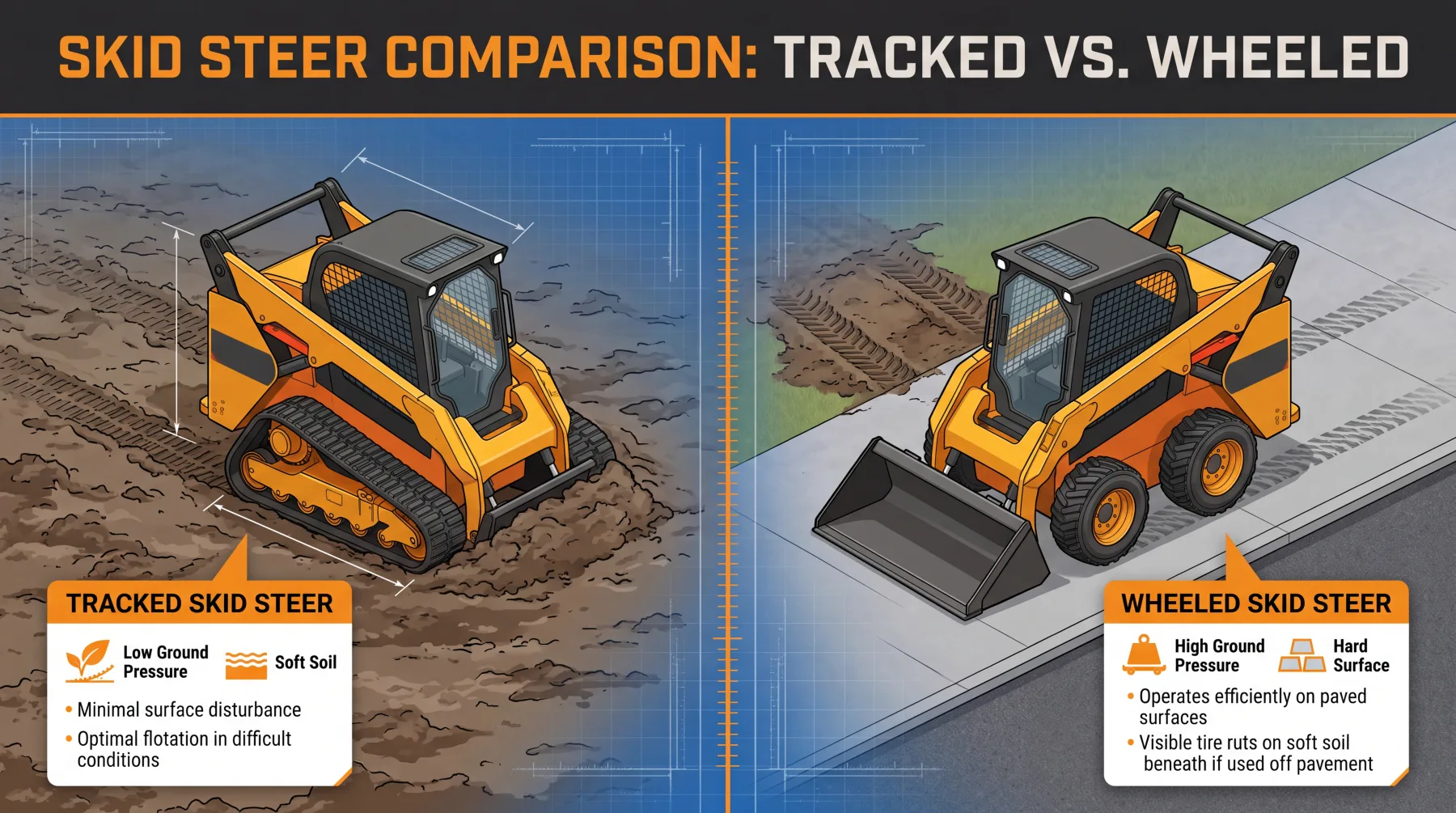
Ground pressure describes how a machine distributes its weight across the surface beneath it, and it explains much of the practical difference between tracks and tires. A tracked skid steer spreads its weight over the entire length and width of both tracks, creating a large contact area. That wide footprint means the machine presses down with relatively low ground pressure, so it is far less likely to sink into soft soil or leave deep ruts behind. A wheeled skid steer concentrates its weight onto four smaller tire contact patches, producing much higher ground pressure at each point.
This difference in ground pressure shapes how each machine treats the surfaces it works on. Because tracks minimize soil disturbance, they are the go-to choice for jobs where protecting the ground matters, such as landscaping over turf, working on soft or freshly graded soil, or operating on sites where deep ruts would create problems. The machine can travel and work without tearing up delicate ground, which saves cleanup and repair time later. Wheels, by contrast, are better suited to hard, finished surfaces where high ground pressure poses no concern and clean tires cause no damage.
Understanding surface impact helps you protect both the site and your results:
- Low ground pressure tracks: Ideal for soft soil, turf, and sensitive or unfinished ground.
- High ground pressure wheels: Well suited to concrete, asphalt, and firm prepared surfaces.
- Rutting and disturbance: Tracks reduce it; wheels are more likely to leave marks on soft ground.
Matching ground pressure to your surface keeps your work efficient and your sites intact. A tracked machine preserves delicate ground while working confidently on soft terrain, while a wheeled machine performs cleanly on hard surfaces where its footprint causes no harm. Reading your typical surfaces honestly points you toward the machine that will treat them right.
Speed, Maneuverability, and Job Site Efficiency
Speed and agility are areas where wheeled skid steers hold a clear advantage, and they translate directly into productivity on the right kind of site. Wheeled machines travel faster than tracked models, moving quickly between work areas and covering ground with ease on firm, level surfaces. When a job involves frequent trips across a paved lot or a large prepared site, that extra speed shortens cycle times and keeps material moving. Their tires also turn tightly and respond crisply, letting operators reposition the machine and navigate around obstacles with efficient, precise handling.
Tracked skid steers trade some of that speed for stability and grip. They generally move more slowly and turn at a steadier pace, but they maintain full control on the rough, soft, and sloped ground where a wheeled machine would lose traction. On those demanding surfaces, a tracked machine keeps working steadily where speed would matter little anyway, since a faster machine that slips or sinks accomplishes nothing. In its element, the tracked model delivers consistent, controlled productivity that suits the conditions it was built for.
The most productive choice depends entirely on your working environment:
- Firm, level sites: Wheeled machines win on speed and quick, tight maneuvering.
- Soft or rough terrain: Tracked machines keep working where wheels would stall.
- Frequent repositioning: Wheels favor fast movement; tracks favor steady control.
- Large paved areas: Wheeled speed shortens cycle times noticeably.
Neither machine is universally more efficient, because efficiency depends on the ground you work. A wheeled skid steer maximizes productivity on hard, open sites where speed and agility pay off, while a tracked machine delivers dependable output on the difficult terrain that would leave a faster machine spinning its wheels. Matching the machine's strengths to your job site is what keeps the whole operation running at its best.
Maintenance Requirements and Operating Costs
Maintenance and long-term costs often tip the balance between tracks and tires, and the two systems carry very different ownership expenses. Tires are relatively simple and inexpensive to maintain. When one wears out or suffers a puncture, replacing a single tire costs far less than replacing a track, and the swap is quick. Wheeled machines generally have fewer undercarriage parts to service, which keeps routine upkeep straightforward and their overall maintenance costs lower over the life of the machine.
Tracks are more complex and more expensive to maintain. The rubber tracks themselves cost considerably more than tires, and the undercarriage includes rollers, idlers, and sprockets that wear over time and eventually need replacement. Track systems also demand regular attention to tension and cleaning, since debris packed into the undercarriage accelerates wear. When a track wears out or is damaged, the replacement expense is significant, making the long-term ownership cost of a tracked machine higher than that of a comparable wheeled model.
Operating conditions have a major influence on how quickly these costs add up:
- Hard, abrasive surfaces: Pavement and rough concrete wear tracks quickly, raising costs.
- Soft, clean terrain: Gentler on tracks, extending their service life.
- Debris-heavy sites: Increase undercarriage wear and cleaning demands on tracked machines.
- Tire replacement: Cheaper and faster than replacing tracks and undercarriage parts.
Running a tracked machine mostly on abrasive hard surfaces wears the tracks far faster than intended, driving up expenses that careful matching would avoid. A wheeled machine on firm ground, meanwhile, keeps maintenance simple and affordable. Understanding how your typical conditions affect wear helps you anticipate real ownership costs, so you can weigh the higher expense of tracks against the performance they provide on the terrain that justifies them.
Choosing the Right Skid Steer for Your Work
Selecting between a tracked and a wheeled skid steer begins with an honest look at where and how you work, because the right choice always comes down to matching the machine to your conditions. Terrain is the most decisive factor. If your jobs involve mud, soft soil, loose gravel, slopes, or unfinished ground, a tracked machine delivers the traction, stability, and low ground pressure those conditions demand. If you work mostly on pavement, compacted soil, and finished surfaces, a wheeled machine offers the speed, agility, and lower operating costs that hard sites reward.
Project type and expected workload deserve equal weight in the decision. Consider the range of jobs you take on and how the machine will spend most of its hours, since a model matched to your typical work outperforms one chosen for occasional tasks. Budget matters throughout, covering not just the purchase price but the long-term cost of maintenance and replacement parts. Tracks carry higher ownership expenses that pay off on demanding terrain, while tires keep costs down on firm ground where their limitations rarely come into play.
Weigh these key factors before you commit:
- Terrain: Soft, rough, or sloped ground favors tracks; firm, finished surfaces favor wheels.
- Project type: Match the machine to the work it will do most often.
- Budget: Account for purchase price plus long-term maintenance and replacement costs.
- Expected workload: Heavier, continuous use on tough ground justifies a tracked machine.
The goal is dependable long-term performance, not the biggest or cheapest option on the lot. A tracked skid steer earns its higher cost on difficult terrain where nothing else keeps working, while a wheeled machine delivers efficient, economical performance on hard, prepared sites. Assess your terrain, projects, budget, and workload together honestly, and you will choose a skid steer that serves your operation reliably for years to come.
Conclusion
Tracked and wheeled skid steers each excel in the conditions they were built for, and understanding the difference is the key to a smart decision. Tracks deliver superior traction, stability, and low ground pressure on mud, soft soil, gravel, and slopes, making them the dependable choice for rough, sensitive, or unfinished terrain. Wheels bring greater speed, tight maneuverability, and lower maintenance and replacement costs, performing best on pavement and firm, finished surfaces where their limitations rarely surface. Neither design wins in every situation, because the right machine depends entirely on your terrain, project type, budget, and expected workload. Weigh those factors honestly against how and where you work most often, and you will select a skid steer that delivers the traction, efficiency, and long-term value your operation needs to keep performing job after job.