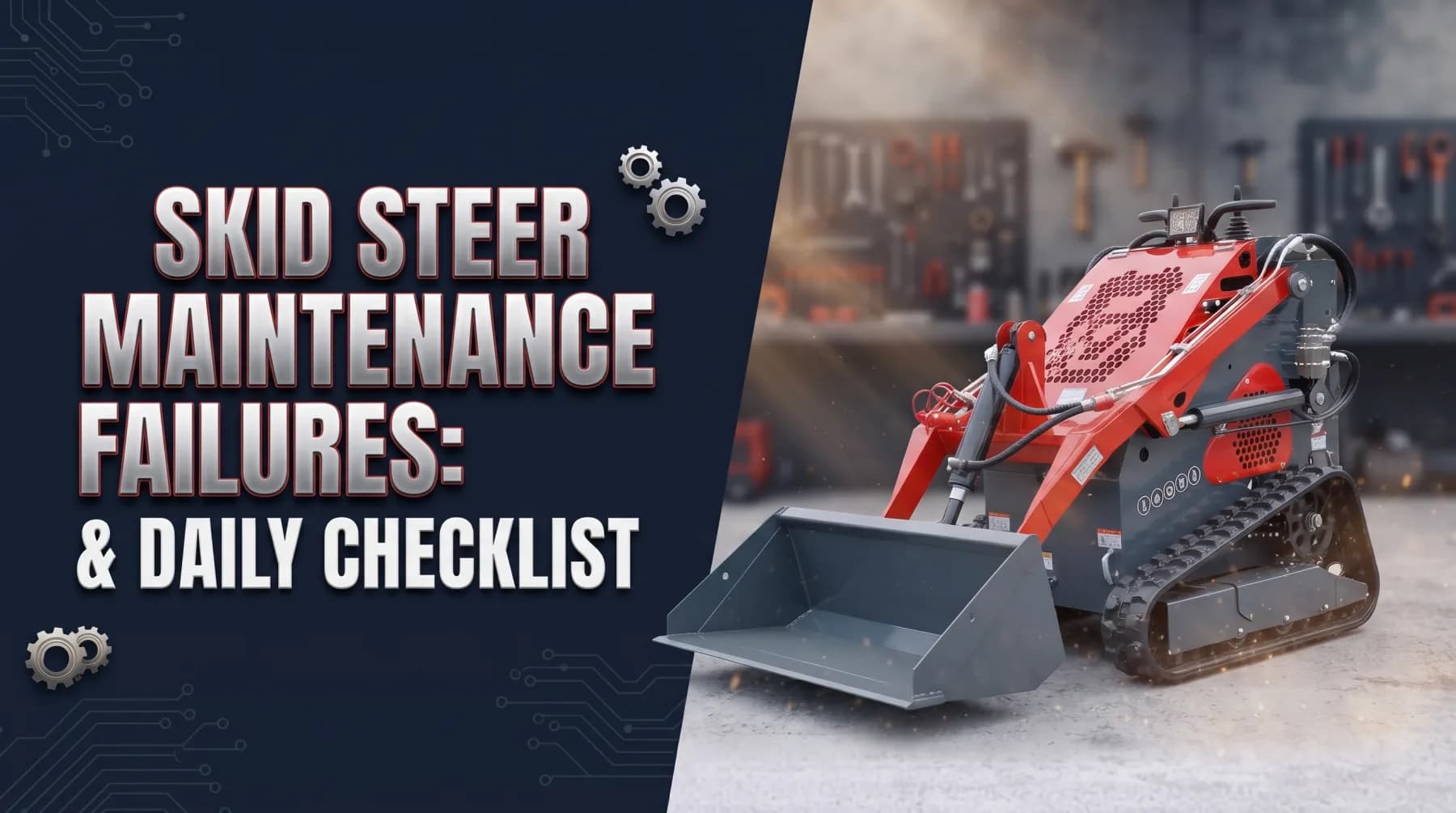
Skid steers earn their keep in some of the toughest conditions on any jobsite. They push through dust, mud, debris, heavy loads, and rough surfaces every day. That constant exposure wears components faster than many operators expect.
When maintenance slips, the machine rarely fails all at once. Instead, a small problem quietly grows until it causes expensive downtime at the worst possible moment.
This guide is for operators, fleet managers, and owners who want to keep their equipment running reliably. You will learn why most failures start small, how a short daily routine protects your investment, and which checks matter most before every shift.
Preventive maintenance is more than a way to avoid repair bills. It improves safety, keeps productivity high, and helps your skid steer perform consistently throughout its service life.
Whether you use your machine every day or only for seasonal projects, building a regular inspection routine is one of the most effective ways to reduce unexpected downtime and protect long-term equipment value.
Need reliable skid steer equipment or support? Request a quote or Visit TYPHON.
Why Skid Steer Maintenance Failures Happen
Most maintenance failures are not caused by bad machines. They are caused by good machines that get pushed hard and checked rarely.
Skid steers operate in abrasive environments where dust clogs filters, mud packs into moving parts, and debris strains seals. That environment accelerates wear far beyond what many owners expect from normal operation.
Many common problems begin with something that seems small, such as a loose hydraulic fitting, dirty air filter, low engine oil, missed grease point, or damaged hose.
Following a preventive maintenance checklist helps operators identify these small issues before they become serious failures.
Left unaddressed, minor issues can reduce performance, increase fuel consumption, overheat critical systems, and place additional stress on expensive components. Catching them early through consistent inspections is much easier and more affordable than dealing with a breakdown after the machine stops working.
How Small Problems Become Big Repairs
The pattern is almost always the same.
A small issue gets ignored, it strains another part, and the damage spreads.
A clogged filter starves the engine of clean air. Low hydraulic fluid overheats the pump. One skipped grease point wears a pin until the whole linkage becomes loose and affects performance.
Because skid steer systems work together, one neglected component rarely stays isolated. The strain moves from one part to the next, turning a five-minute fix into a full-day repair.
Recognizing this chain reaction early is what separates reliable machines from machines that break down without warning.
A daily inspection gives operators the chance to catch small problems before they spread. It also builds awareness of how the machine normally looks, sounds, and feels during operation.
When something changes, the operator can respond early instead of waiting for the machine to fail.
The Cost of Deferred Maintenance
Catching problems early is cheap. Fixing them after they grow is expensive.
That single truth is the reason a short daily routine pays off every time. A few focused minutes before startup can prevent hours of unplanned repair and lost productivity.
The real cost of deferred maintenance goes beyond parts and labor. Unexpected downtime can stall projects, idle crews, delay deliveries, and push back deadlines.
For contractors, those delays can damage customer trust and reduce profit. For fleet owners, one neglected machine can affect the schedule of an entire team.
When you compare a quick daily check against a stalled jobsite, the value of prevention becomes clear.
Preventive maintenance helps you control the schedule. Instead of waiting for a failure to force a repair, you can plan service at the right time and keep your equipment working when it matters most.

Understanding the Daily Inspection Routine
A consistent inspection routine is the foundation of reliable equipment ownership.
Instead of treating checks as an occasional task, productive operators build a fixed sequence they follow before every shift. This structure removes guesswork and helps make sure nothing important gets skipped when the pressure to start work is high.
The routine should move logically around the machine from the ground up.
Start with a visual walkaround to spot leaks, loose fasteners, damaged tires, worn tracks, broken lights, or visible structural damage. Then move to fluid levels, filters, and grease points before finishing with a functional test of the controls and safety systems.
A predictable order helps you notice when something looks or feels different from the day before.
The goal is not to make the inspection complicated. The goal is to make it repeatable.
When every operator follows the same process, the machine gets checked properly and small problems are easier to track.
Building a Maintenance Habit That Sticks
The value of an inspection comes from repetition, not intensity.
A short check performed every day catches more problems than a detailed inspection done once in a while. Consistency turns small warning signs into early action instead of surprise breakdowns.
To make the habit stick, keep the routine short and document it.
A simple logbook, printed checklist, or digital form can help multiple operators follow the same standard. It also creates a record of recurring issues.
Over time, that history becomes useful for spotting patterns. For example, if hydraulic fluid drops faster than usual, the log may help reveal a slow leak. If the same fitting keeps loosening, it may need deeper inspection.
Documentation also helps fleet managers plan larger service intervals before failures happen.
A daily checklist is not just a form. It is a communication tool between operators, technicians, and owners.
Fluid and Filter Checks
Fluids and filters are the lifeblood of any skid steer, and they deserve daily attention.
Engine oil, hydraulic fluid, and coolant all work under heavy load and high heat. When levels drop or contamination appears, the effects can quickly spread to expensive components like pumps, motors, and the engine itself.
Checking fluids takes only a few minutes but can prevent some of the costliest repairs a machine may face.
Look for correct levels, proper color, and signs of leaks beneath the machine. Milky oil, burnt smell, dirty coolant, or foamy hydraulic fluid can all signal problems that need attention before the machine goes back to work.
Do not ignore small drips. A small leak today can become a serious failure under load.
Hydraulic System Checks
The hydraulic system does most of the heavy lifting, so it demands careful monitoring.
Inspect the hydraulic reservoir level with the machine parked on level ground and the attachment lowered. Low hydraulic fluid can force the pump to run hot, which may shorten its life over repeated shifts.
Also examine hoses, fittings, and cylinders for seepage, cracking, worn spots, or wet areas.
A small hydraulic leak wastes fluid, attracts dust, and can grow into a burst line under pressure. Hydraulic failures can stop the machine immediately and create expensive cleanup.
Keeping the hydraulic system in good condition also helps skid steer attachments perform efficiently. Buckets, grapples, augers, trenchers, sweepers, and other tools all depend on reliable hydraulic flow and pressure.
When the hydraulic system is clean, sealed, and properly filled, the whole machine works better.
Air and Fuel Filter Checks
Filters protect the engine from the harsh conditions skid steers work in every day.
In dusty environments, air filters clog faster than many operators realize. A restricted air filter limits clean airflow to the engine, which can cause poor performance, higher fuel use, and extra strain on internal parts.
Inspect the air filter indicator daily when your machine has one. Clean or replace filter elements as conditions require, and follow the manufacturer’s recommendations.
Fuel filters deserve attention too. Contaminated fuel can damage injectors, reduce power, and make the engine run poorly. If the machine starts hard, loses power, or runs rough, filter condition should be one of the first things checked.
Following the correct service intervals keeps combustion efficient and helps the engine reach its full service life.
Greasing and Lubrication Points
Grease is inexpensive, but the wear it prevents is not.
Skid steers rely on pivot points, pins, and bushings that carry constant load and movement. Without proper lubrication, these points wear quickly and cause loose linkages, sloppy control, squeaking, clanking, and eventual component failure.
Daily greasing pushes out contaminated grease and replaces it with a clean protective layer.
This simple step helps keep dirt and moisture from grinding down metal surfaces. Skipping grease may not cause an immediate problem, but the damage builds up fast in dusty, muddy, and high-load conditions.
A dry pin or bushing can become a major repair if ignored for too long.
Finding Every Grease Point
Missing even one grease fitting can weaken the entire maintenance routine.
Consult your operator’s manual to locate every grease point, because layouts vary between models and attachments. Common areas include boom pivots, bucket linkage, cylinder ends, quick coupler mechanisms, lift arms, and attachment pivot points.
Work through the grease points in the same order every day so none are missed.
Apply grease until fresh grease appears, then wipe away excess grease to keep dirt and grit from sticking to the area. Too much exposed grease can collect debris and create a messy abrasive surface.
A consistent greasing pattern makes the task faster once it becomes routine.

Your Daily Skid Steer Maintenance Checklist
A written checklist turns good intentions into a repeatable standard.
Use the list below before each shift to catch problems early and keep your machine performing at its best. Adjust it to match your specific model, attachment setup, and operating conditions.
Daily Checklist
Inspect the machine for leaks, loose bolts, and visible damage during a full walkaround.
Check engine oil, hydraulic fluid, and coolant levels on level ground.
Examine hoses, fittings, and cylinders for wear, cracks, rubbing, or seepage.
Inspect tires or tracks for cuts, wear, low pressure, loose tension, or packed debris.
Clean or replace air and fuel filters as conditions demand.
Grease all pivot points, pins, and bushings until fresh grease appears.
Check the bucket, attachment, and quick coupler for damage or loose parts.
Test the controls, safety systems, backup alarm, warning lights, and emergency stops before starting work.
Listen for unusual noises during startup and early operation.
Record any issues in a shared log so recurring problems can be tracked.
Turning Daily Checks Into Long-Term Reliability
A daily checklist protects more than a single shift.
Recorded observations reveal trends, such as a fluid level that drops faster than normal, a fitting that keeps leaking, or a pin that needs grease more often than expected.
These patterns help you schedule deeper service before a minor issue becomes a major repair.
Treat the checklist as a living tool that your whole team follows. When every operator inspects the machine the same way, you build a culture of accountability that extends equipment life and reduces surprise downtime.
Consistent care today leads directly to dependable performance and lower operating costs over the long run.
Conclusion
Skid steer failures rarely happen without warning.
In most cases, they begin as small issues that go unnoticed or are postponed until they become expensive repairs. A routine that includes checking fluid levels, inspecting filters, greasing pivot points, examining tires or tracks, and looking for leaks or damaged components can catch these problems early.
Spending a few minutes on preventive maintenance before each shift is one of the simplest ways to improve reliability, reduce downtime, and keep your projects moving forward.
Regular maintenance is also an investment in the long-term value of your machine. A well-maintained skid steer operates more efficiently, experiences less wear on critical components, and is less likely to suffer unexpected breakdowns that interrupt your schedule.
Keeping up with routine inspections and scheduled service can also help maintain stronger resale value when it is time to upgrade or sell.
Make this checklist part of your daily routine instead of something you only use when problems appear. Keep a simple maintenance log, encourage every operator to follow the same inspection process, and address warning signs before they become costly repairs.
Consistent care may only take a few extra minutes each day, but it pays off with better performance, lower operating costs, and a skid steer you can rely on job after job.
For skid steer machines, equipment support, and maintenance guidance, Request a quote or Visit TYPHON.