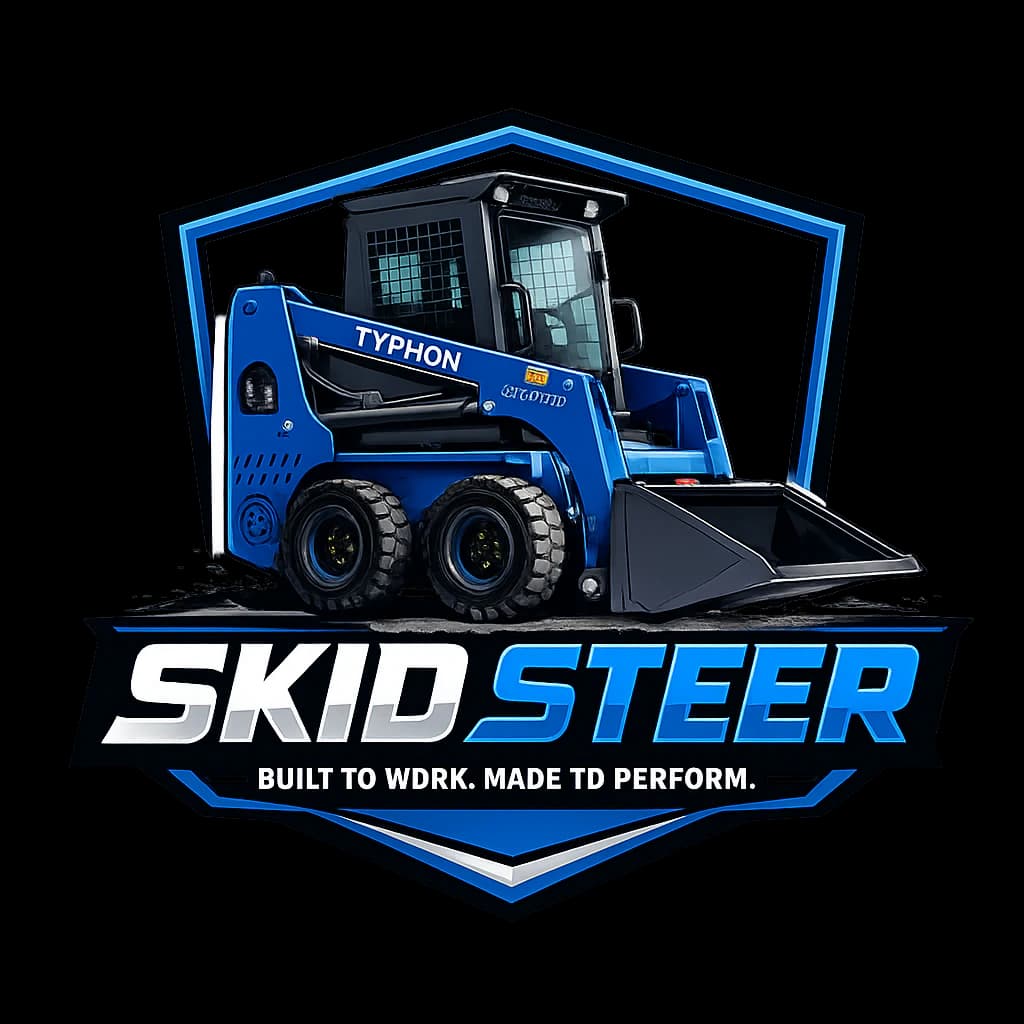
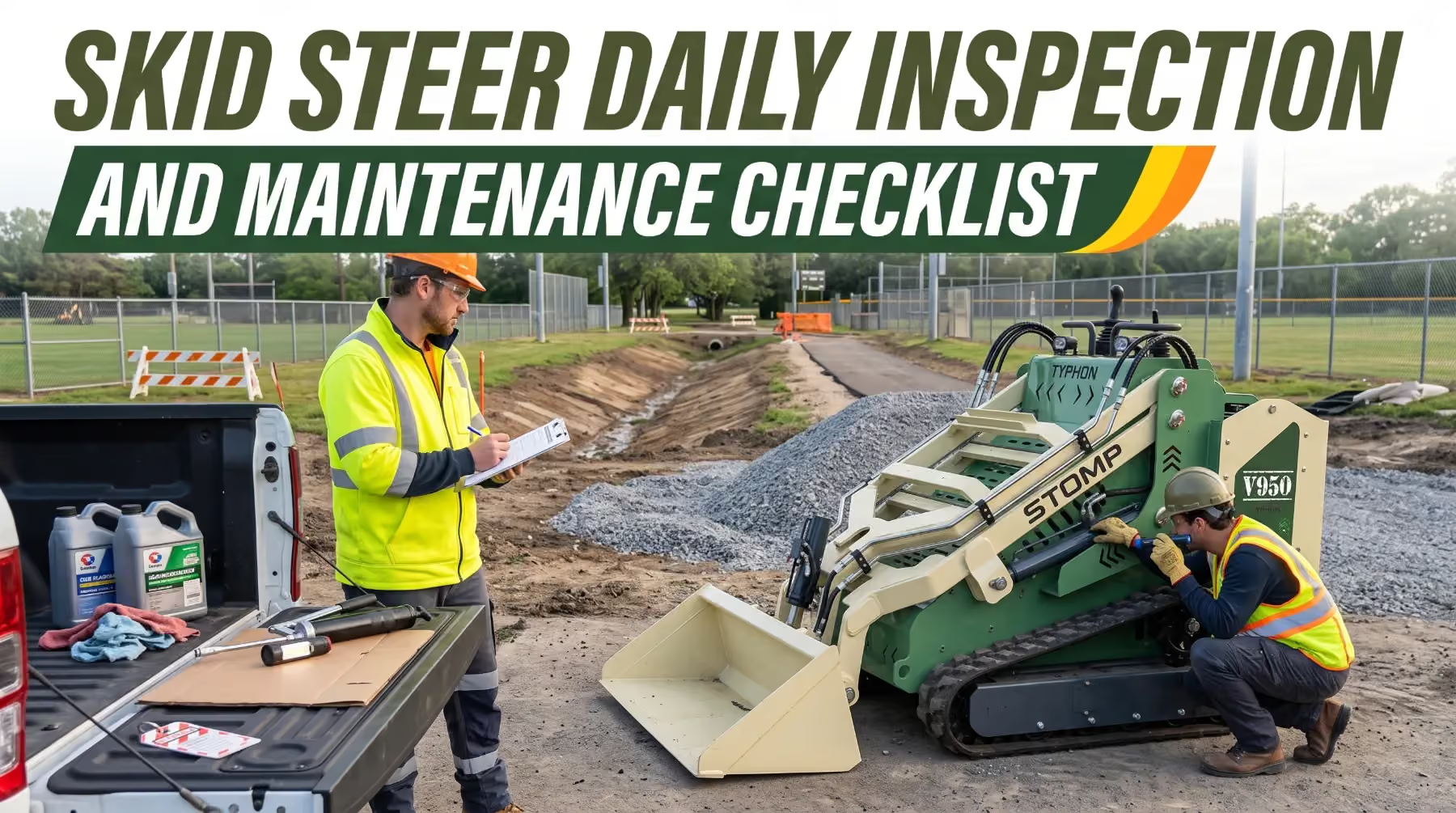
Daily skid steer operation places steady demands on mechanical components and safety systems during grading, digging, loading, and material transport. Damaged hydraulic hoses, loose tracks, accumulated debris, and faulty interlocks can cause equipment damage or unexpected movement if left unchecked. A consistent inspection routine helps identify problems before they interrupt work or create hazards.
Several key areas require attention, including the engine compartment, fluid levels, hydraulic hoses and fittings, loader arms, attachment connections, and operator controls. Wheeled models need tire and wheel inspections, while tracked machines require checks of track tension, sprockets, rollers, and undercarriage buildup. Seat bars, interlocks, alarms, and other installed safety systems should also be tested according to the manufacturer's instructions.
Regular cleaning, lubrication, fluid checks, and scheduled filter changes help limit component wear and maintain reliable performance. Operators should report visible leaks, damaged parts, or safety-related defects and ensure necessary repairs are completed before using the machine. Combining daily walkarounds with preventive maintenance reduces avoidable downtime and supports safer jobsite operation.
Engine and Fluid Level Checks
The engine powers every function on a skid steer, from travel and steering to loader arm movement and auxiliary attachments. Its reliability depends on clean fluids at the correct levels. Start every inspection with the machine parked on firm, level ground, the attachment lowered flat to the ground, the parking brake engaged, the engine off, and the key removed. If you must service the machine with the loader arms raised, engage the manufacturer's lift arm support device first. Never work beneath raised arms supported only by hydraulic pressure.
Check engine oil, coolant, fuel, hydraulic fluid, and any other specified fluids according to the manufacturer's procedure. Read the engine oil level on the dipstick and look at its condition. Milky oil can point to coolant contamination, while gritty or very dark oil may signal a filtration problem or overdue service. Check coolant at the reservoir only when the engine is cool, since a hot radiator cap can release pressurized coolant and cause serious burns. Read the hydraulic fluid level at the sight glass or dipstick with the loader arms lowered, as most manuals require. Cloudy or foamy hydraulic fluid often means water or air has entered the system.
Look closely around the engine compartment for signs of leakage, such as fresh drips, wet fittings, and oily residue that attracts dust. Inspect accessible hoses and belts for cracks, fraying, and looseness. Check the air filter restriction indicator, because dusty excavation and grading work loads filters quickly. Pay attention to how fluid levels change from day to day. A level that drops faster than normal almost always points to a leak, even before you can see one. Use only the oils, coolants, and hydraulic fluids the manufacturer recommends, and keep shop containers clearly labeled.
Key takeaway: Check engine oil, coolant, fuel, and hydraulic fluid according to the manufacturer's procedure, and look for leaks around the engine compartment, since correct levels and early leak detection support reliable operation.
Tires, Tracks, and Undercarriage
Every load a skid steer carries passes through its tires or tracks to the ground. These components control traction, steering response, and how stable the machine feels with a full bucket. Because skid steers steer by varying the speed of each side, ground-contact components take more scrubbing and side loading than those on many other machines. A single damaged tire or poorly tensioned track can change how the entire machine handles.
On wheeled skid steers, inspect each tire before every shift. Where the machine uses air-filled tires, check inflation against the manufacturer's specification with a gauge, since uneven pressure can make the machine pull to one side and affect stability. Look for cuts, punctures, embedded nails or rebar, bulges, and sidewall damage. Note uneven wear patterns, which often point to incorrect pressure or frequent hard turns on abrasive surfaces. Confirm that every wheel nut is present and tight, and inspect the rims for bends or cracks. Replace any tire with exposed cords or serious sidewall damage rather than continuing to run it.
On tracked models, the undercarriage needs the same close attention. Check track tension according to the manufacturer's procedure, because a loose track can come off the rollers and an overtight track speed wear on sprockets, idlers, and bearings. Inspect rubber tracks for cuts, cracks, missing lugs, and exposed steel cords. Look over the rollers, idlers, and drive sprockets for flat spots, leaking seals, and hooked teeth. Clear packed mud, clay, and stone from the undercarriage, since hardened material changes track tension and can force a track off its guides. Never stand in front of a track adjuster fitting while adjusting tension, as the grease inside is under high pressure.
Key takeaway: Inspect tires for damage, wear, and correct inflation, or check tracks and undercarriage for damage, tension, and buildup, since ground-contact components directly influence traction and machine movement.
Hydraulic Hoses and Connections
Hydraulics drive the loader arms, the attachment tilt, and nearly every powered attachment a skid steer runs. Those systems operate under high pressure, and the hoses that carry fluid flex constantly as the arms rise, lower, and tilt. A damaged hose or loose fitting can cause slow or erratic movement, and a hose that fails under pressure creates a serious safety hazard.
Inspect every visible hose, fitting, and cylinder during each walkaround. Look for cracks, abrasion, kinks, bulges, and spots where a hose has worn through its outer cover. Pay close attention to areas where hoses bend at the loader arm pivots or pass near sharp edges and moving parts. Check fittings for dampness, loose connections, and oily residue. Examine the lift and tilt cylinder rods for scoring, nicks, and bends, and look for fresh oil around the rod seals.
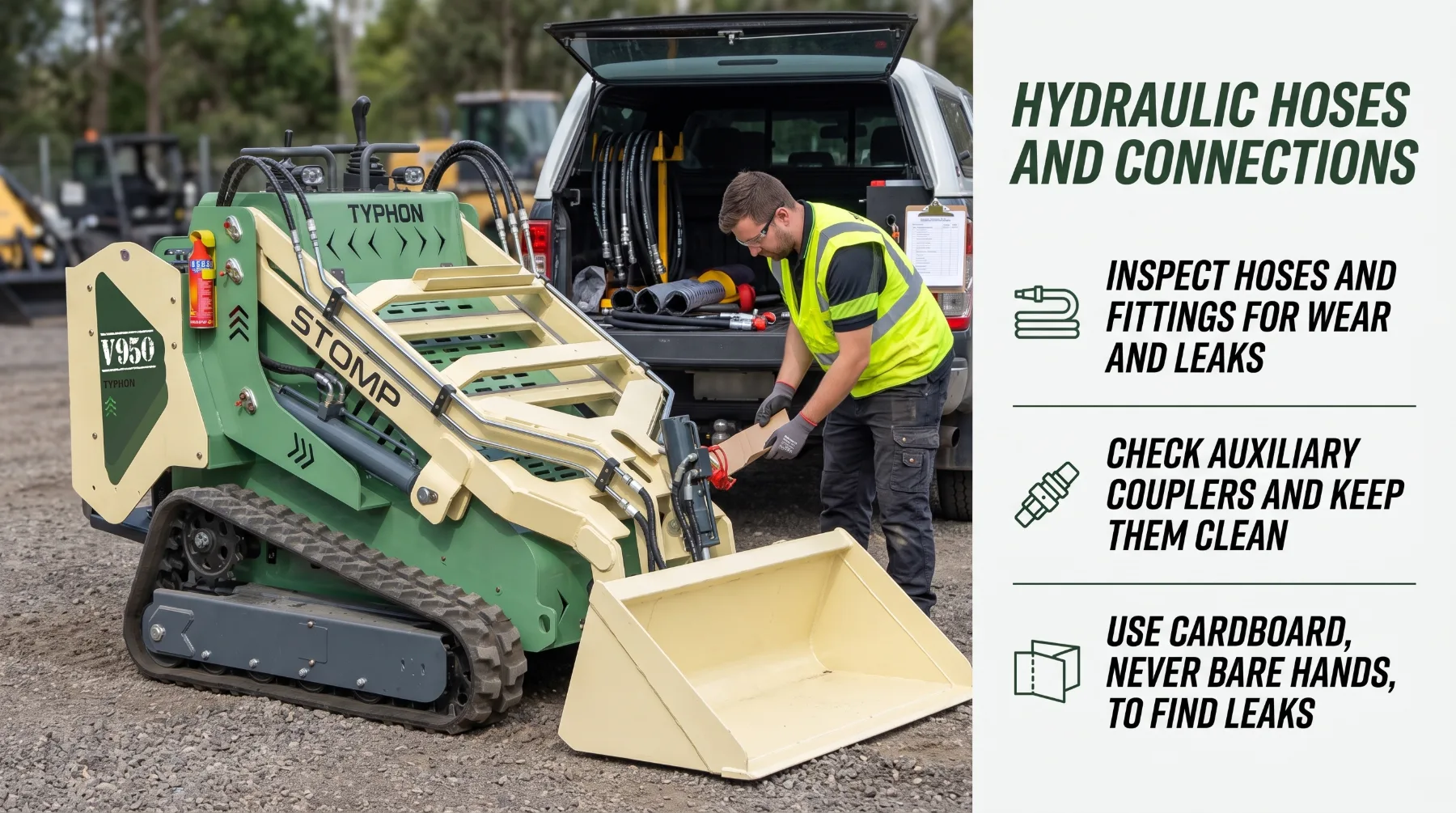
Auxiliary hydraulics deserve special attention because they run attachments such as augers, trenchers, grapples, and breakers. Inspect the auxiliary hoses and quick couplers at the front of the loader arms for damage, leaks, and worn seals. Keep coupler caps in place when no attachment is connected, and wipe couplers clean before every connection to keep dirt out of the system.
Never use bare hands to search for a pressurized hydraulic leak. Pressurized fluid can penetrate skin and cause serious injury that requires immediate medical attention. Use a piece of cardboard or wood instead, and wear gloves and eye protection. Before loosening any fitting or disconnecting hoses, lower the attachment to the ground and relieve system pressure according to the manufacturer's procedure. Replace damaged hoses with parts rated for the system, and add protective sleeves where hoses rub.
Key takeaway: Inspect hydraulic hoses, fittings, cylinders, and auxiliary connections for leaks, cracks, and abrasion every day, and never use bare hands to search for a pressurized leak.
Loader Arms and Attachment Security
The loader arms carry every load the skid steer lifts, while the attachment is where that load meets the work. Together, they withstand repeated stress from digging, lifting, carrying, and moving heavy materials across uneven ground. Regular inspection helps keep the arms moving smoothly, prevents excessive wear at connection points, and ensures attachments remain firmly secured throughout the shift. Before starting work, inspect the loader arms, pivot points, pins, and mounting areas for visible damage, looseness, or signs of unusual wear. Look closely for cracks near welds, cylinder mounts, and sections that may have struck walls, trucks, or debris during previous operations. Check each pin for missing retaining bolts or clips, and look for fresh metal shavings around the joints, which may indicate worn bushings or movement between components.
Examine the attachment mounting plate, locking wedges, and connection points to confirm that the bucket, forks, or other equipment is properly seated and secured. During a slow test movement, raise and lower the arms while listening for clunking, grinding, or unusual noises as the components change direction. Watch for uneven movement, excessive play, or hydraulic leaks around the lift cylinders and their connections. Grease each pivot according to the manufacturer's maintenance schedule, wiping fittings clean before applying grease and replacing any fitting that will not accept lubrication. If cracks, damaged pins, loose mounting components, or abnormal movement are discovered, stop using the machine until the affected parts have been inspected and repaired. Consistent checks of the loader arms and attachments help maintain lifting stability, reduce unexpected downtime, and keep materials secure during daily construction and material-handling tasks.
Attachment security comes next. Confirm that the attachment is compatible with the machine, matched to its quick-attach system, and within its rated operating capacity. Clean mud and debris from the coupler and the attachment's mounting plate before every connection, since packed material can stop a locking pin or wedge from engaging fully. Engage the locking levers or powered lock according to the manufacturer's instructions. Then visually confirm that both pins or wedges pass completely through the attachment's slots, and test the connection with light downward pressure before lifting a load.
When using powered attachments, check that hydraulic couplers are fully seated and that hoses are routed away from pinch points and moving parts. Inspect the attachment itself for bent tines, worn cutting edges, cracked welds, and damaged teeth, and repair any problem before the attachment returns to work.
Key takeaway: Inspect loader arms, pivots, and pins for damage or looseness, and confirm every attachment is compatible, fully locked, and correctly connected before operation.
Controls and Safety Equipment
A skid steer's controls and safety equipment help protect the operator and nearby workers. Checking these systems before operation helps identify faults that could lead to unexpected movement, loss of control, or jobsite accidents.
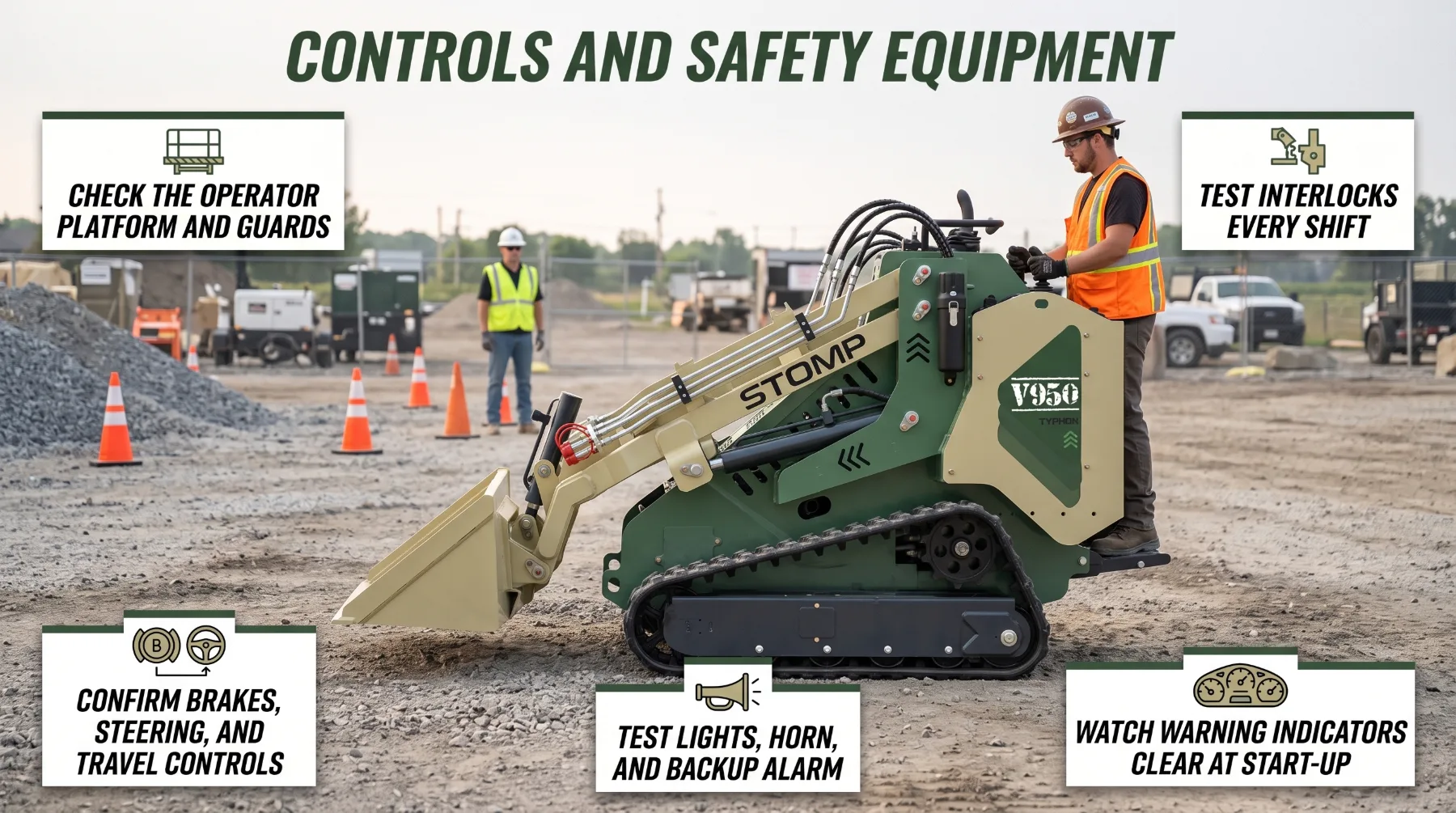
- Seat Belt and Operator Protection: Inspect the seat belt, seat bar, cab structure, and emergency exit to ensure they are secure and in good condition.
- Safety Interlocks: Test safety interlocks according to the operating manual. Never bypass them, and repair any faulty system before using the machine.
- Brakes and Travel Controls: Check steering, joysticks, pedals, and parking brakes to confirm the machine moves smoothly and stops as expected.
- Warning Indicators and Gauges: Check dashboard warnings and gauges during startup. Address any unresolved alerts before beginning work.
- Lights, Alarms, and Visibility Aids: Test work lights, the horn, and backup alarm. Clean and adjust mirrors and cameras to improve awareness around the machine.
If any control or safety system fails, stop and keep the machine out of service until it has been properly repaired.
Key takeaway: Test the seat belt, seat bar, interlocks, brakes, steering, warning indicators, lights, and alarms before every shift, and address any abnormal control or failed safety system before work begins.
Cleaning and Scheduled Maintenance
Skid steers work in mud, dust, clay, and debris that collect around the engine, cooling package, loader arms, and undercarriage throughout the day. Left in place, that buildup hides cracks and leaks, traps moisture against metal, pushes grease out of joints, and blocks airflow through the radiator and coolers. In the engine compartment, dry leaves, straw, and debris resting near hot components also create a fire risk.
Clean the machine at the end of each shift while the material is still soft. Before cleaning near moving components, shut down and secure the machine. Park on firm, level ground, lower the attachment, engage the parking brake, shut off the engine, and remove the key. If the loader arms must be raised to reach the engine compartment, engage the lift arm support device first. Scrape packed material from the undercarriage, tracks, and wheel areas, and clear debris from around cylinders, pivots, and hose routing. Blow out radiator and cooler screens with compressed air, and remove accumulated debris from the engine compartment and belly pan. Avoid close-range high-pressure washing near seals, bearings, and electrical components, since water can be forced where it doesn't belong.
Daily care keeps the machine running, while scheduled maintenance keeps it dependable over its working life. Check the manufacturer's maintenance schedule, which is usually based on operating hours. Typical intervals cover lubrication of pivots and bearings, replacement of engine oil, fuel, air, and hydraulic filters, and changes of engine oil, hydraulic fluid, and coolant. They may also include detailed inspections of drive components, chains, hoses, and undercarriage parts. Track hours with the hour meter, and record every inspection, service task, and repair in a maintenance log. Good records reveal recurring problems early, support warranty requirements, and help you plan service around project schedules.
Key takeaway: Clean the machine safely at the end of each shift, and follow the manufacturer's schedule for lubrication, filter replacement, and fluid changes to keep the skid steer dependable and ready for work.
Conclusion
A daily skid steer inspection is one of the simplest and most effective ways to protect your operators, your crew, and your schedule because it catches problems affecting engine performance, hydraulics, attachments, ground contact, and operator safety while they are still small and easier to repair. Checking fluid levels, examining visible leaks, and inspecting the engine compartment helps maintain reliable performance, while reviewing tires, tracks, rollers, and the undercarriage protects traction and stable movement across different working surfaces. Careful examination of hydraulic hoses, fittings, and auxiliary connections helps prevent leaks, pressure loss, and unexpected equipment failures, while confirming that loader arms are sound and attachments are fully locked keeps every load secure during lifting, transporting, and dumping. Testing the seat belt, seat bar, safety interlocks, brakes, warning indicators, lights, and alarms ensures the machine responds as expected before entering an active work area. Operators should also check the bucket or other attachment for cracks, worn cutting edges, loose pins, and damaged connection points that could affect handling or create additional hazards. End-of-shift cleaning removes dirt and debris that can hide developing damage, while recording inspection findings and following the manufacturer's maintenance schedule helps keep the skid steer dependable throughout its working life. Building these checks into the start of every shift encourages consistent operating habits, gives maintenance teams time to address minor concerns, and reduces the risk of unexpected breakdowns during important tasks. If a serious defect is discovered, the machine should remain out of service until the problem has been properly repaired and its safe operation confirmed. When you make every walkaround thorough, document what you find, and ensure necessary repairs are completed before the skid steer returns to work, you reduce downtime, extend equipment life, protect your crew, and support safer, more consistent construction operations.
Frequently Asked Questions
What should be checked before starting a skid steer?
Before starting a skid steer, inspect fluid levels, visible leaks, tires or tracks, hydraulic hoses, loader arms, attachments, controls, and safety equipment. Check for loose hardware, damaged components, and debris that could interfere with operation. Test the seat bar interlock, brakes, lights, and alarms according to the manufacturer's instructions. Confirm that the attachment is properly secured and that the work area is clear of people and obstacles before moving the machine.
How often should a skid steer be inspected?
Operators should complete the required pre-operation inspection before each shift or whenever the machine is prepared for use. Check key components such as fluids, hoses, tires or tracks, attachments, and safety devices for damage or abnormal conditions. More detailed servicing should follow the manufacturer's maintenance schedule, which is commonly based on operating hours. Keep inspection and service records to track recurring issues and help plan maintenance before problems interrupt work.
Why should hydraulic hoses be checked every day?
Hydraulic hoses should be checked daily because damage, wear, or leaks can affect attachment performance and create serious hazards. High-pressure hydraulic fluid can penetrate the skin, even through a small leak. Inspect hoses, fittings, and connections for cracks, abrasion, bulging, or loose components. Never use your hand to locate a suspected leak. Use cardboard or another suitable method, keep clear of pressurized lines, and have damaged hoses repaired or replaced before operating the machine.
What should happen if a serious defect is found?
Do not operate the skid steer if a serious defect affects its safety or function. Stop the machine, secure it according to the manufacturer's procedures, and report the problem to the responsible supervisor or maintenance personnel. Tag the machine out of service so others do not use it accidentally. The defect should be assessed and repaired by qualified personnel, and the machine should be inspected before returning to operation. Never bypass safety devices or continue working with a known serious fault.