
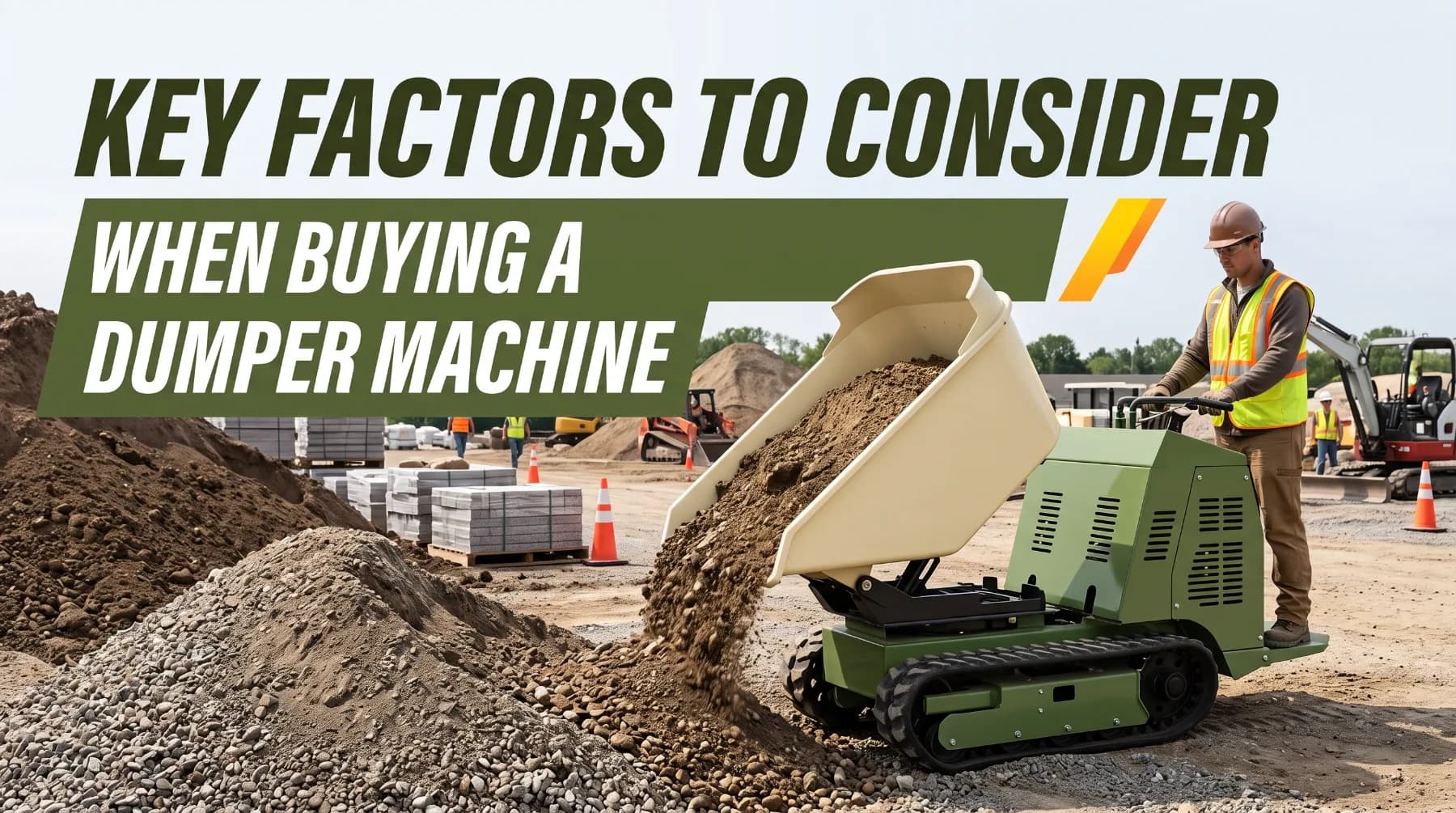
Buying the wrong dumper can slow your entire operation and cost you far more than the purchase price. A machine that carries too little forces extra trips, while one that cannot reach your work area sits idle when you need it most. The right dumper matches your material, your site, and your daily workload with precision. That match is what keeps crews productive and projects on schedule. Getting it right means looking past the price tag and weighing the factors that actually determine performance on the ground. This guide walks you through the five most important considerations, so you can invest with confidence and choose a machine that earns its keep on every job.
Load Capacity and Material Requirements
Load capacity is the first thing to nail down, because it shapes how efficiently the machine moves material across your site. Start by thinking about how much material the dumper needs to carry on each trip. A payload that fits your typical loads reduces the number of runs your crew makes, which saves fuel, time, and wear on the machine. Undersize the capacity and you multiply trips unnecessarily. Oversize it beyond your needs and you pay for hauling power that never gets used.
Material type matters just as much as volume. Different materials place different demands on a dumper, both in weight and in how they behave in the cargo box:
- Soil can vary widely in weight depending on moisture, so wet loads weigh far more than dry ones
- Gravel and sand are dense and settle heavily, demanding a machine rated for concentrated weight
- Construction debris is often bulky and awkward, calling for both volume and durable box construction
Matching payload capacity to your most common materials keeps the machine working within its designed limits. Running a dumper consistently overloaded strains the engine, drivetrain, and hydraulics, which shortens its service life and raises repair costs.
Think realistically about your typical loads rather than the heaviest one you might ever face. A machine sized for your everyday work, with a sensible margin for occasional heavier tasks, delivers the best balance of efficiency and reliability. When capacity aligns with the materials you actually move, every trip counts and the dumper performs dependably shift after shift.
Machine Size and Jobsite Access
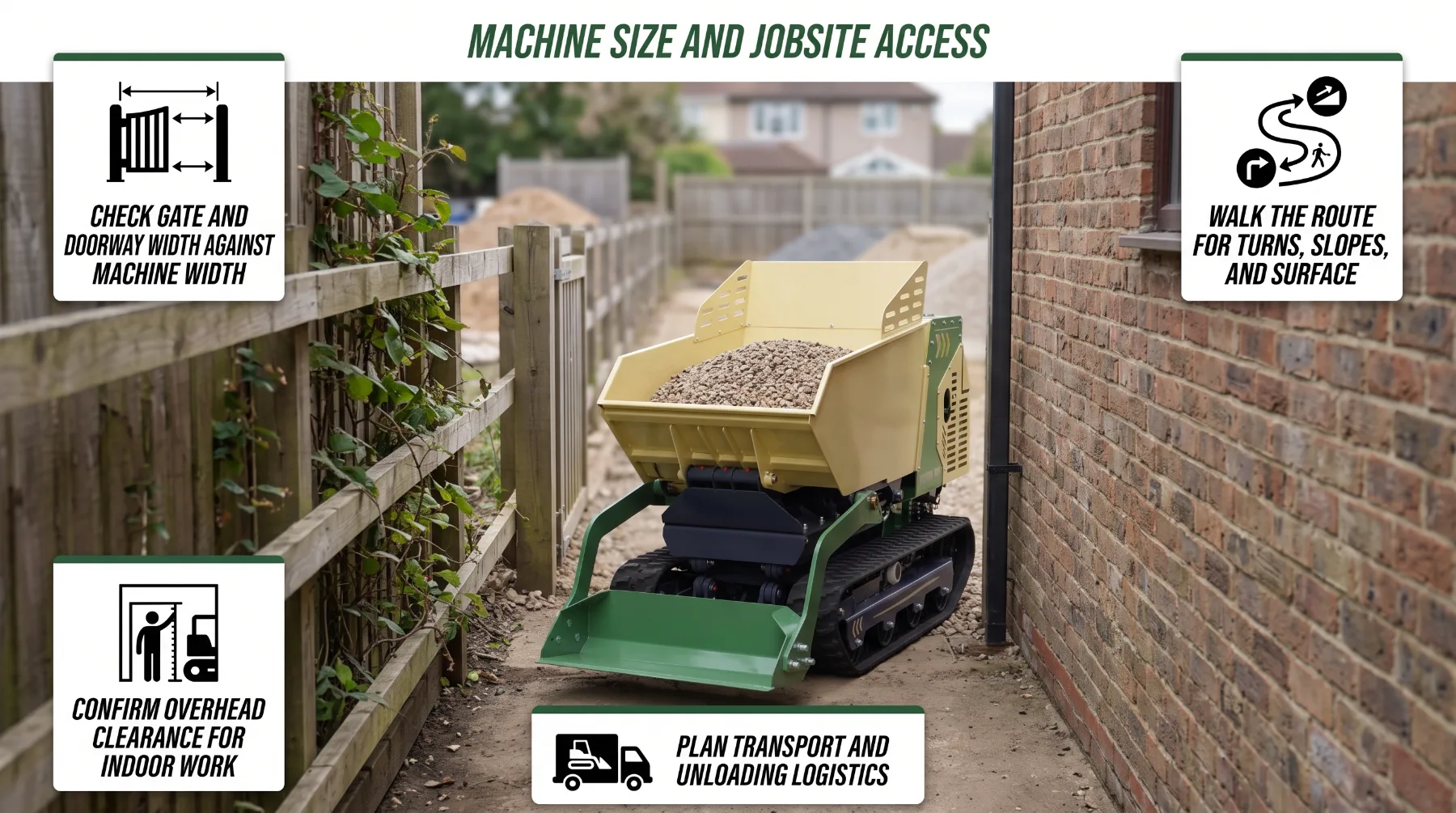
Size determines where a dumper can go, and access is often the deciding factor operators underestimate until they are stuck at the gate. A compact dumper can be far easier to operate in narrow spaces, restricted pathways, and smaller jobsites. Tight backyards, indoor renovations, dense urban projects, and landscaped areas all reward a machine that maneuvers cleanly through confined zones. When space is limited, the ability to turn corners and thread through doorways keeps work flowing where a larger machine would stall.
Before you commit, check the machine's overall dimensions against the access routes it will use regularly. Walking the route the dumper must travel reveals constraints that specifications alone can miss. Pay attention to a few key checkpoints:
- Gate and doorway width compared to the machine's overall width
- Pathway conditions including turns, slopes, and surface stability
- Overhead clearance for indoor work or areas with low obstructions
- Transport logistics covering how the machine gets delivered and unloaded
There is a genuine tradeoff to weigh here. Larger dumpers offer more capacity, but that scale becomes a liability when access is restricted. A machine that cannot reach the work area delivers no value, regardless of how capable it is otherwise.
Compact machines also tend to be lighter and simpler to transport, which lowers the cost and effort of moving equipment between sites. For contractors working across multiple small jobs, that convenience adds up quickly. Match the machine's footprint to the tightest point it must pass through on a regular basis, and you avoid the frustration of equipment that looks right on paper but cannot get to work.
Engine Power and Performance
Engine power determines whether a dumper handles its workload with ease or struggles through every demanding cycle. Power directly affects the machine's ability to haul heavy loads, climb inclines, and perform under tough operating conditions. A dumper that runs out of power on a grade or bogs down under a full load slows your entire operation and puts extra strain on its components. Choosing the right power level means matching the engine to the workload and terrain you expect to face.
Consider how and where the machine will work before settling on an engine. Different conditions place very different demands on power output. A dumper hauling dense material up steep grades all day needs considerably more capability than one moving light loads across flat, firm ground. Sustained heavy work generates the greatest demand, so plan for your toughest regular task rather than your lightest.
Several conditions raise the power a dumper needs to perform reliably:
- Steep inclines that require sustained pulling force under load
- Heavy or dense materials that push the machine toward its capacity limits
- Soft or uneven terrain that demands extra effort to keep moving
- Long or continuous work cycles that keep the engine near peak output
An engine matched to your workload delivers consistent performance without overworking itself. Adequate power also gives you a margin for the occasional demanding job, so the machine does not strain when conditions turn difficult.
It helps to think about the future too. If your workload is likely to grow more demanding, choosing a dumper with a little power headroom protects your investment and keeps the machine capable as your projects expand.
Dumping System and Cargo Box
The dumping system is where a dumper earns its name, and its design has a direct effect on how efficiently you load and unload. Look closely at the cargo box capacity, the dumping angle, and the dumping mechanism to ensure they suit the material-handling tasks you have in mind. A practical, well-matched dumping system makes the cycle of filling and emptying faster and smoother, which translates into real productivity gains across a busy day.
Cargo box capacity should align with the load capacity you have already identified, so the box holds the volume of material you plan to move without spilling or overloading. Beyond raw volume, the box design affects how well it handles your specific materials. A box built for heavy aggregate needs robust construction, while one handling loose debris benefits from a shape that empties cleanly.
The dumping angle and mechanism deserve careful attention, since they determine how completely and quickly the box empties. Consider the following when evaluating a dumping system:
- Dumping angle steep enough to fully release sticky or compacted materials
- Dumping direction whether front, side, or high tip suits your unloading needs
- Mechanism type and how smoothly and reliably it operates under load
- Box material and durability to withstand abrasive or heavy loads over time
A dumping system that struggles to fully release material leaves residue behind and forces extra effort to clear the box. That wasted time compounds over many cycles. A system that empties cleanly and reliably, at an angle and in a direction that fits your workflow, keeps material moving and reduces the manual work your crew has to do. Matching the dumping system to your tasks ensures the machine supports the way you actually work.
Track or Wheel Configuration
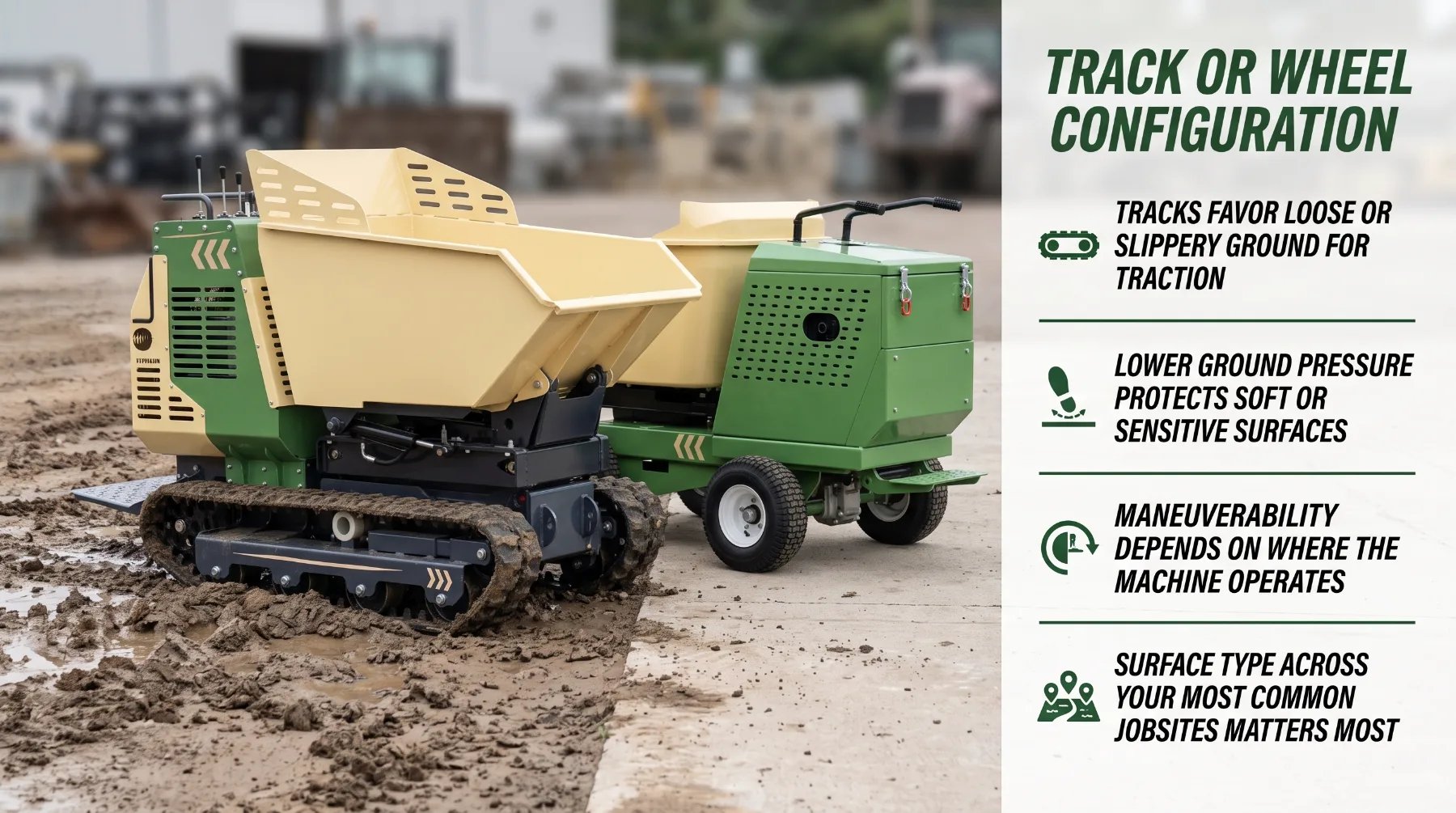
The choice between tracks and wheels shapes how a dumper performs across different terrain, and it is one of the most important decisions you will make. Each design offers distinct advantages depending on your jobsite conditions, so the right configuration depends on the ground you work on most often. Before choosing, weigh traction, ground pressure, maneuverability, and surface type against the realities of your typical projects.
Track-driven dumpers excel on difficult ground. They spread the machine's weight across a wider footprint, which lowers ground pressure and improves traction on soft, muddy, or uneven surfaces. This makes tracks a strong choice for sites where wheels might slip or sink, and their gentler footprint causes less damage to delicate surfaces like lawns or freshly graded ground. On slopes and unstable terrain, that added grip and stability keeps the machine working safely and confidently.
Wheeled dumpers offer their own benefits, particularly on firm, level surfaces. They tend to move faster, maneuver easily in open areas, and often cost less to maintain. Consider these factors as you decide between the two:
- Traction needs, with tracks favoring loose or slippery ground
- Ground pressure requirements on soft or sensitive surfaces
- Maneuverability in the spaces where the machine will operate
- Surface type across your most common jobsites
There is a safety dimension woven through this choice as well. A configuration matched to your terrain keeps the machine stable under load, while a poor match can feel unpredictable on challenging ground. Assess the surfaces you face most honestly, then choose the design that keeps the dumper steady and productive. When the configuration fits your conditions, you gain both efficiency and confidence on every job.
Conclusion
Choosing the right dumper machine comes down to matching its capabilities to the work you actually do. Load capacity should fit the materials you haul most often, and the machine's size must clear the tightest access point on your regular routes. Engine power needs to handle your inclines and heaviest loads without straining, while the dumping system and cargo box should make loading and unloading efficient for your specific tasks. Finally, the track or wheel configuration must suit the terrain you face day in and day out.
Weigh these five factors together rather than fixating on any single spec or the purchase price alone. Start by mapping your typical workload, materials, jobsite conditions, and access routes, then evaluate each machine against that honest picture. A dumper chosen this way protects your investment, keeps your crew productive, and delivers dependable performance for years of hard work. Take the time to match the machine to the job, and it will reward you on every trip.
Frequently Asked Questions
**1. How do I choose the right load capacity for a dumper?
**Base your choice on the materials you move most often and how much you carry on a typical trip. Dense materials like gravel and sand weigh more than they appear, and wet soil can be significantly heavier than dry. Size the capacity for your everyday work with a sensible margin for occasional heavier loads. Avoid choosing a capacity you will constantly exceed, since running a dumper overloaded strains the engine and drivetrain and shortens its service life.
**2. Why does machine size matter so much when buying a dumper?
**Size determines where the machine can actually go and operate. A compact dumper maneuvers easily through narrow gates, tight pathways, and confined work areas where a larger machine would be stuck. Before buying, measure your regular access routes and compare them to the machine's overall dimensions. Even a highly capable dumper delivers no value if it cannot reach the work area, so matching the footprint to your tightest access point is essential.
**3. How much engine power do I really need?
**The right power level depends on your workload and terrain. Hauling heavy or dense materials, climbing steep inclines, and working on soft ground all demand more power than light loads on flat, firm surfaces. Plan for your toughest regular task rather than your lightest, and choose an engine with a small margin of headroom. This ensures the machine performs consistently without straining, and it keeps the dumper capable if your work becomes more demanding over time.
**4. What should I look for in a dumping system?
**Focus on cargo box capacity, dumping angle, and the dumping mechanism. The box capacity should match your load needs, while the dumping angle must be steep enough to fully release sticky or compacted materials. Consider the dumping direction, whether front, side, or high tip, and confirm the mechanism operates smoothly and reliably under load. A well-matched dumping system empties cleanly, reduces manual clearing, and speeds up your loading and unloading cycle across a busy day.
**5. Should I choose a track or wheel configuration?
**It depends on your terrain. Track dumpers spread weight over a wider footprint, offering better traction and lower ground pressure on soft, muddy, or uneven surfaces, plus a gentler footprint on delicate ground. Wheeled dumpers move faster, maneuver well in open areas, and often cost less to maintain on firm, level surfaces. Assess the ground you work on most often, then choose the configuration that keeps the machine stable, productive, and safe under your typical conditions.