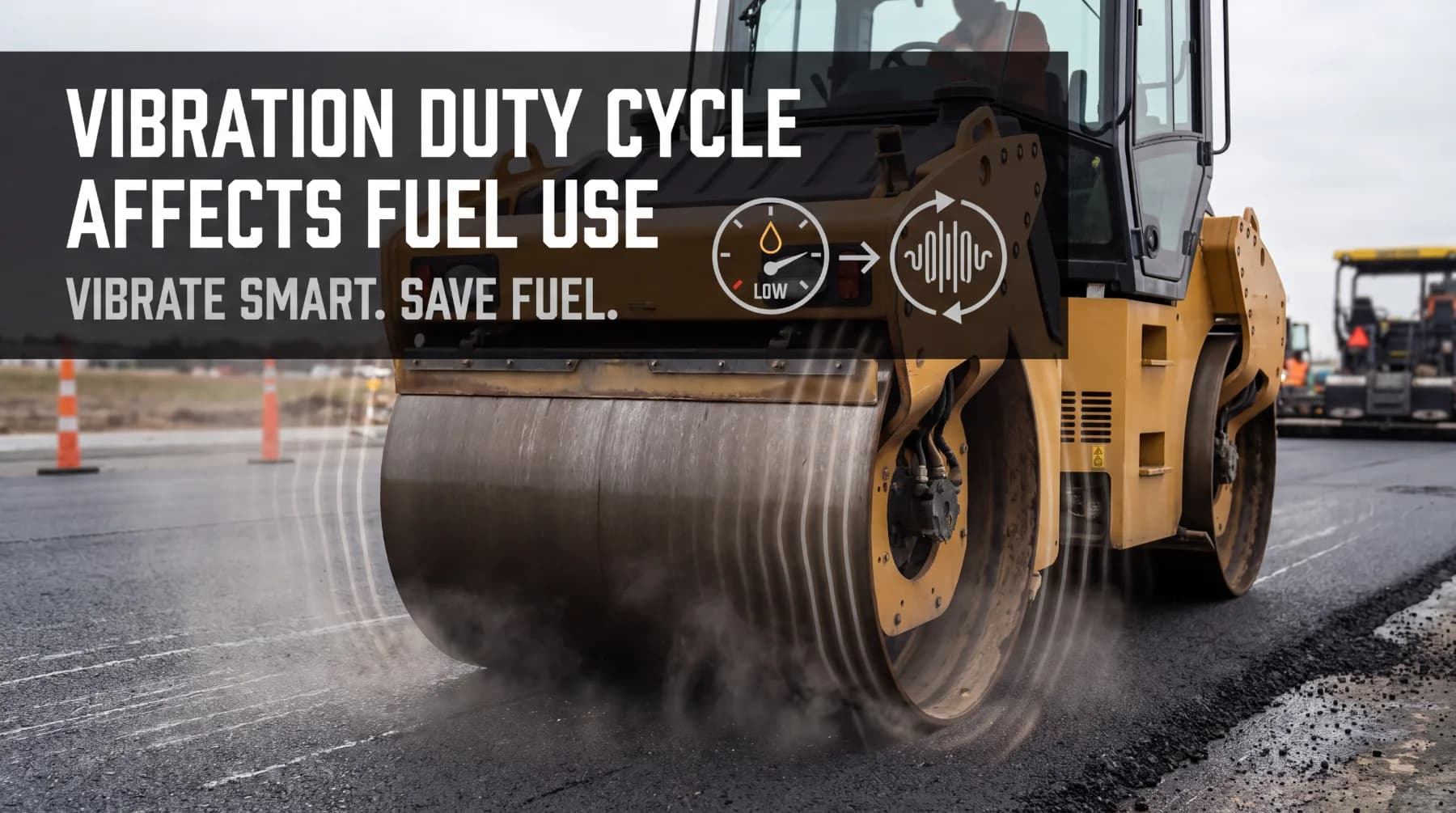
Fuel is one of the largest ongoing costs of running a road roller, and how you use the vibration system has a direct effect on how much of it you burn. The vibration duty cycle, meaning how often, how hard, and how long the drum vibrates, shapes the load on the engine throughout the workday. Manage that duty cycle well, and the roller delivers strong compaction while keeping fuel use in check. Manage it poorly, and the machine burns fuel on passes and vibration it never needed. This guide explains how vibration duty cycle affects fuel consumption, so you can plan compaction work that stays both effective and efficient.
Vibration Frequency and Engine Load
Vibration frequency describes how many times per minute the drum's eccentric weights complete a rotation to shake the drum, and it has a direct bearing on how hard the engine has to work. A higher frequency means the vibration system cycles faster, which raises the power it draws. The engine drives that system, so as frequency climbs, the engine must supply more power to keep the drum vibrating at the set rate. That added power demand shows up as higher fuel consumption, because the engine burns more fuel to sustain the faster vibration.
The relationship is worth understanding because frequency is not simply a matter of more being better. Each material and lift thickness responds best to a particular frequency, and running higher than the job requires wastes energy without improving the result. When the frequency matches the compaction task, the engine works within a sensible range and converts fuel into useful compaction rather than unnecessary shaking.
Consider how frequency influences engine load in practice:
- Higher frequency raises the power the vibration system draws and increases fuel use.
- Matched frequency keeps the engine working efficiently for the material at hand.
- Excessive frequency burns extra fuel without adding compaction value.
The engine also has to hold that frequency consistently under load. When the drum meets resistance, the system needs steady power to maintain the set vibration rather than letting it drop. An engine with enough capacity sustains the frequency smoothly, which keeps both compaction quality and fuel use predictable. Choosing a frequency suited to the work, and running a machine with the power to hold it steadily, is the first step toward controlling fuel consumption during vibratory compaction.
How Vibration Time Affects Fuel Consumption
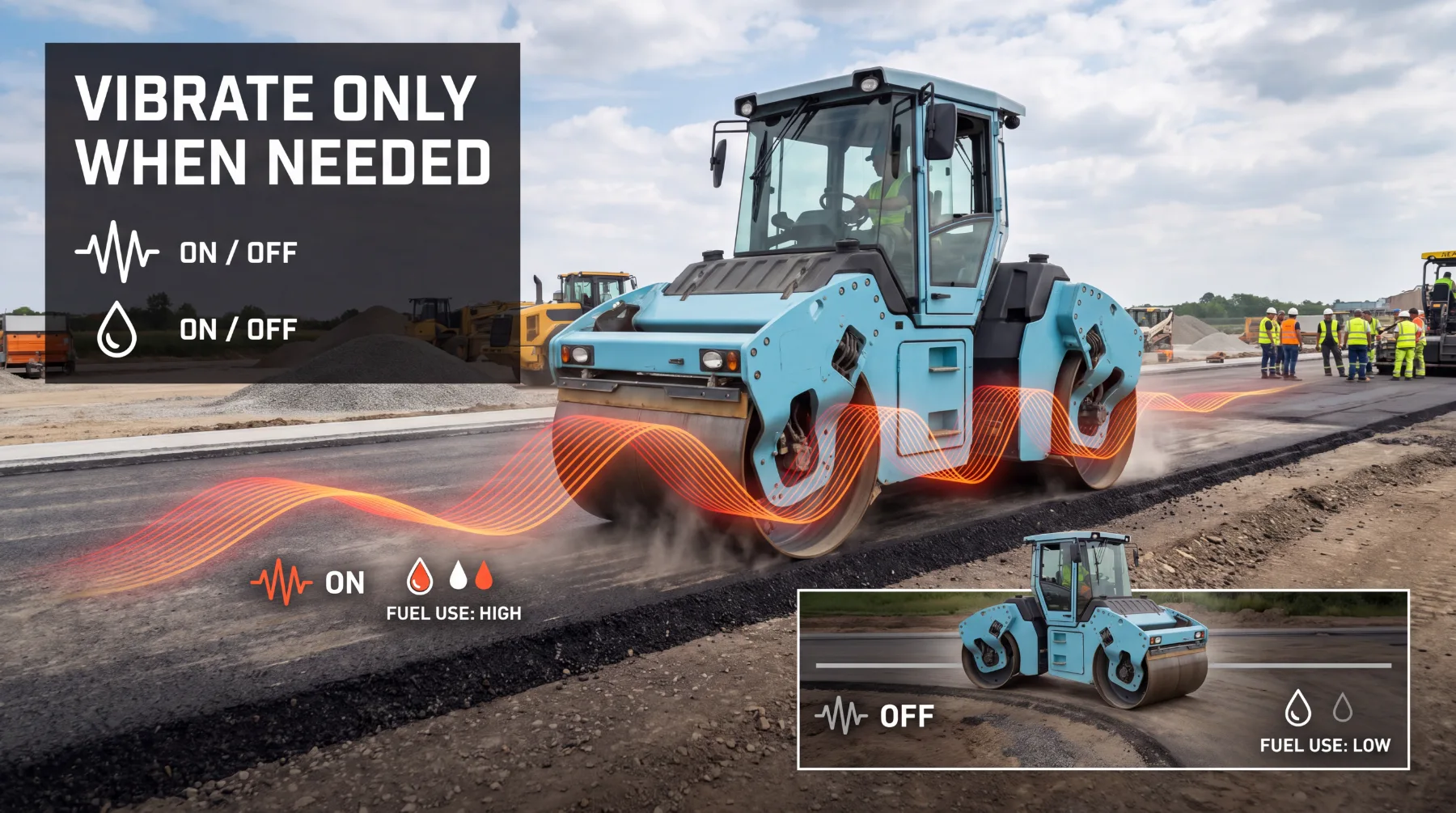
The length of time the vibration system runs is one of the clearest drivers of fuel consumption. Every minute the drum vibrates, the engine supplies energy to keep the eccentric weights spinning, and that energy comes from fuel. The longer the system operates, the more fuel the machine uses. This makes total vibration time a factor worth watching closely, because it accumulates across every pass and every hour of the shift.
Continuous vibration over extended periods naturally consumes more fuel than intermittent use. A roller that keeps its vibration engaged for long, uninterrupted stretches draws steady power the entire time, while a machine that vibrates only when it is actively compacting uses fuel more selectively. The difference may seem small on a single pass, but over a full day of compaction the gap between continuous and intermittent operation adds up to a meaningful amount of fuel.
Here is where vibration time tends to add unnecessary fuel use:
- Vibrating during travel to and from the work area, when no compaction is happening.
- Vibrating over already-compacted ground that has reached the required density.
- Leaving vibration engaged during pauses, turns, or repositioning.
None of these situations contribute to the finished result, yet each one burns fuel. An operator who engages vibration only when the drum is compacting material that still needs it keeps total vibration time down and fuel use with it. This does not mean rushing the work or cutting passes that the compaction genuinely requires. It means being deliberate about when the vibration system runs, so the machine spends its energy on productive compaction rather than on shaking that adds nothing. Treating vibration time as a resource to manage, rather than something to leave running by default, is a practical way to hold fuel consumption in check across the working day.
Soil Conditions Change Vibration Demand
The material a roller compacts has a strong influence on how much power the vibration system draws, and therefore on fuel consumption. Different soils and materials present different levels of resistance to the drum, and that resistance shapes the engine load. Hard, dense, or already-firm surfaces push back against the drum more than loose, soft material, which changes how hard the vibration system and the engine have to work to achieve the required compaction.
On dense or resistant surfaces, the drum meets more opposition as it vibrates, and maintaining consistent vibration performance under that resistance places a heavier load on the engine. The machine has to supply steady power to keep the drum working effectively against material that does not yield easily. Softer or looser materials, by contrast, compact more readily and generally place less sustained demand on the system, though the right approach still depends on reaching the target density.
Soil conditions affect vibration demand in several ways:
- Hard or dense material resists the drum and calls for consistent vibration under higher engine load.
- Loose or granular material often compacts more readily, changing how the system draws power.
- Moisture and material type influence how the surface responds and how much work compaction requires.
Because conditions vary from site to site and even across a single job, the fuel used for vibratory compaction is not fixed. The same roller can consume fuel at different rates depending on what it is compacting and how much resistance the drum encounters. Recognizing this helps operators and planners set realistic expectations for fuel use and adjust their approach to the material at hand. Matching vibration settings to the soil conditions, rather than applying one fixed setting everywhere, helps the machine achieve the required compaction while keeping engine load and fuel consumption suited to what the material actually needs.
Balancing Vibration With Travel Speed
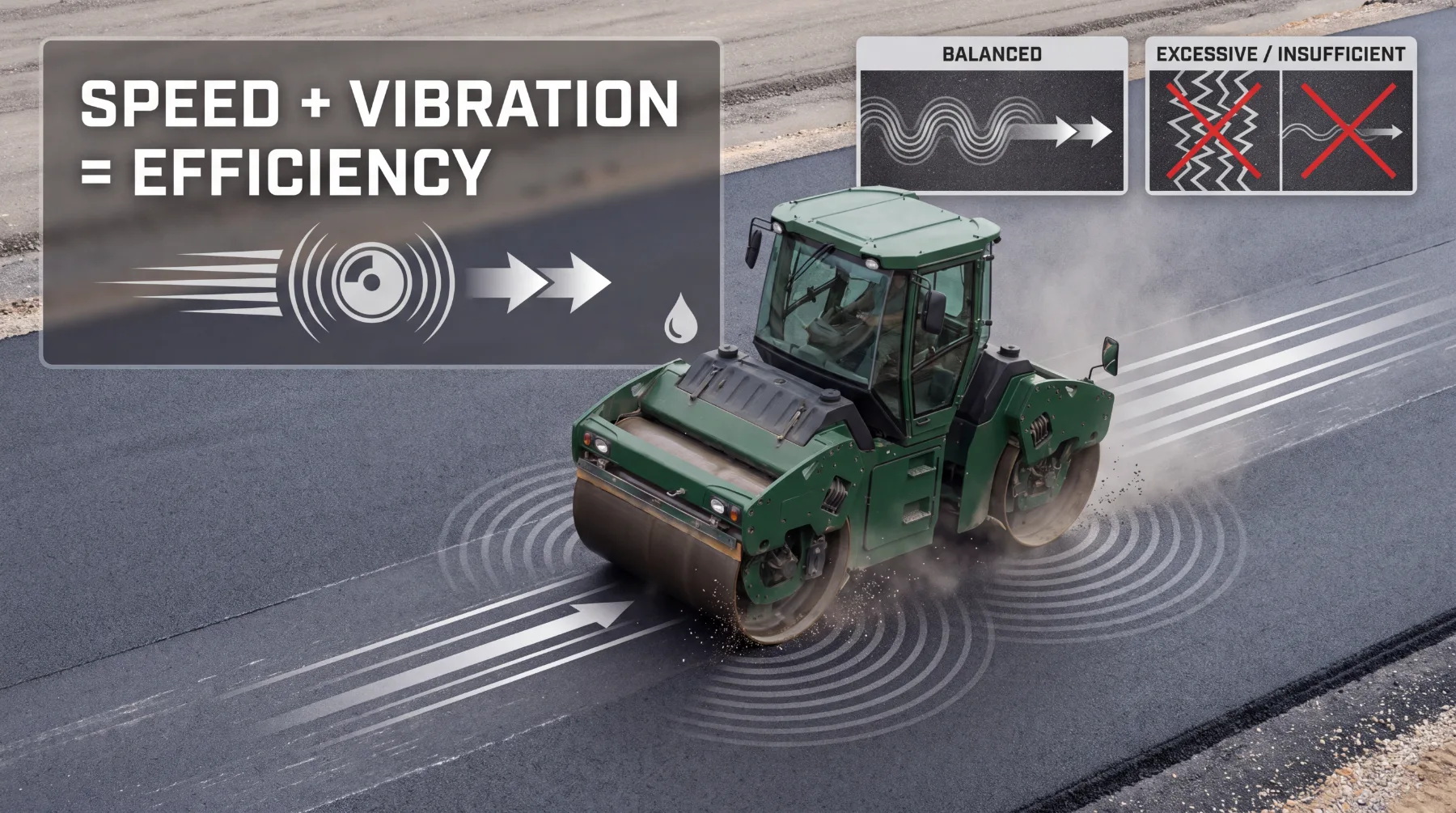
Vibration and travel speed work together to determine how effectively a roller compacts, and coordinating them well has a direct effect on fuel efficiency. Travel speed controls how quickly the drum moves across the surface, while vibration delivers the compacting energy. If these two are out of balance, the roller either covers ground too fast to compact properly or moves so slowly that it wastes energy and time. The right coordination achieves the required compaction in fewer passes, which saves fuel.
Travel speed matters because it sets how much vibratory energy each section of ground receives. Moving too quickly means the drum passes over the material without delivering enough impacts to reach the target density, which forces additional passes to finish the job. Each extra pass burns more fuel and adds time. Moving at an appropriate speed lets the drum apply the right amount of energy in a single pass or two, so the work is done efficiently rather than repeated unnecessarily.
Coordinating vibration with travel speed delivers efficiency in practical ways:
- Fewer passes to reach target density, which directly reduces fuel burned.
- Consistent coverage so no section is under-compacted and left needing rework.
- Steady progress that keeps the machine working productively rather than repeating effort.
The goal is to find the pairing of vibration and travel speed that achieves proper compaction without wasted effort. When the operator matches speed to the vibration output and the material, the roller compacts effectively while avoiding the fuel cost of redundant passes. Going too slow can waste fuel through unnecessarily long exposure, while going too fast wastes it through repeated passes. Striking the right balance keeps compaction quality high and fuel use sensible, letting the machine finish each area efficiently before moving on. This coordination is one of the most practical ways an operator can control fuel consumption without compromising the finished result.
Using the Right Duty Cycle for Efficiency
Bringing these factors together, the vibration duty cycle, meaning how the vibration system is used across the whole job, is where fuel efficiency is ultimately won or lost. A well-planned duty cycle runs vibration only when it is needed, so the machine delivers effective compaction while avoiding unnecessary load on the engine and the vibration system. Rather than leaving vibration engaged by habit, a thoughtful operator treats it as a tool to apply deliberately, matching its use to the real needs of each section of work.
Running vibration only when it serves a purpose is the heart of an efficient duty cycle. When the drum is compacting material that still needs density, vibration earns its fuel. When the machine is traveling, turning, repositioning, or passing over ground already at target density, vibration adds nothing and should be switched off. This selective approach keeps the engine and vibration system from working when there is no compaction benefit, which controls fuel consumption without sacrificing results.
A well-planned duty cycle brings several benefits together:
- Controlled fuel use because vibration runs only during productive compaction.
- Reduced system load that eases wear on the engine and vibration components over time.
- Effective compaction achieved without the waste of unnecessary vibration.
Planning the duty cycle means thinking through the job before and during the work. Consider which areas need vibratory compaction, how many passes the material actually requires, and when static rolling alone will suffice for finishing. Coordinating this plan with appropriate frequency, travel speed, and attention to soil conditions ties the whole approach together. When the duty cycle is matched to the job rather than left running by default, the roller delivers the compaction the project demands while keeping fuel consumption and machine strain under control. That deliberate management is what turns efficient operation into a dependable habit across every shift.
Conclusion
Vibration duty cycle sits at the center of how much fuel a road roller consumes during compaction. Higher vibration frequency raises engine load, longer vibration time steadily adds fuel use, and demanding soil conditions increase the power the drum draws to work through resistance. Coordinating vibration with the right travel speed reduces the passes needed to reach target density, and running vibration only when it serves a purpose keeps the engine and vibration system from burning fuel on effort that adds no value. Managing these factors together, rather than leaving vibration running by default, lets the roller deliver strong, reliable compaction while keeping fuel consumption sensible. When you plan each job with the duty cycle in mind, you protect both your results and your operating costs shift after shift.
Frequently Asked Questions
1. How does vibration frequency affect a road roller's fuel consumption?
Vibration frequency sets how fast the drum's eccentric weights cycle to shake the drum, and a higher frequency draws more power from the engine. Because the engine drives the vibration system, sustaining a faster vibration rate means burning more fuel. Frequency is not a case of higher always being better, since each material and lift thickness compacts best at a particular rate. Running a frequency higher than the job needs wastes fuel without improving compaction. Matching the frequency to the material keeps the engine working within a sensible range and converts fuel into useful compaction rather than unnecessary shaking, which helps control overall consumption.
2. Does running vibration continuously use more fuel than intermittent use?
Yes. Every minute the vibration system runs, the engine supplies energy to keep the eccentric weights spinning, and that energy comes from fuel. Continuous vibration over long, uninterrupted stretches draws steady power the entire time, while intermittent use engages vibration only during active compaction. The difference on a single pass may be small, but across a full day it adds up to a meaningful amount of fuel. Fuel is often wasted when vibration stays on during travel, over already-compacted ground, or during pauses and turns. Engaging vibration only when the drum is compacting material that still needs it keeps total vibration time and fuel use down.
3. Why do soil conditions change how much fuel the roller uses?
Different materials present different levels of resistance to the drum, and that resistance shapes the engine load. Hard, dense, or already-firm surfaces push back against the drum more than loose, soft material, so maintaining consistent vibration under that resistance requires more sustained power from the engine. Softer or granular materials generally compact more readily and place less continuous demand on the system, though reaching the target density still governs the approach. Moisture and material type also influence how the surface responds. Because conditions vary across sites and even within a single job, the same roller can consume fuel at different rates depending on what it compacts.
4. How does travel speed affect fuel efficiency during vibratory compaction?
Travel speed determines how much vibratory energy each section of ground receives. Moving too fast means the drum passes over material without delivering enough impacts to reach target density, which forces extra passes that each burn more fuel. Moving too slowly wastes fuel through unnecessarily long exposure and time. The efficient approach is to match travel speed to the vibration output and the material, so the drum applies the right amount of energy in as few passes as possible. Coordinating speed and vibration this way reaches the required density with fewer passes, consistent coverage, and steady progress, which reduces the fuel spent on redundant work.
5. What is a good vibration duty cycle for controlling fuel use?
A good duty cycle runs vibration only when it serves a purpose. When the drum is compacting material that still needs density, vibration earns its fuel. When the machine is traveling, turning, repositioning, or passing over ground already at target density, vibration should be switched off, since it adds nothing but still burns fuel. Planning the duty cycle means considering which areas need vibratory compaction, how many passes the material truly requires, and when static rolling alone will finish the job. Combining this plan with an appropriate frequency, matched travel speed, and attention to soil conditions delivers effective compaction while keeping engine load and fuel consumption under control.