
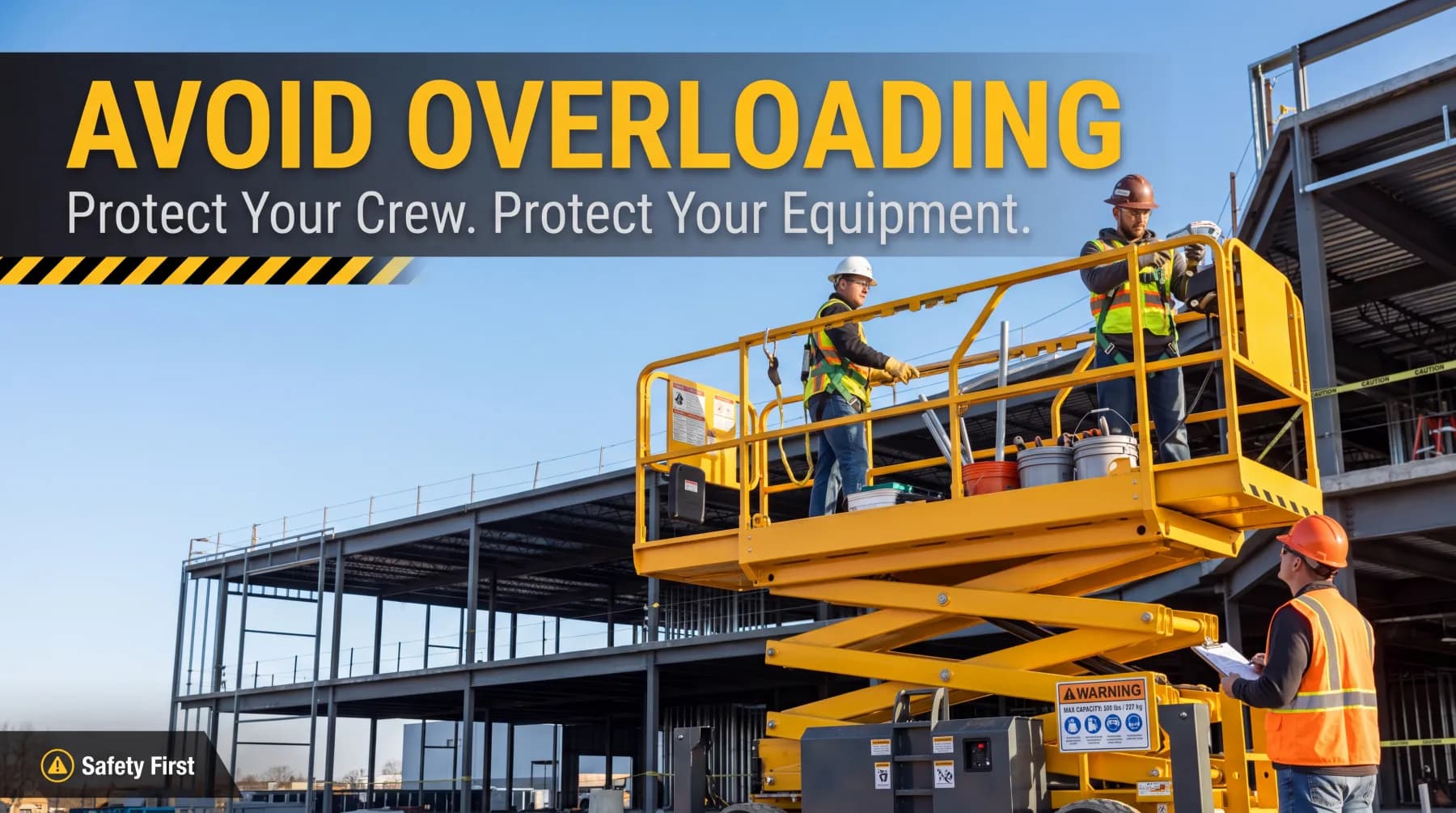
Overloading is one of the most preventable causes of scissor lift accidents, yet it happens on job sites more often than it should. A platform pushed beyond its limits can tip, buckle, or fail in ways that put workers at serious risk and take expensive equipment out of service. The good news is that avoiding overload comes down to a handful of clear, disciplined habits: knowing your limits, doing the math before you lift, balancing the load, following the manufacturer's guidance, and training the people who run the machine. This guide walks through each of those practices so operators, supervisors, and fleet managers can keep every lift safe and dependable.
Know Your Scissor Lift's Rated Load Capacity
Every scissor lift is engineered to carry a specific maximum weight on its platform, known as its rated load capacity. This figure represents the total load the machine can safely lift and hold at full extension, and it should never be exceeded under any circumstances. The manufacturer sets this limit through careful engineering and testing, accounting for the strength of the structure, the stability of the base, and the forces at work when the platform is raised. When you understand exactly what that number means, you gain the foundation on which all safe operation is built.
Ignoring or misjudging the rated capacity invites real danger. Pushing a lift beyond its limit strains the scissor mechanism, compromises stability, and can lead to structural failure or tipping, especially when the platform is elevated. The consequences reach beyond the immediate risk to workers, since overloading also accelerates wear on cylinders, joints, and structural components, shortening the machine's service life and driving up repair costs over time.
Finding and respecting the rated capacity is straightforward when you know where to look:
- Check the capacity plate or decal, usually mounted on the platform or near the controls, which lists the maximum load.
- Consult the operator's manual for detailed capacity information and any conditions that affect it.
- Note any separate limits, such as a lower capacity when an extension deck is in use.
Treating the rated capacity as an absolute boundary rather than a rough guideline is the first and most important step toward safe operation. When everyone who runs the machine knows the limit and respects it without exception, you protect both your crew and your investment for the long term.
Calculate the Total Weight on the Platform
Knowing the rated capacity means little unless you also know how much weight you are actually placing on the platform. Before raising the lift, take the time to calculate the combined weight of everything that will ride on it. That total includes far more than just the workers standing on the deck, and overlooking any part of it can quietly push the machine past its safe operating capacity without anyone realizing it until a problem develops.
A complete calculation accounts for every load the platform will carry:
- Workers, using realistic weights for each person on the platform rather than an optimistic estimate.
- Tools, including power tools, hand tools, and anything carried up for the task.
- Equipment, such as welding gear, testing instruments, or fixtures brought aboard.
- Materials, from pipe and lumber to fasteners, panels, and supplies staged on the deck.
Add these figures together honestly, and compare the total against the rated capacity before the platform ever leaves the ground.
The critical point many operators miss is how quickly small additions add up. A single extra toolbox, a bundle of materials, or one more worker can seem harmless on its own, yet each addition nudges the total closer to the limit, and even a modest overage compromises safety. This is why guesswork has no place in load calculation. Rather than assuming a load is "probably fine," weigh or reliably estimate each component and keep a comfortable margin below the maximum. Building this calculation into your routine before every lift turns a potential hazard into a controlled, predictable operation. It costs only a few minutes, and it ensures the machine works within the safe range it was designed for, protecting your crew and your equipment on every job.
Distribute Loads Evenly Across the Platform
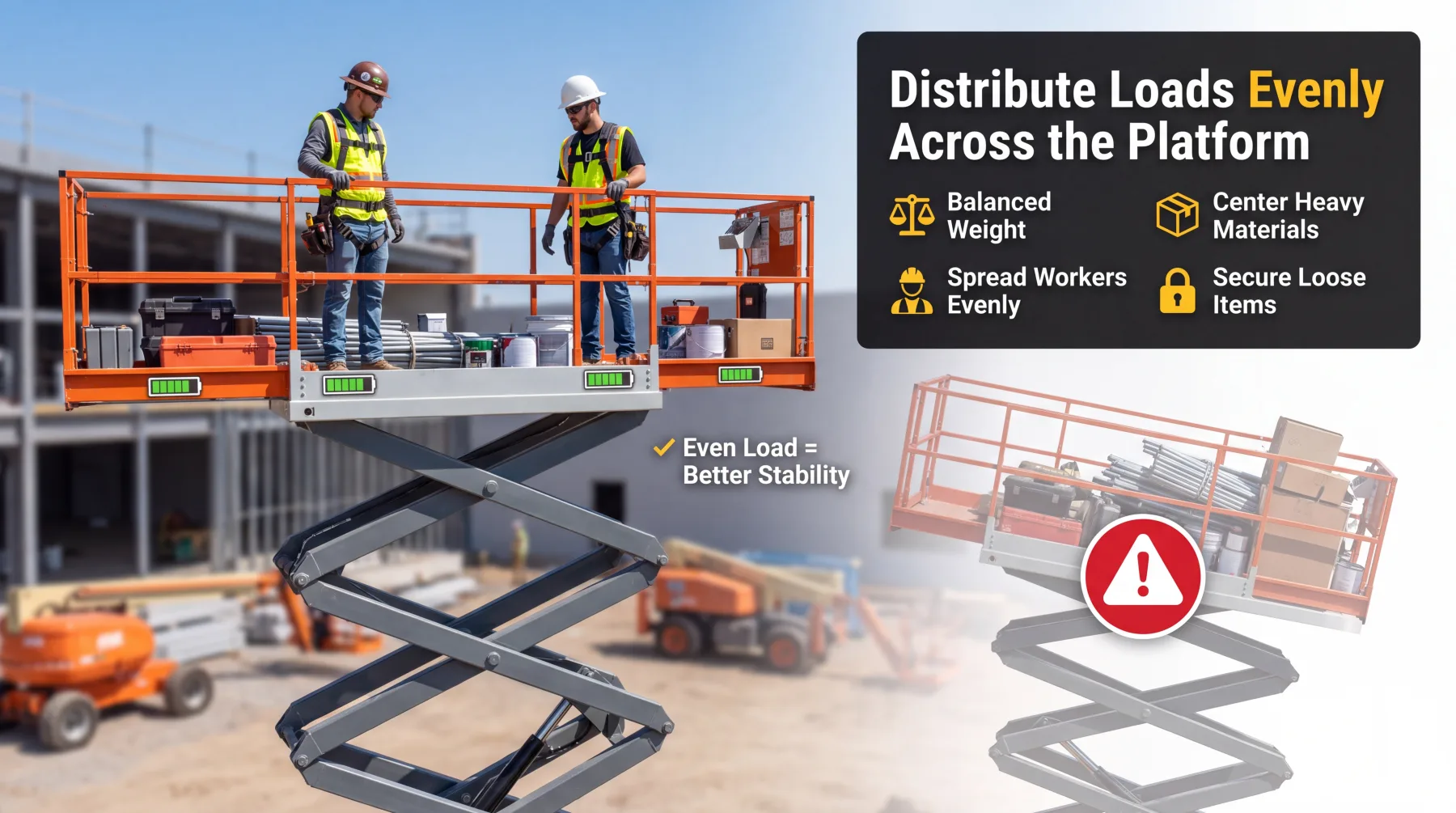
Staying within the rated capacity is essential, but where you place that weight matters just as much as how much you carry. A load concentrated at one edge or corner of the platform behaves very differently from the same load spread evenly across the deck. Uneven placement shifts the machine's center of gravity, reduces stability, and increases the risk of tipping, particularly when the platform is elevated and the margin for error is smallest. Balanced loading keeps the lift operating as its engineers intended, with forces distributed the way the structure was built to handle them.
Concentrated loads also create structural stress that even distribution avoids. When heavy items pile up in one spot, they place uneven strain on the platform, the scissor mechanism, and the machine's supports. Over time that uneven stress accelerates wear, and in the moment it can undermine the stability that keeps the lift safely upright. Spreading weight evenly protects both the immediate safety of the operation and the long-term health of the equipment.
Good load distribution is largely a matter of awareness and habit. Keep these practices in mind whenever you stage weight on the platform:
- Position heavy items toward the center rather than piling them against a single edge or rail.
- Balance workers and materials across the deck instead of clustering them on one side.
- Secure loose items so they cannot shift toward one end as the platform moves or is raised.
- Reassess the balance whenever materials are added, removed, or repositioned during the task.
By treating even distribution as a standard part of loading the platform, operators keep the machine stable through its full range of motion. A well-balanced lift feels steadier, resists tipping more effectively, and endures far less structural strain, all of which contribute to a safer and more reliable operation on every job.
Follow Manufacturer Guidelines and Safety Procedures
Manufacturers do not set their operating guidelines arbitrarily. Each recommendation reflects the engineering and testing behind the machine, and following those instructions is one of the surest ways to operate safely and get the full working life out of the equipment. The operator's manual is the definitive source for how a specific lift should be loaded and used, and it deserves close attention rather than a quick glance. When you align your practices with the manufacturer's guidance, you are working within the exact conditions the machine was designed and proven to handle.
Several areas of manufacturer guidance directly affect safe loading and operation:
- Load limits, including the rated capacity and any reduced limits that apply under specific conditions.
- Occupancy, meaning the maximum number of people permitted on the platform at once.
- Material handling, covering how loads should be positioned, secured, and moved on the deck.
Respecting each of these instructions keeps the machine operating within its safe design envelope and removes much of the guesswork that leads to overload.
Proper operating practices deliver benefits that extend well beyond avoiding a single incident. Consistently following the guidelines reduces the likelihood of accidents by keeping the lift stable, balanced, and within capacity throughout the task. Just as importantly, treating the machine as intended reduces unnecessary strain on its components, which extends its service life and lowers the cost of ownership over time. For supervisors and fleet managers, this makes adherence to manufacturer procedures both a safety measure and a sound financial practice. Building these guidelines into daily routines, backed by regular inspection and maintenance on the recommended schedule, ensures the lift performs dependably and safely. When the manufacturer's instructions become the standard everyone follows, the result is a safer site and equipment that holds up reliably for years.
Train Operators to Recognize Overloading Risks
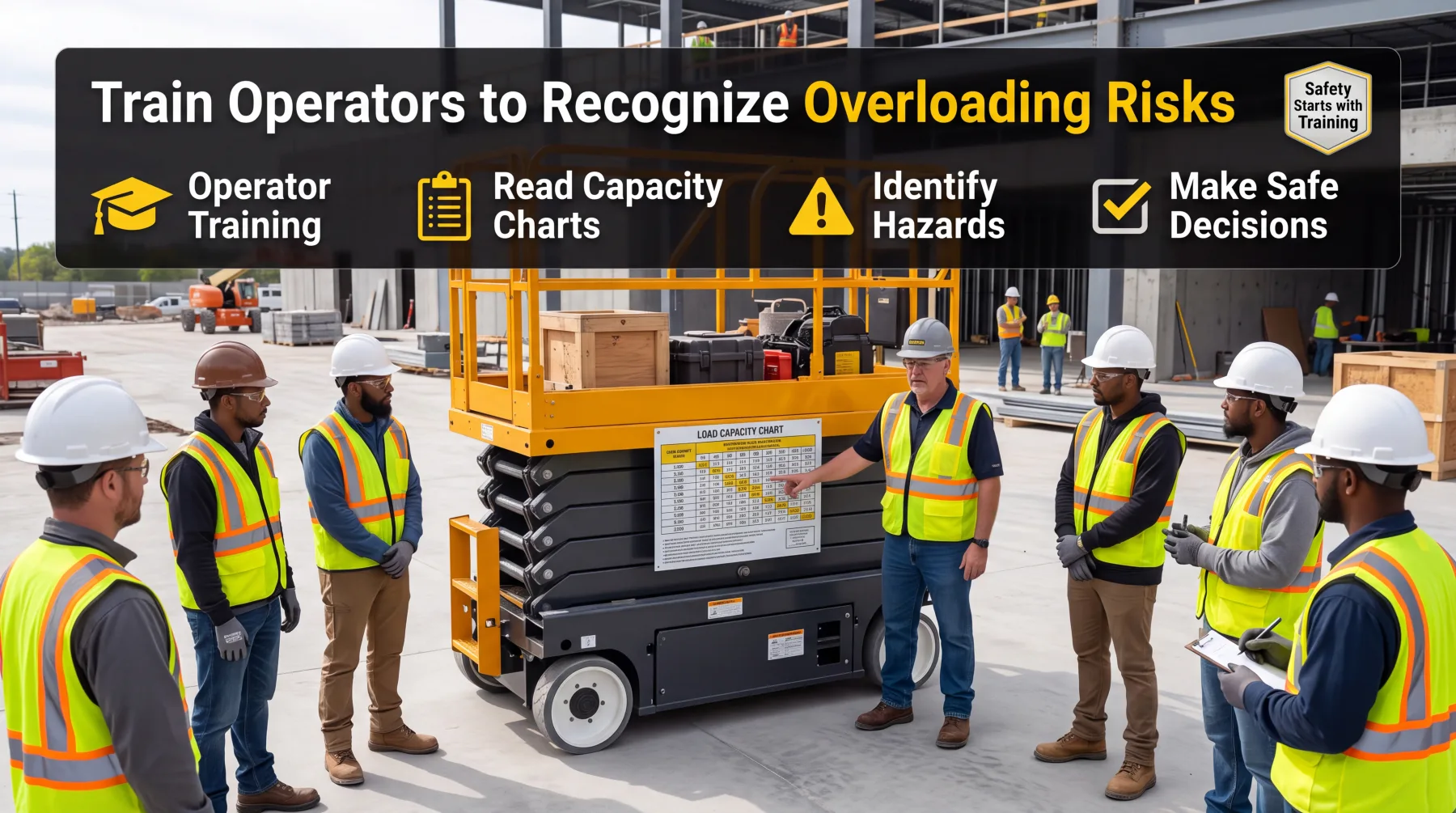
Even the clearest guidelines depend on the people who apply them, which is why operator training is the backbone of overload prevention. A well-trained operator understands not only the rules but the reasoning behind them, and that understanding allows them to identify unsafe loading conditions before they turn into hazards. Rather than reacting to a problem after it develops, a knowledgeable operator anticipates it, recognizing when a load is approaching the limit, when weight is poorly distributed, or when conditions call for extra caution. That kind of proactive judgment is difficult to replace and impossible to fake.
Effective training equips operators to make sound decisions in the moment, when it matters most. A capable operator knows how to calculate a total load accurately, how to read the capacity plate, how to balance weight across the platform, and how to spot the warning signs that a lift is being pushed too far. These skills transform abstract safety rules into practical habits that guide everyday work, giving operators the confidence to stop and reassess when something does not look right instead of pressing ahead.
Regular safety training does more than build individual skill; it strengthens the safety culture of the entire operation. Ongoing instruction keeps knowledge fresh, reinforces good habits, and ensures that everyone works to the same standard. It also supports compliance with workplace safety requirements, helping the organization meet its obligations and demonstrate a genuine commitment to protecting its workforce. For site supervisors and fleet managers, investing in consistent training pays clear dividends: fewer incidents, better decision-making, and a crew that treats safe loading as second nature. When operators are trained to recognize overloading risks and empowered to act on what they see, the machine, the crew, and the entire job site are safer for it.
Conclusion
Avoiding scissor lift overload is not complicated, but it does require consistent discipline from every person on the job site. Start by knowing your machine's rated load capacity and treating it as an absolute limit, never a rough guide. Before each lift, calculate the combined weight of workers, tools, and materials honestly, and keep a clear margin below the maximum. Place loads evenly across the platform to maintain stability and reduce structural stress. Follow the manufacturer's guidelines for load limits, occupancy, and material handling, and schedule regular inspections to keep the machine in sound condition. Finally, invest in ongoing operator training so your crew can recognize and respond to unsafe loading conditions before they become hazards. Each of these habits reinforces the others, and together they protect your workers, preserve your equipment, and build the kind of safety culture that keeps every lift dependable and every job site secure.