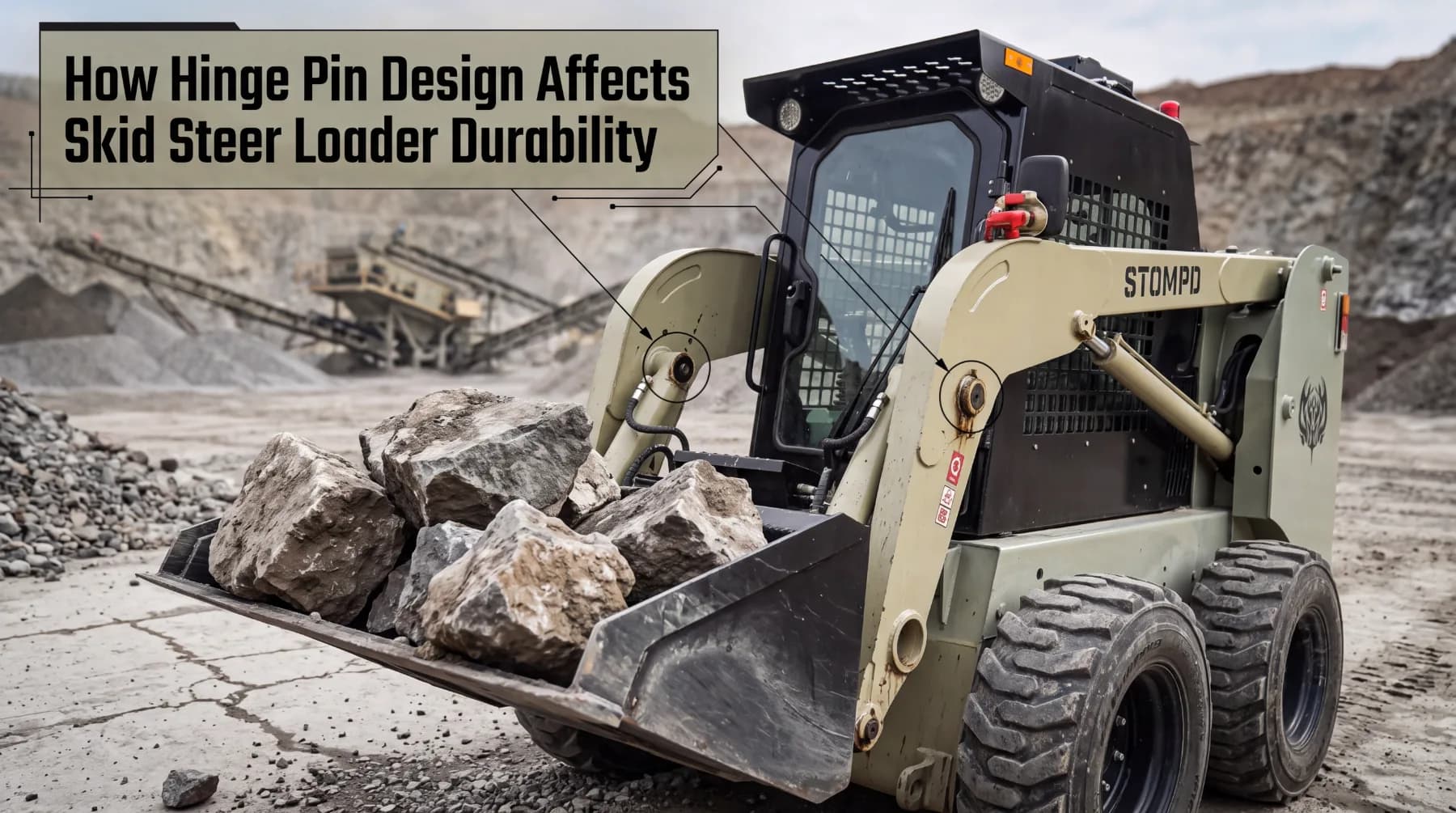
A skid steer loadertakes a beating every working day. It lifts, digs, pushes, and carries through thousands of cycles, and the forces from all that work pass through a handful of small but critical joints. At the heart of those joints sit the hinge pins, the components that connect the loader arms and attachments and let them pivot under load. How these pins are designed has a direct effect on how long the machine holds up.
This guide explains how hinge pin design shapes skid steer loader durability. You will learn how pin strength handles heavy loads, why pin and bushing wear matters, what lubrication and maintenance keep the joints healthy, how a well-designed hinge distributes forces, and how all of this adds up to long-term reliability. By the end, you will know what to watch for to keep your loader working dependably.
Hinge Pin Strength and Load Handling
Hinge pins carry significant forces at the points where the loader arms and attachments connect, which makes their strength central to how the machine performs under load. Every time the loader lifts a full bucket, curls an attachment, or pushes into a pile, the stress from that work concentrates at the pivot joints. The pins have to absorb these repeated forces without bending, cracking, or wearing prematurely, so their design determines how confidently the machine handles demanding tasks.
Three factors shape how well a hinge pin manages these loads:
- Diameter, since a larger pin offers more cross-sectional strength to resist bending and shear under heavy forces
- Material, as high-grade, properly hardened steel withstands stress and wear far better than lower-quality alternatives
- Overall design, including how the pin is shaped, finished, and supported within the joint to spread load effectively
When these elements are engineered correctly, the joint handles repeated loading without trouble. A pin of adequate diameter made from quality material resists the deformation and fatigue that eventually lead to failure. It holds its shape cycle after cycle, keeping the connection tight and the movement controlled.
The consequences of an undersized or poorly made pin show up quickly in hard use. A pin that flexes under load introduces play into the joint, accelerates wear, and places added stress on the surrounding components. Over time this can lead to sloppy operation and costly repairs. Choosing a loader with well-designed hinge pins, or replacing worn pins with quality parts, protects the machine from these problems and keeps it performing reliably where the work is toughest.
Pin and Bushing Wear
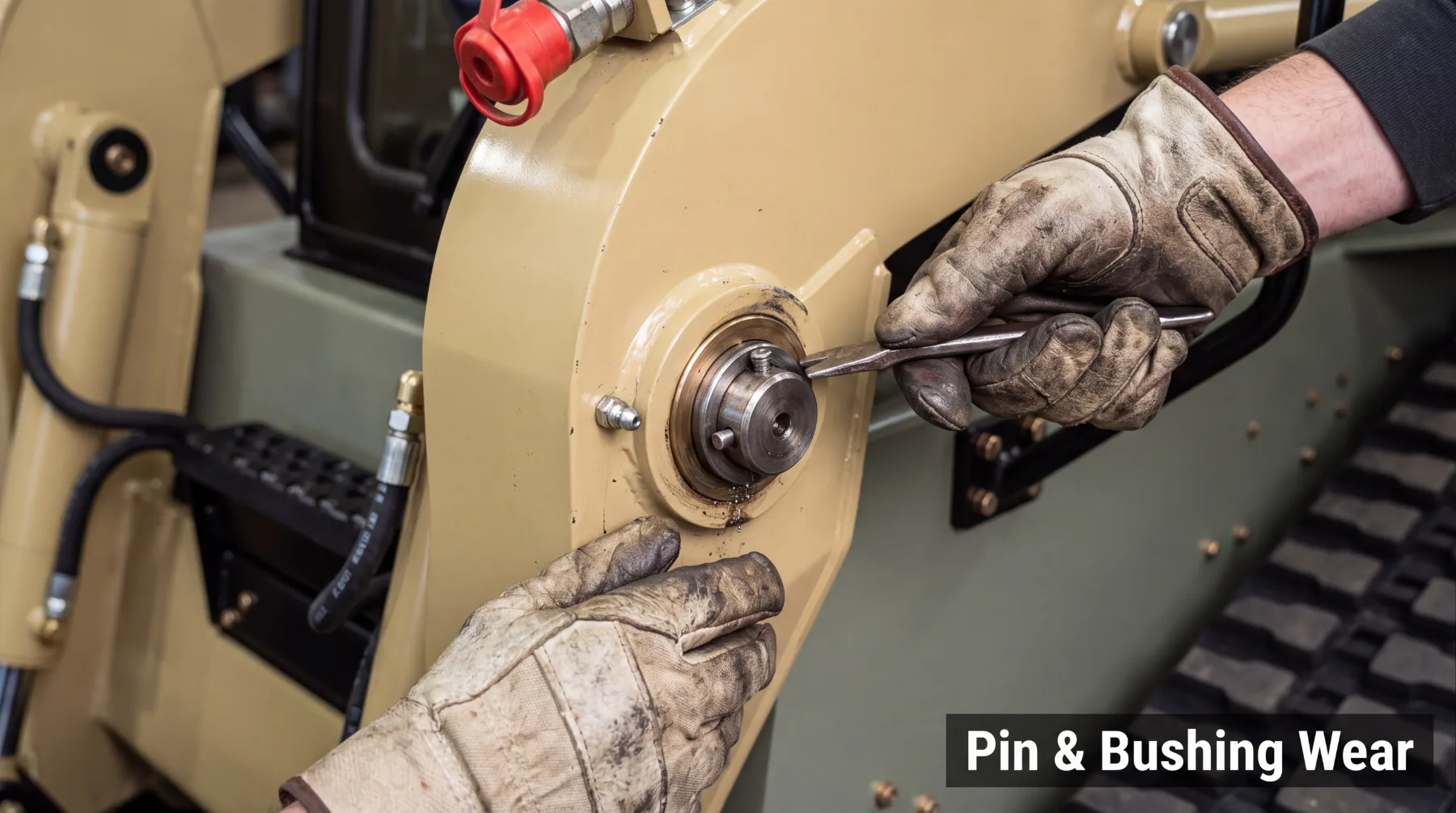
Here is the key question with any pivot joint: how well does it hold up to constant motion? Regular movement and heavy loads cause wear between hinge pins and the bushings they ride in, and this wear is one of the most common sources of trouble in a loader's linkage. Each pivot cycle creates friction between the pin and bushing surfaces, and over thousands of cycles that friction gradually removes material from both parts. As they wear, the fit loosens and play develops in the joint.
That play matters more than it might seem. A small amount of clearance grows over time, and as it does, the movement of the loader arms and attachments becomes less precise. Excessive play introduces slack that shows up as sloppy operation, unusual noise, and uneven loading on the pins and bushings. Left unchecked, it accelerates further wear and can eventually damage the surrounding components that depend on a tight, controlled joint.
Proper fit and consistent maintenance are the best defense against premature wear. When pins and bushings are correctly matched and kept in good condition, they share load evenly and move smoothly against one another. Keeping the joint properly lubricated reduces friction and slows the wear process considerably. Regular inspection helps you catch developing play early, while replacing a worn bushing or pin is still a straightforward, affordable job.
Staying ahead of the pin and bushing wear keeps the loader tight and responsive. Rather than letting clearance build until the linkage feels loose and imprecise, checking these joints regularly and servicing them as needed maintains the controlled movement the machine was built to deliver. That attention protects both the joints themselves and the components around them.
Lubrication and Maintenance Requirements
Adequate lubrication is the single most practical thing you can do to protect your loader's hinge joints. Grease at the pivot points minimizes friction between the pins and bushings, and less friction means less heat, less wear, and smoother operation. Without proper lubrication, metal grinds against metal, and the pins and bushings wear rapidly, shortening their service life and introducing play into the linkage. A well-lubricated joint, by contrast, moves freely and lasts far longer.
Keeping the hinge assembly properly maintained comes down to a few consistent habits:
- Grease points, which should be serviced on schedule so fresh lubricant reaches every pivot
- Seals, which need checking to confirm they keep grease in and dirt and moisture out
- Lubrication intervals, which should follow the manufacturer's guidance and tighten under heavy or dusty conditions
Each of these deserves regular attention. Applying grease at the specified points pushes fresh lubricant into the joint and helps flush out contaminants. Inspecting the seals matters because a failed seal lets grease escape and allows abrasive grit to enter, which accelerates wear dramatically. Following sensible lubrication intervals ensures the joints never run dry between services.
The demands of the job should shape how often you service the joints. A loader working in dusty, dirty, or wet conditions needs more frequent lubrication than one used lightly, since contaminants work their way into the joints and grease breaks down faster under hard use. Checking grease points, seals, and intervals regularly keeps the hinge assembly operating smoothly and reliably. This routine care costs little time yet pays off in longer component life and fewer breakdowns, making it one of the smartest investments you can make in your machine's durability.
Load Distribution Through the Loader Arm
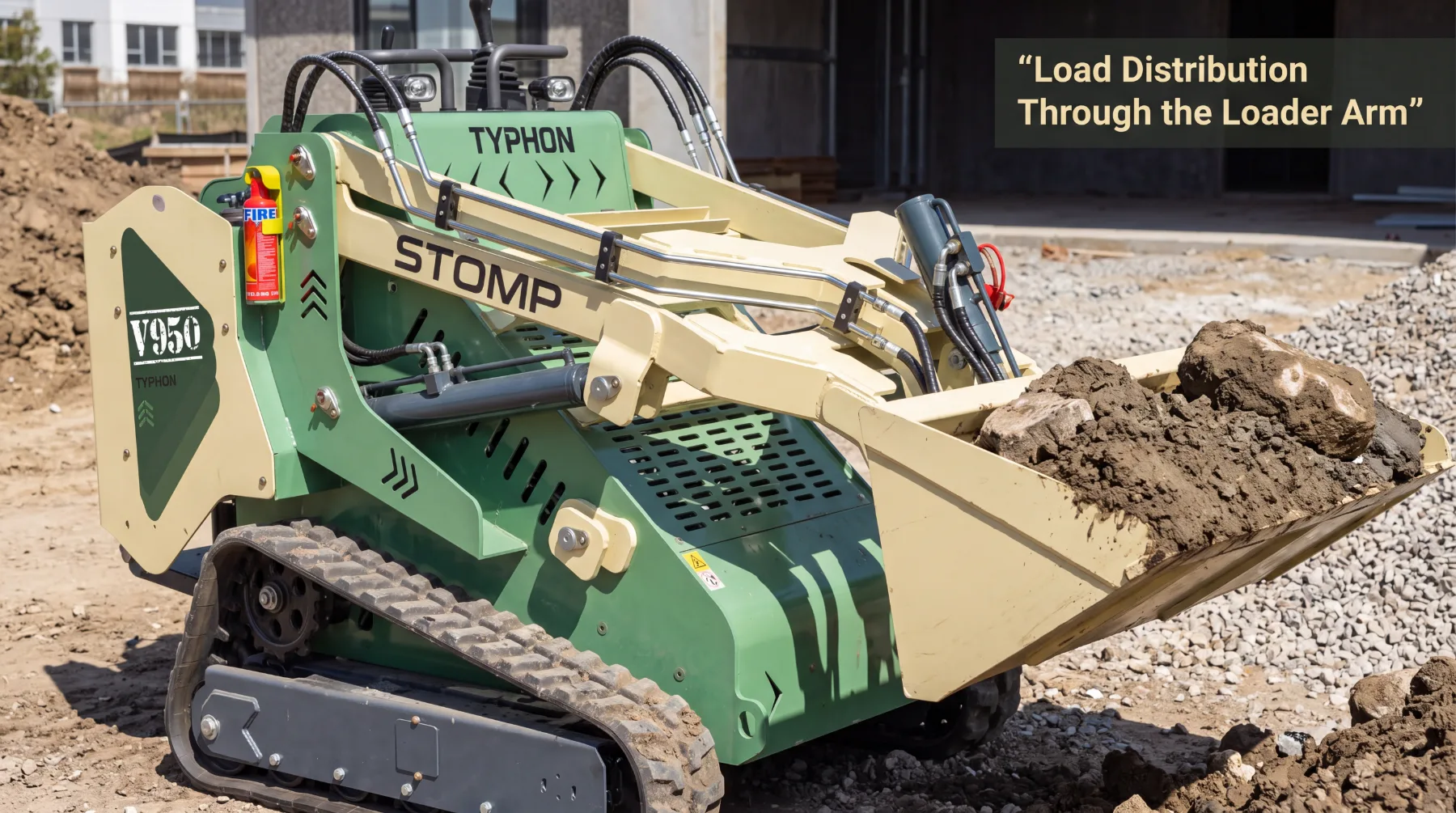
A well-designed hinge system does more than simply connect parts. It helps distribute forces evenly through the loader arm and the attachment connection, which protects the entire linkage from concentrated stress. When the loader works, the forces from lifting and loading travel through the arms and into the pivot joints. A sound hinge design spreads these forces across the pins, bushings, and surrounding structure so no single component bears more than its share.
Proper alignment is essential to this balanced distribution. When the pins, bushings, and mounting points are correctly aligned, the joint moves cleanly and load passes through it as intended. When alignment is off, the forces concentrate unevenly, placing extra stress on parts of the joint that were never meant to carry it. This uneven loading wears components faster and can lead to damage well before the linkage should show its age.
Excessive clearance creates similar problems. A joint with too much play allows the components to shift under load rather than holding a steady position, which concentrates stress at contact points and adds impact forces as the slack takes up. Over time, that added stress on the pins, bushings, and surrounding components accelerates wear and undermines the durability of the whole system. Keeping clearance within proper limits helps the joint carry load smoothly.
When the hinge system distributes forces the way it should, the loader operates smoothly and its components last longer. Maintaining proper alignment and controlling clearance are what make that even distribution possible. For anyone relying on a skid steer for demanding work, paying attention to how well the hinge joints are aligned and fitted is a practical step toward protecting the machine from the stresses that shorten its working life.
Impact on Long-Term Loader Durability
Everything about hinge pin design comes together in one place: the long-term durability of the loader's linkage system. The pins, bushings, and pivot joints endure repeated lifting and loading cycles throughout the machine's life, and how well they are designed and maintained determines how long that linkage stays reliable. Durable, well-engineered components form the foundation of a loader that keeps working season after season without constant repair.
Several factors work together to support this long-term reliability. Durable components made from quality materials resist wear and fatigue under repeated stress. Proper alignment keeps forces distributed evenly so no part wears prematurely. Routine inspections catch developing problems early, while play, wear, or lubrication issues are still easy to address. Together, these elements keep the linkage operating dependably under the heavy demands of daily work.
The payoff from this attention is a machine you can count on. A loader with sound hinge pins and a well-maintained linkage handles repeated lifting and loading cycles without developing the loose, imprecise operation that signals worn joints. It holds its performance over time, requires fewer unexpected repairs, and delivers the reliability that keeps your work on schedule. That dependability is exactly what a hardworking skid steer is meant to provide.
Protecting long-term durability means treating hinge pin quality and maintenance as priorities rather than afterthoughts. When you choose a machine with well-designed linkage components, keep them properly lubricated, and inspect them regularly, you extend the service life of the entire system. This straightforward commitment to quality and care rewards you with a loader that performs reliably through years of demanding use, which is the return every operator wants from their equipment.
Conclusion
Hinge pin design plays a defining role in how long a skid steer loader holds up under hard work. Strong, properly sized pins handle heavy loads without deforming, while a good fit and regular maintenance keep pin and bushing wear in check. Consistent lubrication protects the pivot points, sound design and alignment distribute forces evenly, and routine inspection keeps the whole linkage reliable through repeated lifting and loading cycles.
Before your next job or maintenance cycle, take a close look at your loader's hinge joints. Check the grease points and seals, watch for play or unusual noise in the linkage, and service the pivots on a schedule that matches your working conditions. When you treat hinge pin quality and care as priorities, you gain a machine that stays tight, responsive, and dependable for years of demanding use.
Frequently Asked Questions
**1. Why are hinge pins so important to a skid steer loader's durability?
**Hinge pins are important because they carry significant forces at the points where the loader arms and attachments connect, making them central to how the machine handles load. Every time the loader lifts, digs, curls, or pushes, the stress from that work concentrates at the pivot joints, and the pins have to absorb those repeated forces without bending, cracking, or wearing prematurely. Their diameter, material, and overall design determine how well they manage this. A pin of adequate diameter made from high-grade, properly hardened steel resists the deformation and fatigue that eventually lead to failure, keeping the joint tight and the movement controlled cycle after cycle. When the pins are undersized or poorly made, they can flex under load, which introduces play into the joint, accelerates wear, and places added stress on the surrounding components. Over time, that leads to sloppy operation and costly repairs. Because the entire linkage depends on these joints holding up, hinge pin quality has a direct effect on how long the loader performs reliably under demanding work.
**2. What causes wear between hinge pins and bushings?
**Wear between hinge pins and bushings comes from regular movement combined with heavy loads. Each pivot cycle creates friction between the pin and bushing surfaces, and over thousands of cycles that friction gradually removes material from both parts. As they wear, the fit between them loosens and play develops in the joint. Heavy loads intensify this process, since greater force means more pressure and friction at the contact surfaces. Contaminants make it worse still, because dust, grit, and moisture that work their way into the joint act as abrasives that speed up wear considerably. The play that results matters more than it might first appear, since a small amount of clearance grows over time and makes the movement of the loader arms and attachments less precise. This shows up as sloppy operation, unusual noise, and uneven loading on the pins and bushings. The best defense is a proper fit between well-matched components, consistent lubrication to reduce friction, and regular inspection to catch developing play early while replacement is still a straightforward, affordable job.
**3. How often should I lubricate my loader's hinge points?
**Lubrication frequency depends on how hard and in what conditions the loader works, so the best starting point is always the manufacturer's recommended intervals. Those guidelines give you a baseline, but you should tighten the schedule when conditions demand it. A machine working in dusty, dirty, or wet environments needs more frequent greasing than one used lightly, since contaminants work their way into the joints and grease breaks down faster under hard use. Heavy, continuous loading also calls for more regular attention. When you lubricate, apply grease at every specified grease point so fresh lubricant reaches each pivot and helps flush out any contaminants that have entered. It also pays to check the seals at the same time, because a failed seal lets grease escape and allows abrasive grit inside, which accelerates wear dramatically. Keeping the joints properly greased minimizes friction, reduces heat and wear, and keeps the linkage moving smoothly. This routine care costs little time yet delivers a real return in longer component life and fewer breakdowns, making regular lubrication one of the smartest maintenance habits you can build.
**4. What happens if there is too much clearance in the hinge joints?
**Too much clearance in the hinge joints creates several problems that undermine the loader's performance and durability. Excessive play allows the components to shift under load rather than holding a steady, controlled position. As that slack takes up during operation, it introduces impact forces and concentrates stress at the contact points, which places added strain on the pins, bushings, and surrounding components. This uneven, shock-loaded stress accelerates wear well beyond what a properly fitted joint would experience. The effects also show up in how the machine handles, since a loose joint produces imprecise, sloppy operation, unusual noise, and less controlled movement of the arms and attachments. Left unchecked, the clearance keeps growing, wear speeds up further, and the damage can eventually spread to the components that depend on a tight joint to work correctly. Keeping clearance within proper limits allows the joint to carry load smoothly and distribute forces as intended. Regular inspection helps you catch growing play early, and replacing a worn bushing or pin promptly restores the tight fit that keeps the linkage operating reliably and protects the rest of the system from unnecessary stress.
**5. How can I extend the service life of my loader's linkage system?
**Extending the service life of your loader's linkage comes down to combining quality components with consistent care. Start with durable, well-engineered hinge pins and bushings made from quality materials, since these resist the wear and fatigue that repeated lifting and loading cycles cause. Proper alignment matters too, because when the pins, bushings, and mounting points line up correctly, forces distribute evenly through the joints and no single component wears prematurely. From there, regular maintenance keeps everything working as it should. Lubricate the pivot points on a schedule suited to your working conditions, check the seals to keep grease in and contaminants out, and inspect the joints routinely for play, unusual noise, or signs of wear. Catching developing problems early, while they are still easy and affordable to address, prevents small issues from growing into major repairs. Servicing worn pins and bushings promptly restores the tight fit that keeps the linkage controlled and protects the surrounding components. When you treat both component quality and routine maintenance as priorities, the entire system lasts longer, and the loader stays tight, responsive, and dependable through years of demanding work.