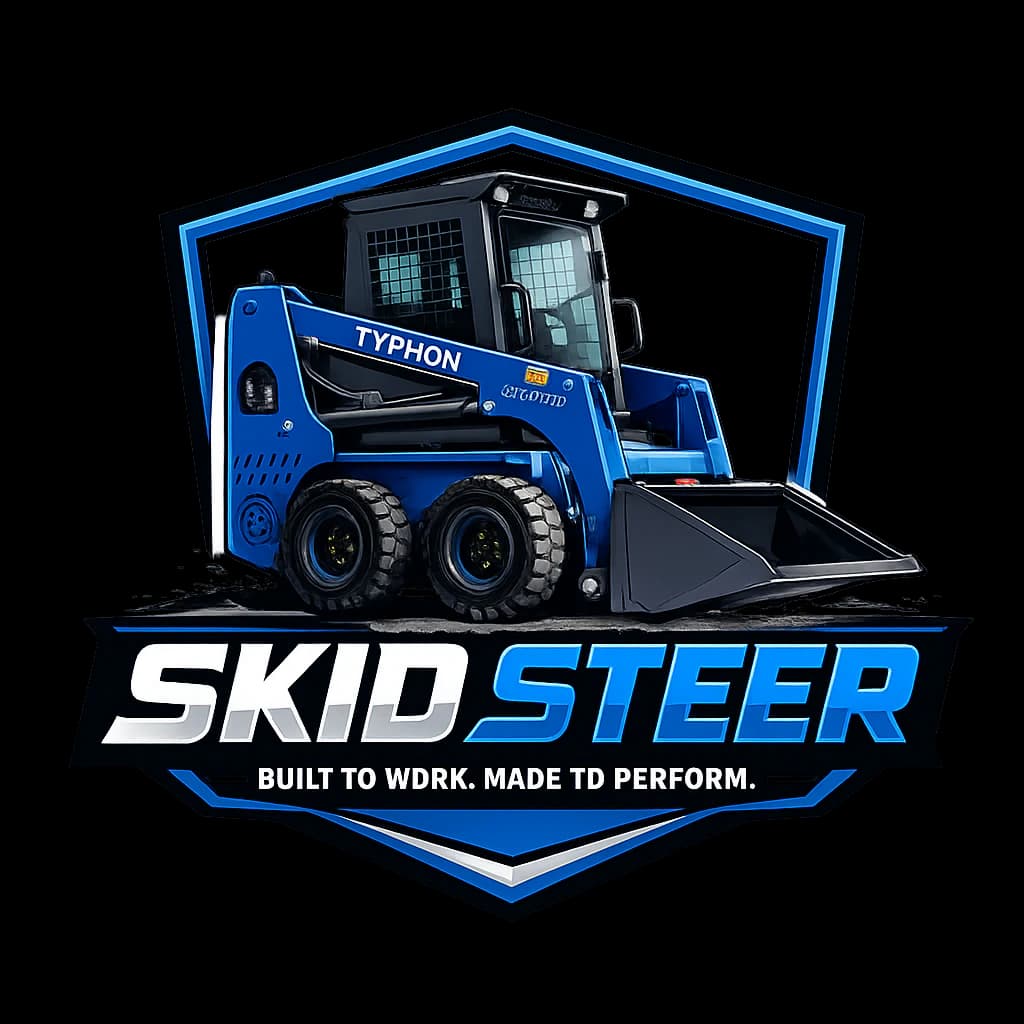
A landscaping crew arrives at a job site with pallets of paver stone stacked high on a delivery truck, and the plan is simple: lift each load and set it near the walkway the crew is building. The skid steer operator hooks up the pallet forks, slides them under the first load, and pulls back on the controls to raise it. The arms climb halfway, then slow, then stall as the engine strains against a weight it cannot quite manage. The load hangs there while the operator eases off, frustrated, wondering whether the problem is the machine, the attachment, or the way the two work together. That stalled lift traces back to something many buyers overlook when they read a spec sheet, which is how directly the engine's power shapes what a skid steer can safely raise. Understanding that link is what separates a machine that handles the day's work from one that fights it on every pallet.
Engine power influences skid steer lift capacity far more than most operators realize, because the engine feeds the hydraulic system that does the actual lifting. Knowing how power connects to lifting force, how the machine's ratings are set, and how the work itself strains both helps you buy and run the right machine with confidence.
Engine Power and Lifting Performance
Power is the source of everything a skid steer accomplishes, so the engine ultimately decides how much the machine can raise. The diesel or gasoline engine drives the hydraulic pump, and that pump supplies the pressurized fluid that pushes the lift cylinders and moves the arms. When a load presses down on those arms, the engine must supply enough power to overcome the weight, so a machine short on power reaches its limit long before a stronger one would.
Lifting is only part of what the engine handles at any moment, which is why its power matters so much to capacity. The same engine that raises a load also runs the drive motors, the auxiliary hydraulics, and the cooling system, so the muscle left over for lifting depends on how much the rest of the machine demands. An engine with room to spare keeps the arms climbing smoothly, while one already working hard leaves little in reserve for a heavy load.
Confidence on the job follows directly from having power to match the work, since an operator who trusts the machine lifts without hesitation. A skid steer that raises its rated load smoothly, shift after shift, keeps material moving and the crew productive, while one that strains and stalls slows the whole operation. Key takeaway: the engine drives the hydraulics that do the lifting and powers everything else at once, so its output sets the ceiling on what a skid steer can safely raise.
How Hydraulic Flow and Pressure Turn Power Into Lifting Force
Hydraulics stand between the engine and the load, translating raw power into the force that raises the arms. The engine spins the hydraulic pump, the pump moves fluid under pressure, and that pressurized fluid drives the cylinders that lift and tilt. Because this chain carries every ounce of lifting force, the strength of the hydraulic system depends squarely on the power the engine can feed it.
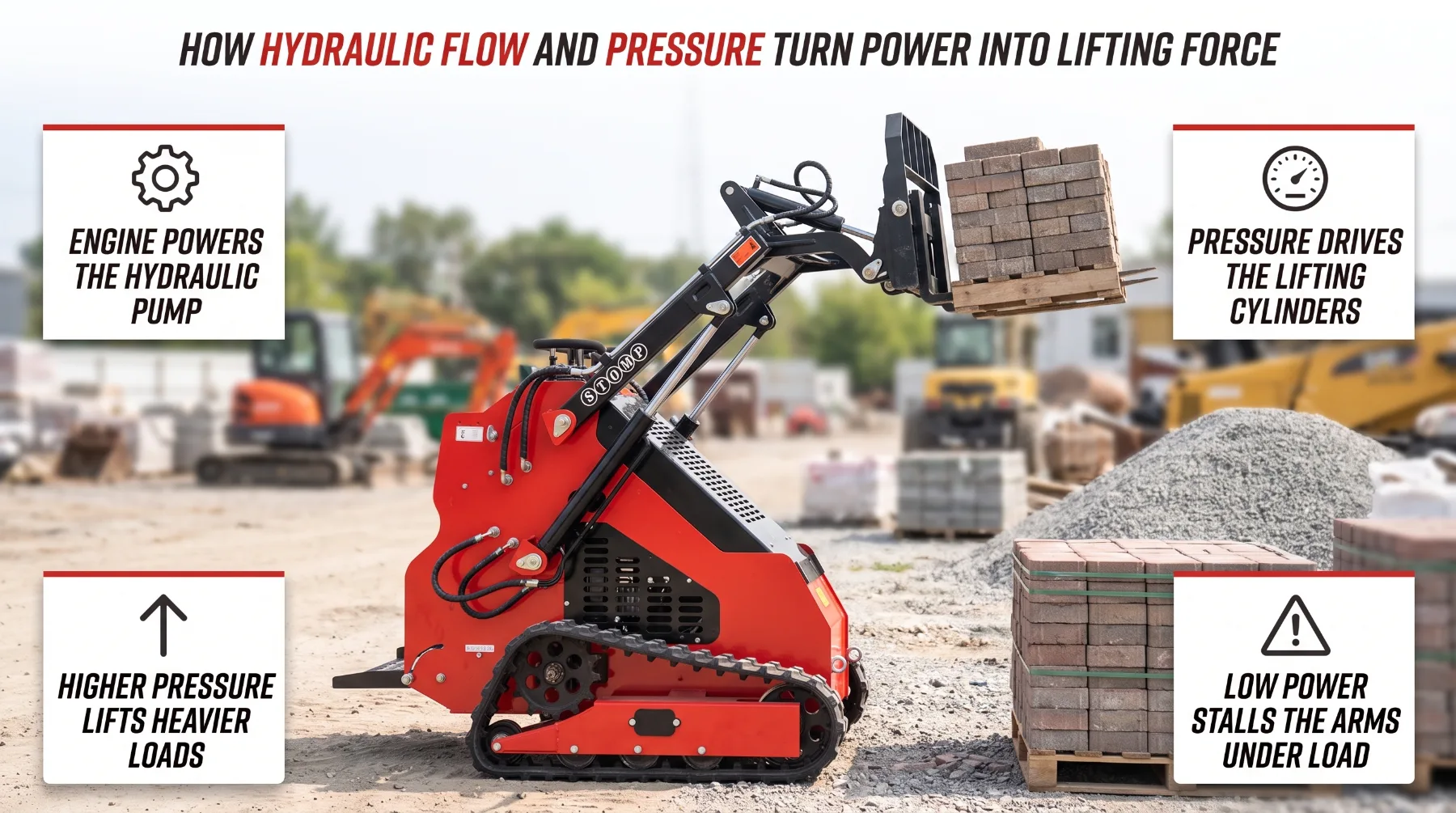
Pressure is the quality that determines how much weight the cylinders can push against, so it ties closely to lifting force. Higher system pressure lets the cylinders exert greater force on the load, which translates into the ability to raise heavier weights, and generating that pressure against a demanding load draws real power from the engine. When the engine cannot sustain the pressure a heavy lift requires, the arms slow or stall exactly as the load grows toughest.
Flow governs how quickly the arms move, which shapes the pace of the work rather than the raw weight limit. Strong, steady flow raises and lowers the load briskly, keeping cycle times short across a busy shift, and maintaining that flow while the machine also drives and steers asks more of the engine still. Key takeaway: hydraulic pressure sets how much a skid steer can lift and flow sets how fast, and the engine must supply the power behind both, so its output shapes lifting force directly.
Reading Rated Operating Capacity Against Tipping Load
Ratings on a skid steer spec sheet describe lift capacity in two distinct figures, and confusing them leads to poor decisions. Tipping load is the weight at which the machine begins to tip forward as the load lifts, essentially the point of failure, while rated operating capacity is the safe working limit set as a fraction of that tipping load. Knowing which figure you are reading keeps you from overloading a machine you thought had room to spare.
Rated operating capacity is the number that should guide daily work, because it builds in a safety margin the tipping load does not. Manufacturers set this rating at a defined percentage of the tipping load, commonly half for a standard wheeled skid steer, so the machine handles that weight with stability and control rather than teetering at the edge. Working within this figure protects the operator, the load, and the machine from the danger a tip-over invites.
Engine power supports these ratings even though the numbers themselves rest on weight and balance, since the machine must actually generate the force to reach its rated capacity. A skid steer rated to lift a given weight needs enough engine and hydraulic power to raise that load smoothly to full height, so adequate power is what makes the rating real in the field rather than merely printed on paper. Key takeaway: tipping load marks where a skid steer fails and rated operating capacity marks the safe working limit beneath it, and enough engine power is what lets the machine reach that rating dependably.
Understanding How Duty Cycle and Concurrent Functions Strain the Machine
Demand on the engine rises sharply when a skid steer performs several functions at once, which is exactly how most real work unfolds. An operator rarely just lifts in isolation; instead the machine drives forward, raises the arms, and runs an attachment all in the same motion, and every one of those functions pulls power from the same engine. The more the machine does simultaneously, the less power remains for any single task, including the lift.
Concurrent draw is where an underpowered machine reveals its limits most plainly, because the engine cannot fully serve competing demands at once. Lifting a heavy load while also driving up a ramp forces the engine to split its output, so the lift slows, the travel drags, or both suffer together, and a machine with little power in reserve simply cannot keep pace. A stronger engine absorbs these combined demands without the lift faltering.
Duty cycle compounds the strain across a full shift, since how hard and how often the machine works determines whether the engine keeps up or falls behind. A skid steer cycling heavy loads continuously through a long day asks far more of its engine than one making occasional light lifts, and sustained heavy work builds heat and stress that a modestly powered machine struggles to manage. Key takeaway: running several functions at once and cycling heavy loads all shift long both draw hard on the engine, so a machine needs power in reserve to lift dependably under real working conditions.
Weighing Attachment Load and Its Pull on Engine Demand
Attachments change the lifting equation in two ways at once, and both trace back to the engine. First, the attachment itself has weight, and that weight counts against the machine's rated operating capacity, so a heavy pallet fork or grapple leaves less capacity for the material it carries. Reading the combined weight of the attachment and its load against the rating is the only honest way to judge whether a lift stays safe.
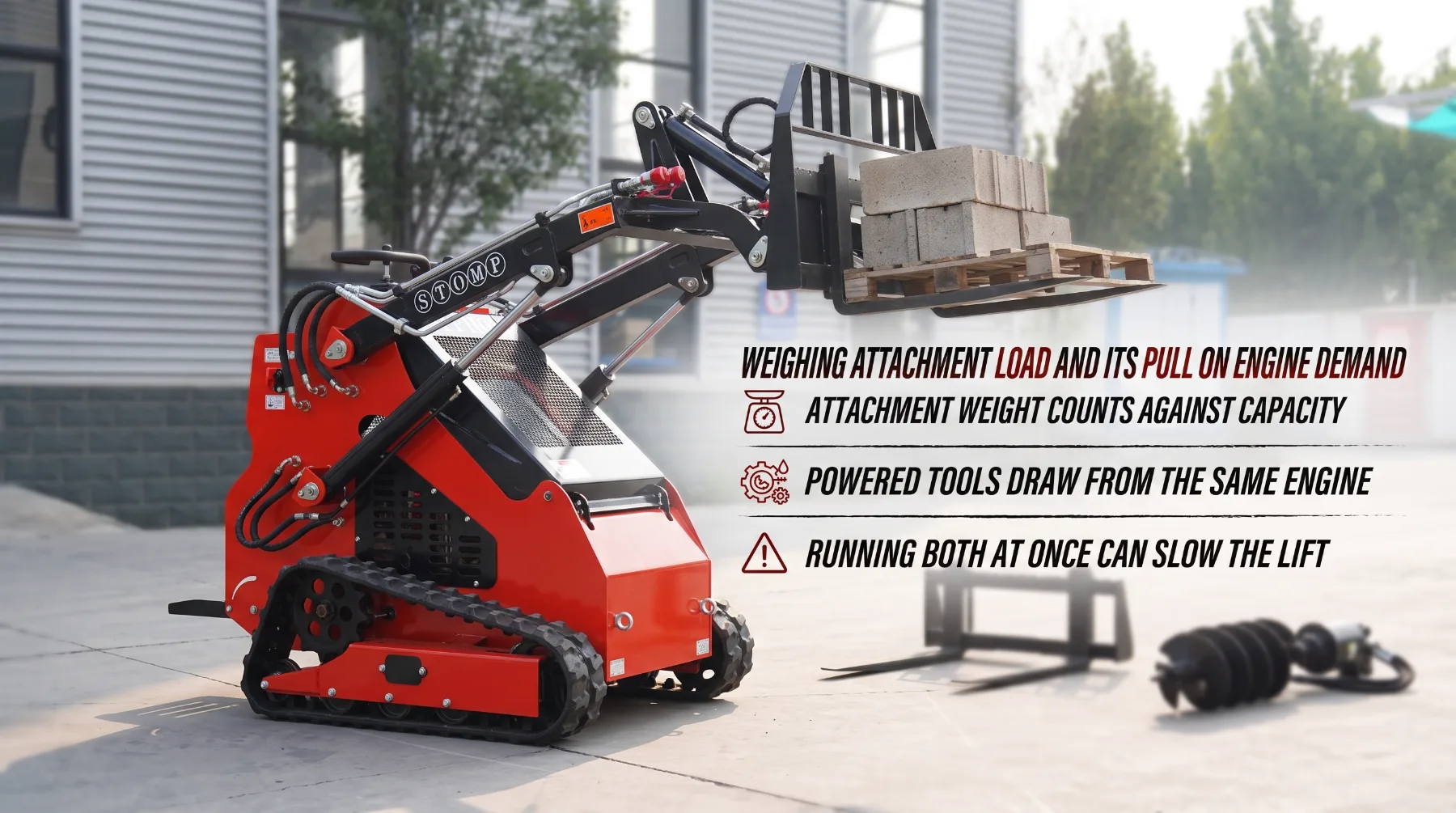
Powered attachments add a second demand that plain forks never impose, since they draw on the auxiliary hydraulics the same engine must feed. An attachment with a hydraulic motor, such as an auger or a grapple that opens and closes, pulls flow and pressure away from the lift circuit while it runs, so operating that attachment during a lift asks the engine to power two hydraulic jobs at once. A machine short on power cannot serve both without one of them slowing.
Balance across attachment weight, material load, and hydraulic draw is what keeps the machine working safely and smoothly, and the engine sits at the center of that balance. A skid steer with ample power handles a heavy attachment running its hydraulics while still lifting confidently, whereas an underpowered one strains the moment the attachment and the load combine. Key takeaway: an attachment adds its own weight against the rated capacity and, if powered, draws hydraulic flow from the same engine, so its demand must be weighed alongside the load the machine lifts.
Matching Engine Power to the Lift Capacity You Need
Selection should start with an honest tally of the heaviest loads the machine will lift on a regular basis, because that figure anchors every other decision. Name the weight of the material you move most often, add the weight of the attachment you use to move it, and confirm the machine's rated operating capacity comfortably covers the total. Buying for the loads you actually handle keeps the skid steer working within its safe limit rather than fighting the edge of it.
Power in reserve deserves deliberate thought rather than an afterthought, since a machine sized to handle only its lightest days strains the moment a demanding job arrives. Choosing an engine and hydraulic system with a sensible margin above your routine loads protects you when you lift near capacity, run a powered attachment, and drive across the site all at once. That headroom is what keeps the lift smooth under the combined demands real work brings.
Guidance from a knowledgeable equipment source turns your assessment into a confident purchase, because matching engine power, hydraulic capability, and lift rating to a real workload rewards experience. Describing your typical loads, your attachments, your duty cycle, and your site to a trusted specialist lets them recommend a machine built for the results you need rather than a generic guess. Key takeaway: match engine power to your heaviest routine loads plus your attachments, build in sensible reserve for concurrent demands, and lean on a trusted specialist so the machine lifts dependably where it earns its keep.
Conclusion
Engine power shapes skid steer lift capacity through a chain that runs from the engine to the hydraulics to the load on the forks, and the full picture holds once you follow each piece in turn. Start by recognizing why the engine sits behind every lift, driving the hydraulics while powering the whole machine at once. Understand how hydraulic pressure sets how much the machine can raise and flow sets how fast, with the engine supplying the power behind both. Read the rated operating capacity against the tipping load so you work within the safe margin, and account for how running several functions at once and cycling heavy loads all shift long strain the engine and the lift together. Weigh how an attachment adds its own weight against the rating and draws hydraulic flow when powered, then match the engine power to your heaviest routine loads with sensible reserve built in. Attend to all six, and you buy and run a skid steer that lifts smoothly and safely rather than stalling under a load it was never sized to raise. Before your next purchase, tally your heaviest loads, add your attachment weights, and confirm the rating and power suit the work so the machine performs from the first pallet. When you're ready to put a dependable skid steer matched to your lift capacity needs to work, or need help reading the ratings for your operation, reach out to a trusted equipment specialist who can match reliable equipment to the results your work depends on.
Frequently Asked Questions
Does more engine horsepower always mean a skid steer can lift more?
No. Lift capacity also depends on hydraulic pressure, flow, machine weight, and balance. Check the rated operating capacity rather than horsepower alone.
What is the difference between rated operating capacity and tipping load?
Tipping load is the weight at which the machine begins to tip forward. Rated operating capacity is the safer working limit, providing a stability margin. Always stay within the rated operating capacity.
Why does my skid steer struggle to lift when I use a powered attachment?
The attachment and lift system share the engine and hydraulics. A demanding attachment can reduce available power and flow, slowing the lift. Choose a machine with enough hydraulic and engine capacity for both.