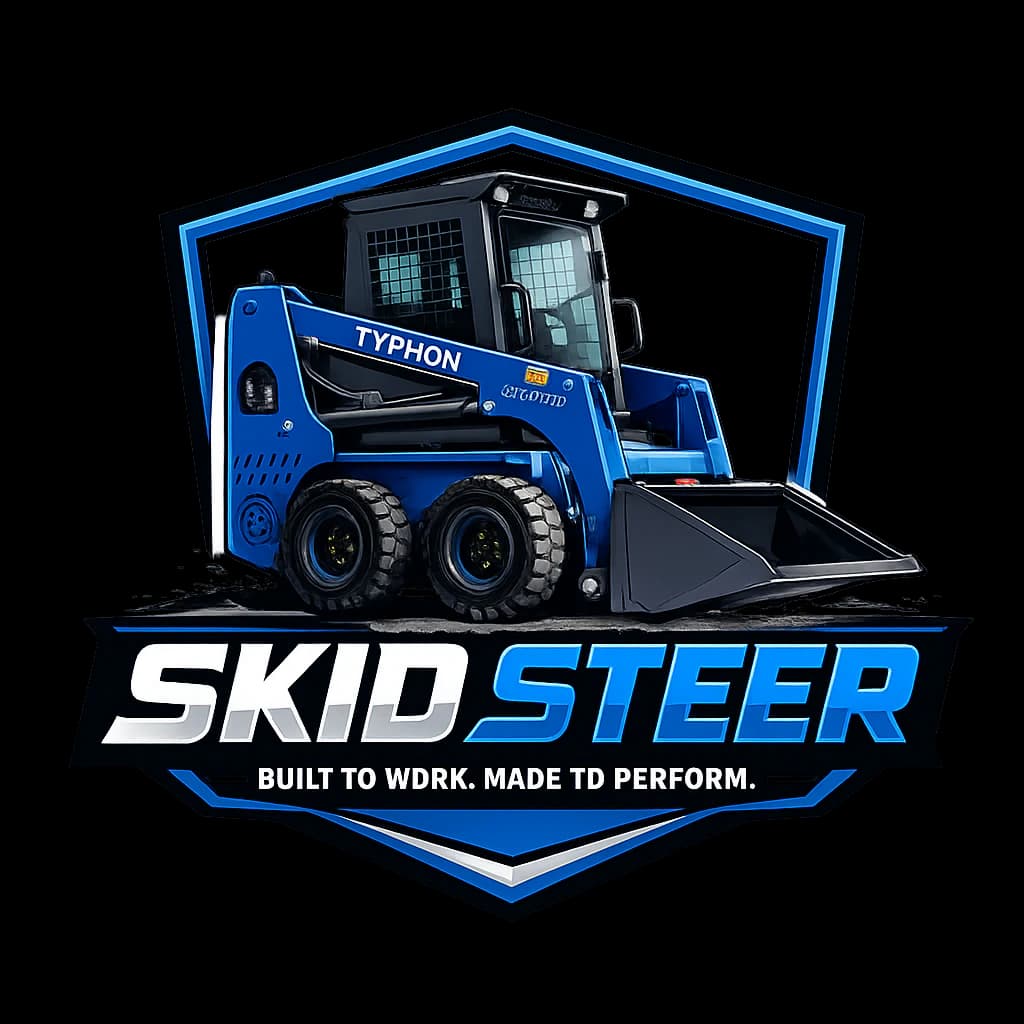
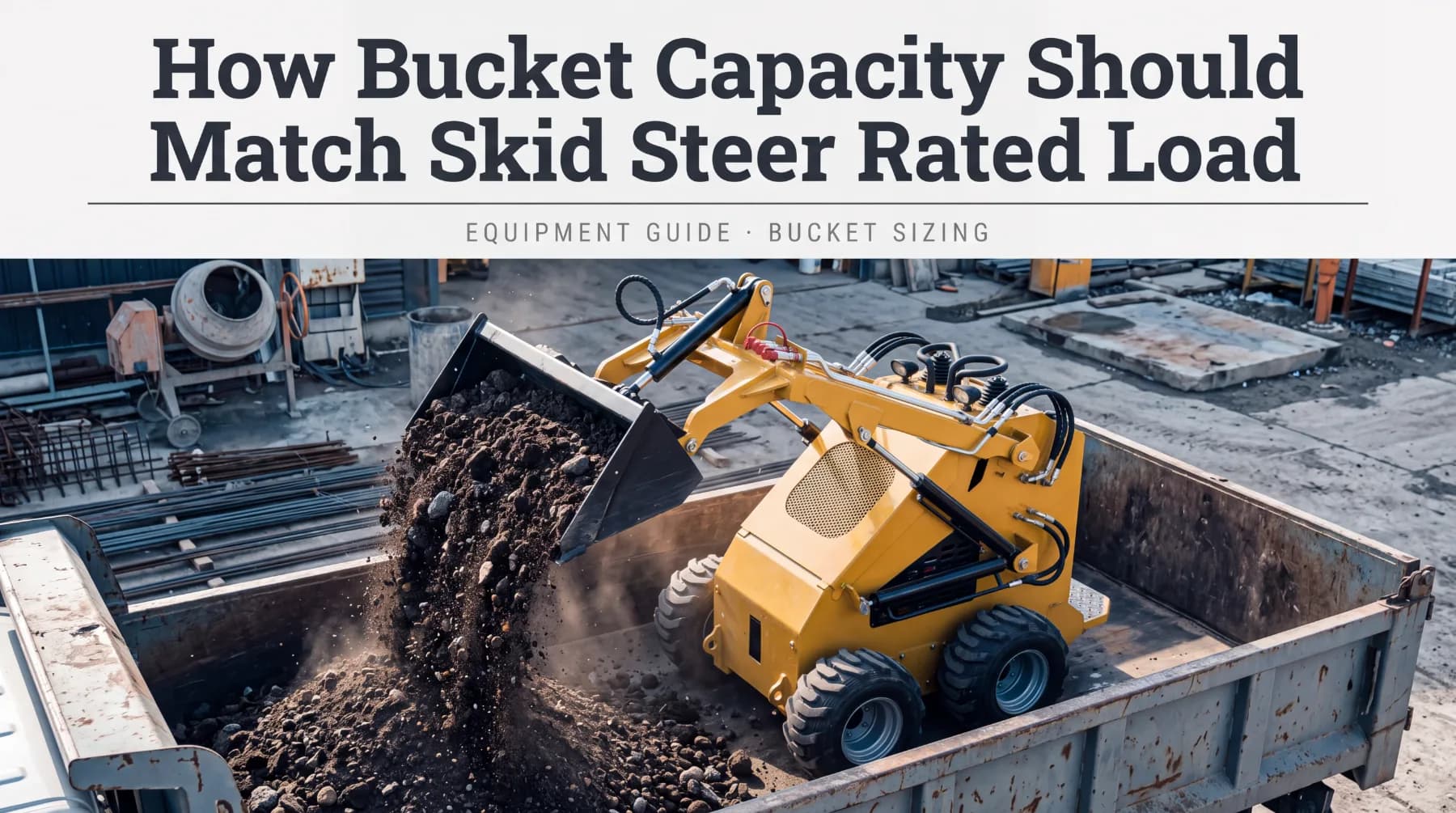
A bigger bucket looks like a shortcut to faster work. More material per scoop should mean fewer trips and quicker completion, right? For skid steers, that assumption often costs more than it saves. These machines are built around a precise balance of weight, hydraulics, and stability, and pairing them with the wrong bucket can throw that balance off in ways that hurt both performance and safety.
Choosing the right bucket capacity is one of the smartest decisions you can make for your skid steer. The correct match protects your machine, keeps your operators secure, and helps you move more material across a full shift. Below, we walk through five reasons bucket size needs to match your machine's rated load, and how to make the right call for your equipment and your jobsite.
Bucket Capacity Must Match Rated Operating Load
Every skid steer is engineered with a rated operating capacity. This figure represents the maximum load the machine can safely lift, carry, and control while staying balanced. A larger bucket can certainly hold more material, but only if the machine can handle the resulting weight. Fit a bucket that's too big, and it becomes very easy to exceed that limit, often without the operator realizing it. A bucket that seems reasonable when empty can quickly overwhelm the machine once it's filled.
Matching the bucket to the rated load is about more than avoiding a single overload. It protects the way the machine was designed to perform. The hydraulics, lift arms, tires, and drivetrain are all built to handle a defined range of loads. Push past that range regularly, and you place added strain on these components, which leads to premature wear and unplanned downtime.
When selecting a bucket, keep a few core specifications in view:
- Rated operating capacity: The safe working load your skid steer is designed to handle, often calculated as a percentage of tipping load.
- Operating weight: Heavier machines can generally support larger buckets, but only within their limits.
- Bucket weight itself: A heavier bucket eats into the capacity available for material.
A bucket sized to fit these numbers lets the machine work the way its designers intended. It fills smoothly, lifts confidently, and carries loads without protest. The goal isn't to move the most material in a single scoop, but to move the right amount on every cycle. That consistency translates into reliable output, fewer breakdowns, and equipment that holds its value over time.
Material Density Changes the Effective Load
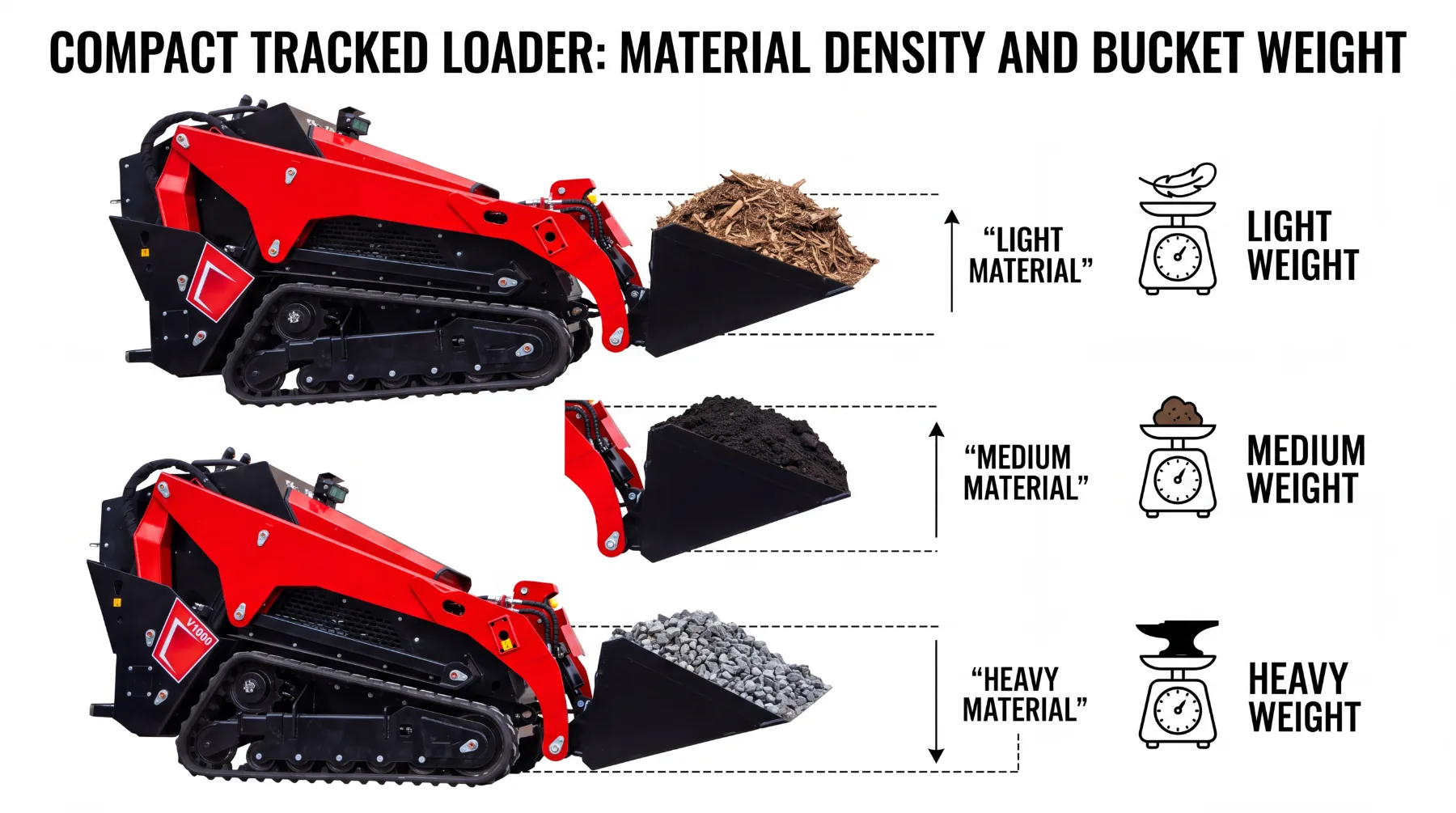
One of the most common bucket-selection mistakes is thinking only about volume. A bucket's capacity is usually listed in cubic feet or cubic yards, which tells you how much space it holds. What that number doesn't tell you is how much the material inside will actually weigh. That's where density comes in, and it makes an enormous difference to your effective load.
The same bucket can weigh dramatically differently depending on what fills it. A scoop of dry mulch weighs a fraction of the same scoop packed with wet gravel or saturated soil. The volume is identical, but the weight is not. Dense materials such as gravel, wet sand, or clay can reach your skid steer's rated load long before the bucket is full, while lighter materials let you fill to the brim and still stay well within limits.
Here's how density shapes your choices across common materials:
- Light materials such as wood chips, snow, or dry compost let you safely run a larger bucket, since volume fills up before weight becomes a concern.
- Medium materials such as topsoil or loose aggregate call for a balanced approach between volume and weight.
- Heavy materials such as wet soil, gravel, or clay demand a smaller bucket, because the weight limit arrives well before the bucket is full.
The smart move is to size your bucket around the heaviest material your skid steer will handle regularly. This prevents accidental overloads and keeps the machine operating safely. If you work across a wide range of materials, more than one bucket may be worthwhile, each matched to a different density range. Sizing to weight, not just volume, is one of the simplest ways to protect your equipment and improve daily results.
Oversized Buckets Can Affect Stability
Stability is the foundation of safe skid steer operation, and bucket size plays a direct role in it. An oversized or heavily loaded bucket carries more material, and it holds that material farther out in front of the machine. This shifts the skid steer's center of gravity forward and upward, changing how the machine behaves during lifting, traveling, and dumping.
The physics here are straightforward but important. The farther a load sits from the front axle, the more leverage it exerts against the machine's balance. A heavy load held high and forward can lighten the rear of the machine, reducing traction and making it feel tippy. On level, prepared ground the effect may not be obvious. But real jobsites are rarely perfect, and uneven terrain magnifies every stability concern.
Consider the conditions your skid steer faces on a typical day. Sloped or graded surfaces let weight shift downhill. Soft or muddy ground can give way under one side of the machine. Debris, ruts, and potholes cause sudden jolts during travel. In each of these situations, an oversized bucket makes the machine harder to control and slower to recover if it starts to tip.
The consequences reach beyond comfort. A loss of stability can lead to spilled loads, damaged equipment, or serious safety incidents. Operators often compensate for an unbalanced load by slowing down, which drags on the whole operation. A properly sized bucket keeps the load closer to the machine's ideal balance point, giving operators the confidence to work at a steady pace even when ground conditions are less than ideal. Stability is easy to overlook until it's gone, and by then the cost can be high.
Bucket Size Affects Hydraulic Performance
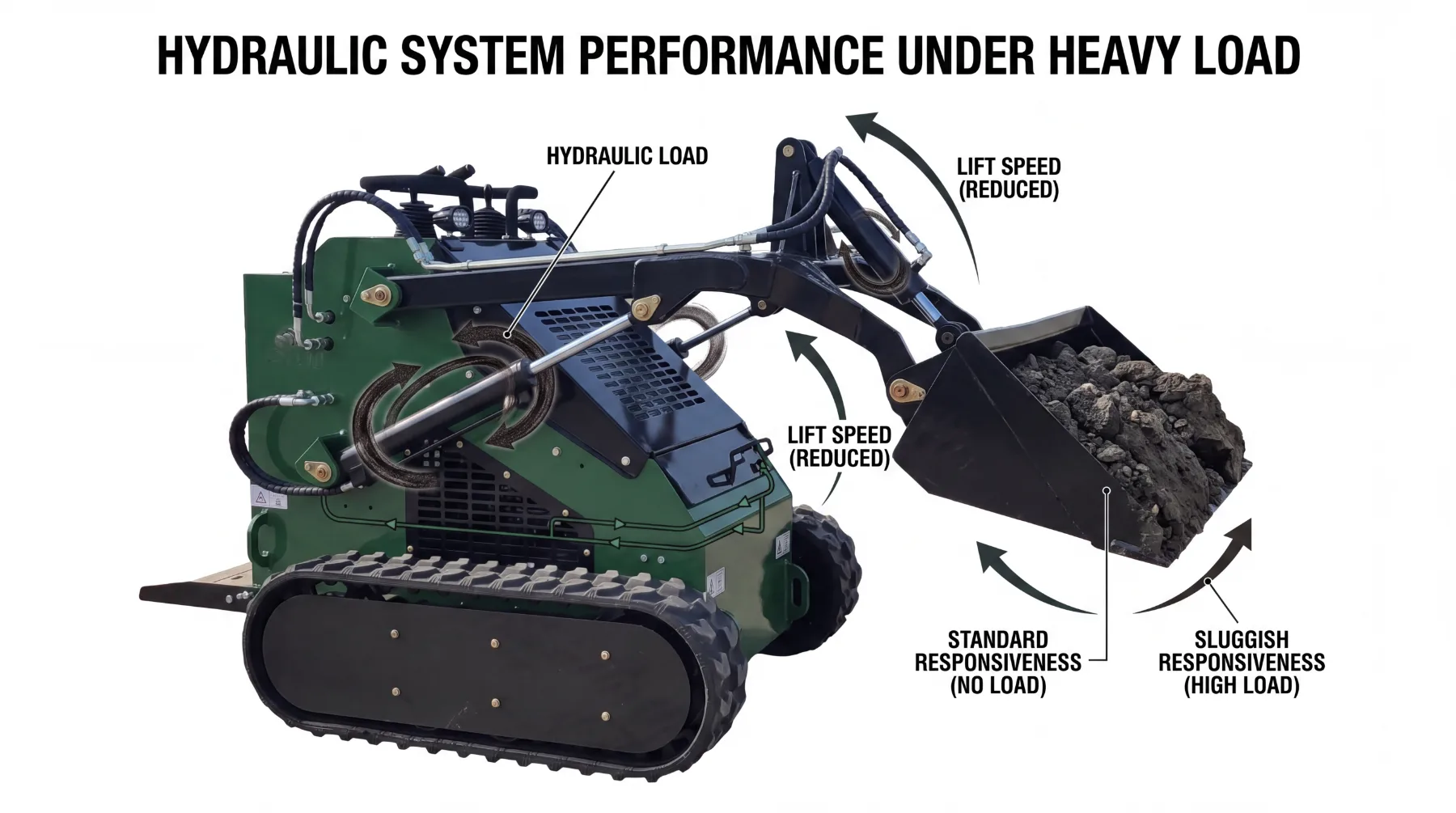
A skid steer's hydraulic system does the heavy lifting, quite literally. It has to raise, tilt, and control the bucket and its contents smoothly and predictably. When the bucket is too large or overloaded, that system is forced to work near the edge of its capability, and performance suffers even when hydraulic pressure is technically sufficient.
The most noticeable effect is on lifting speed. A fully loaded oversized bucket demands more from the hydraulics to raise, so lift cycles slow down. Tilt and curl functions become sluggish too, and the machine feels less responsive to operator input. What should be a quick, fluid motion turns into a labored one, and every cycle takes longer than it should. Across a full day of repetitive loading, those extra seconds add up quickly.
There's also a wear factor to consider. Consistently pushing the hydraulic system to its limits generates more heat and places added stress on pumps, cylinders, and seals. Over time this accelerates component wear and raises the risk of leaks or failures. A system that regularly runs hot is a system heading toward earlier repairs.
Responsiveness matters for safety and precision as well. Many skid steer tasks require fine control, such as placing material carefully or feathering a load into position. When the hydraulics are strained by an overloaded bucket, that precision fades, and delicate work becomes harder to perform. A right-sized bucket keeps the hydraulic system operating in its comfortable range, delivering the crisp, controlled response operators rely on. The result is faster cycles, smoother handling, and a hydraulic system that stays healthy for the long haul.
The Right Bucket Improves Productivity
The appeal of a larger bucket usually comes down to a single idea: more material per cycle should mean faster work. In practice, productivity depends on far more than how much a bucket can hold. The goal isn't to choose the largest bucket available, but to find the right balance between capacity, load weight, stability, and cycle time.
A right-sized bucket often moves more material over the course of a shift precisely because it keeps the machine efficient. Each cycle is quick, smooth, and predictable, and the operator can maintain a steady rhythm without fighting the load. Consider how a balanced bucket protects your output:
- Faster cycle times, since the hydraulics lift and dump without straining.
- Better traction and control, which reduces wheel spin and wasted effort.
- Fewer stops to reposition, recover control, or clean up spilled material.
- Lower fuel consumption, as the machine works within its efficient range rather than at its limits.
An oversized bucket undercuts each of these advantages. Heavier loads slow every motion, reduce maneuverability in tight spaces, and force operators to move cautiously to stay safe. The time saved by carrying more per scoop is quickly lost to slower, more careful work.
Real productivity comes from consistent, controlled operation, not from the size of any single load. When you measure output over hours rather than seconds, the balanced bucket usually wins. Just as important, a machine that never has to work at the edge of its capacity experiences less wear and stays reliable longer. Matching bucket capacity to your skid steer's rated load isn't a compromise on productivity. It's the surest path to it.
Conclusion
Bucket capacity is far more than a matter of volume. It shapes how safely, efficiently, and reliably your skid steer moves material across every shift. Rated operating load, material density, stability, and hydraulic performance all influence what the right bucket looks like for your operation. Rather than reaching for the largest option, match your bucket to the machine's rated capacity and the materials you handle most. When capacity, load weight, stability, and cycle time all stay in balance, your skid steer delivers dependable performance and better results, day after day.
Frequently Asked Questions
1. How do I know if my bucket is too large for my skid steer?
Compare your machine's rated operating capacity against the loaded weight of your bucket. If the bucket, filled with your typical material, pushes the machine toward or past that rating, it's too large. Watch for warning signs during operation, including a light or unstable rear end, sluggish lifting, wheel spin, and the machine feeling tippy on uneven ground. When in doubt, size down to stay within safe limits.
2. Should I choose a bucket based on volume or weight?
Both matter, but weight should be your limiting factor. Volume tells you how much space the bucket holds, while weight determines whether you stay within the skid steer's rated operating capacity. Always consider the density of the heaviest material you'll handle regularly, then size the bucket so a full load stays within your machine's limits. This prevents accidental overloads that volume alone can hide.
3. Can an oversized bucket damage my skid steer?
Yes. Regularly overloading a skid steer with an oversized bucket strains the hydraulics, lift arms, tires, and drivetrain. Over time, this leads to accelerated wear, more heat in the hydraulic system, and a higher risk of leaks or failures. It also increases safety risks from reduced stability. Choosing a correctly sized bucket protects both your equipment investment and the people operating the machine.
4. Why does my skid steer lift more slowly with a bigger bucket?
When a bucket is too large or overloaded, the hydraulic system has to work near the edge of its capability to raise and control the load. Even with sufficient hydraulic pressure, lift and tilt functions slow down and feel less responsive. This also generates more heat and stress on hydraulic components. A right-sized bucket keeps the system in its efficient range, delivering faster, smoother, more precise motion.
5. Is it worth owning more than one bucket for my skid steer?
For many operations, yes. If you handle a variety of materials or tasks, multiple buckets let you match the right tool to each job. A larger bucket suits light, bulky materials, while a smaller one handles dense loads safely. Swapping buckets keeps your machine efficient, protects it from overload, and helps maintain stability and cycle times across different jobs. It's a practical investment that pays off in performance and equipment life.