
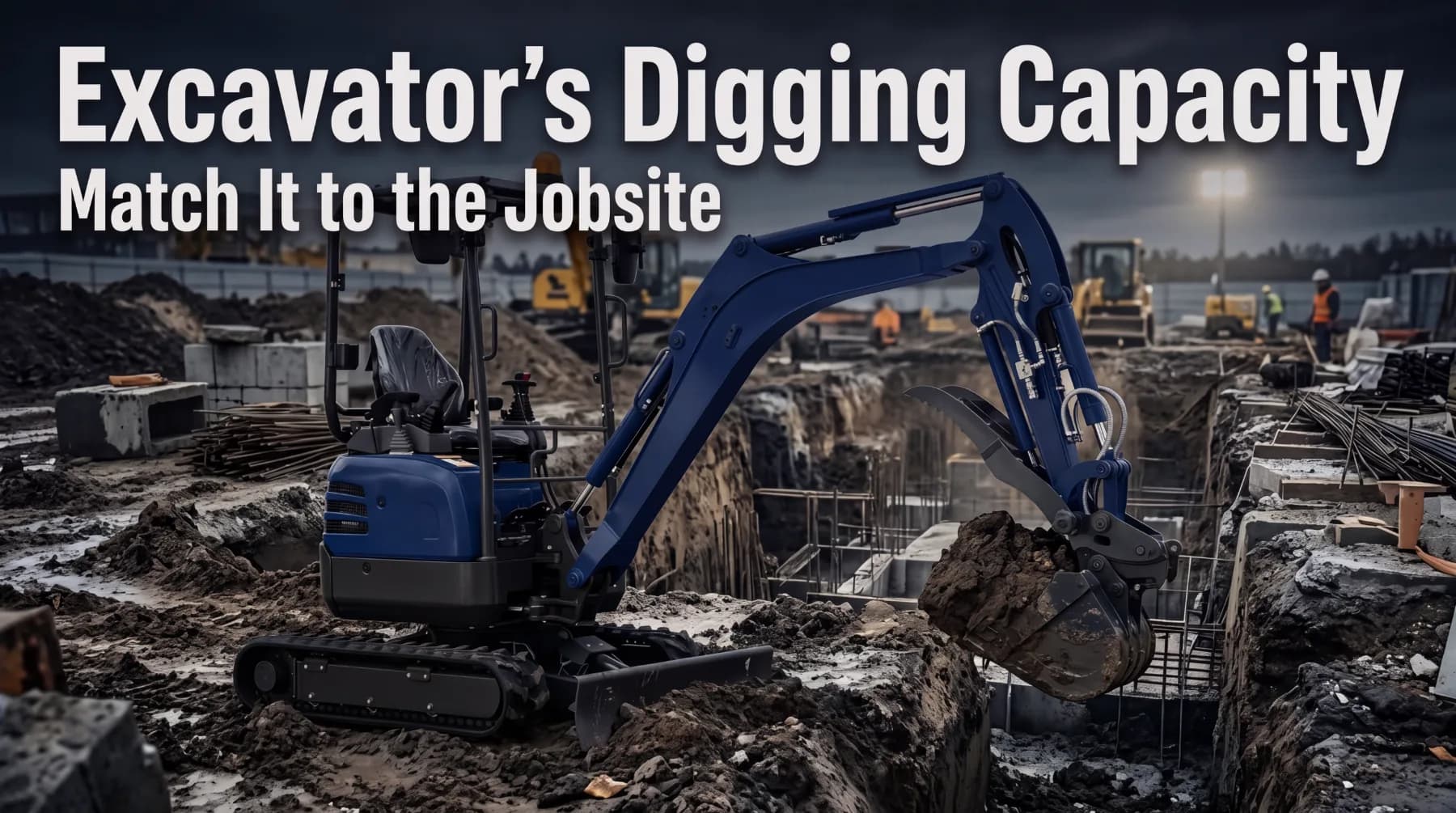
An excavator that looks powerful on paper can still fall short on your site. If it can't reach the depth your foundations demand, or it struggles against the soil you actually dig, you lose time, spend more, and put extra strain on the machine. Digging capacity is not a single number. It's a combination of depth, force, bucket size, reach, and how well the machine fits the space you work in.
Choosing the right excavator means matching all of these factors to the real demands of your project. This guide walks through the five considerations that determine whether a machine's digging capacity fits your jobsite. By the end, you'll know exactly what to weigh before you buy or rent, so the excavator you choose performs reliably from the first trench to the final grade.
Match Digging Depth to the Job
Digging depth is the first specification to nail down, because it sets a hard limit on what a machine can accomplish. Every excavator has a maximum digging depth, which is how far below ground level the bucket can reach at full extension. If that figure falls short of what your project requires, no amount of power or bucket capacity makes up for it. The machine simply cannot reach the bottom of the excavation.
Start by mapping the depth requirements across your project. Different tasks call for very different depths, and it helps to plan around the deepest work you'll face rather than an average. Consider the range of jobs a typical project might include:
- Utility trenches for water, sewer, or electrical lines, which often require significant depth
- Building foundations that must reach below the frost line or bear on stable ground
- Basements and deep excavations that demand the greatest reach available
- Drainage and grading work that may need only moderate depth but consistent precision
Choose an excavator with enough digging depth to handle your deepest regular task, plus a sensible margin. Selecting a machine that just barely meets your requirement leaves no room for the unexpected, and deep excavations often reveal conditions that call for going a little further than planned. A machine with adequate depth headroom keeps you working confidently rather than scrambling to bring in a larger unit mid-project. When digging depth matches the job from the start, you avoid one of the most disruptive and costly mismatches on any site.
Consider Digging Force and Ground Conditions
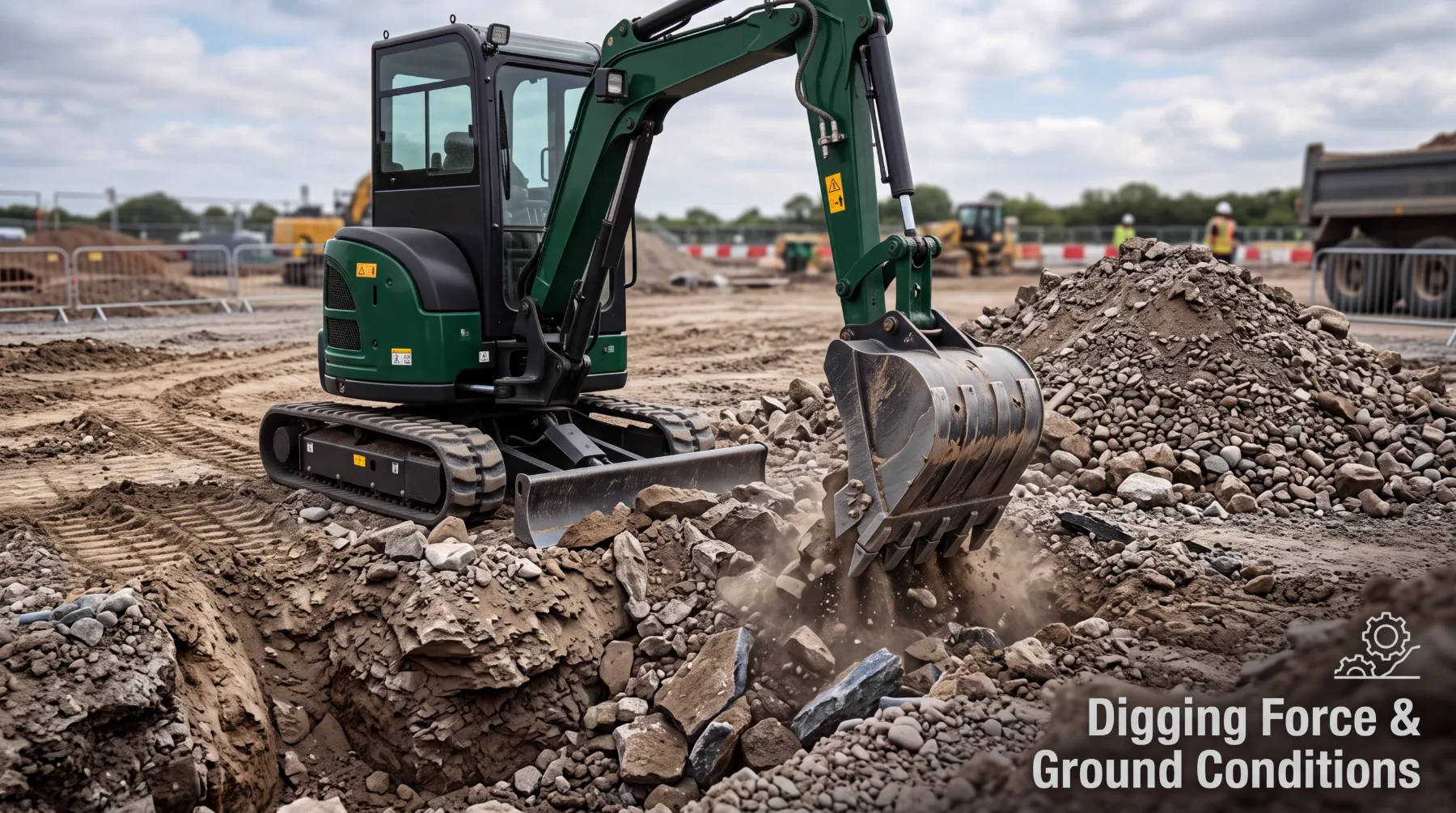
Depth tells you how far a machine can reach, but digging force tells you whether it can actually break the ground once it gets there. Different soils and materials demand very different levels of force, and an excavator that handles loose topsoil with ease can stall against hard, compacted, or rocky ground. Matching digging force to the conditions you'll encounter is essential for steady, efficient work.
Excavator digging force comes in two main forms: bucket breakout force, which is the power the bucket applies to break into material, and arm force, which pulls the loaded bucket through the ground. Both matter, and the harder your ground, the more force you need in each. Before choosing a machine, assess the material you'll actually be digging.
Ground conditions vary widely, and each places its own demand on the machine:
- Soft soil and loose fill dig easily and require modest force
- Dense, compacted clay resists the bucket and demands considerably more power
- Gravel and mixed material grind against the bucket and call for solid breakout force
- Rocky or highly compacted ground requires the highest force and often specialized buckets
Underestimating your ground conditions leads to slow, frustrating work and premature wear as the machine strains against material it wasn't built to handle. Overestimating means paying for capability you may not need. The right approach is to evaluate the toughest ground you'll dig regularly and choose a machine with the force to handle it comfortably. When digging force matches the soil, the excavator breaks ground steadily, protects its own components, and keeps your production on schedule.
Check Bucket Size for the Work
Bucket capacity directly shapes how much material you move with every pass, so it has an outsized effect on productivity. A larger bucket carries more per scoop, which means fewer cycles to complete the same volume of work. But bigger is not automatically better, because the bucket must suit both the task and the excavator's operating capability. Get the balance right, and the machine works efficiently. Get it wrong, and you either waste capacity or overload the machine.
The key is matching bucket size to the excavator that carries it. Every machine is rated to handle a certain bucket capacity based on its weight, hydraulic power, and stability. Fit a bucket that's too large, and the excavator strains, loses stability, and digs less effectively, especially in dense material where a full bucket becomes very heavy. Fit one that's too small, and you cap your productivity by moving less material than the machine could comfortably handle.
Task type matters just as much as raw volume. Consider how the work shapes your choice:
- Bulk excavation and loading reward a larger bucket that maximizes material per pass
- Precise trenching calls for a narrower bucket sized to the trench width
- Digging in dense or heavy material favors a smaller bucket to keep loads manageable
- General site work often suits a mid-range bucket that balances capacity and control
Think about the material's weight, not just its volume, since dense or wet material fills a bucket with far more mass than light, dry soil. A bucket sized for your typical material and matched to your machine's rated capacity delivers the best combination of productivity and reliable performance across the working day.
Think About Reach and Working Radius
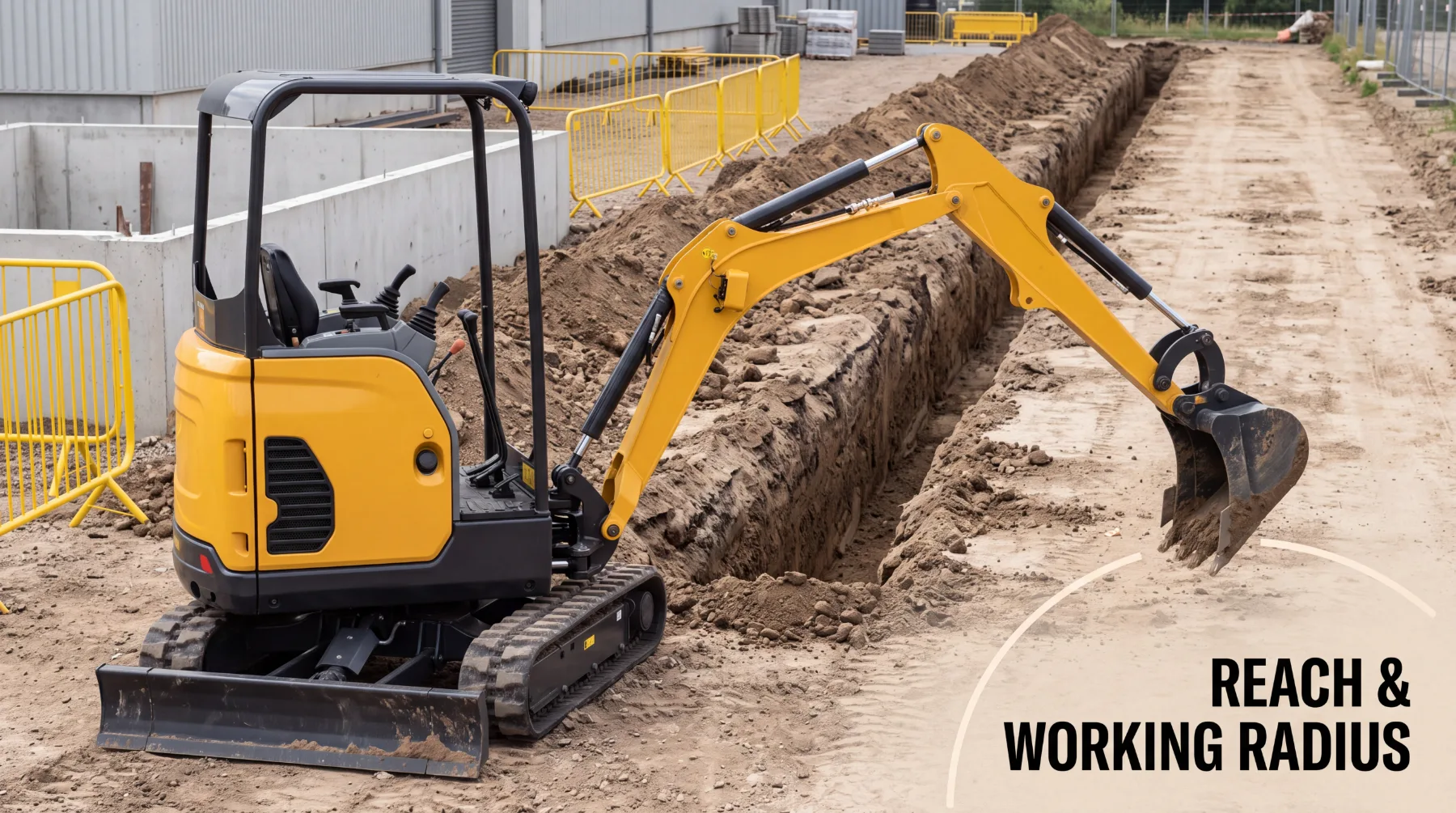
Reach determines how much ground an excavator can cover from a single position, and it has a direct impact on how efficiently you work. An excavator with suitable reach lets you access the areas you need without constantly repositioning the machine. Every time you have to move and reset, you lose time and momentum, so a machine matched to your working range keeps production flowing smoothly.
Two measurements matter here. Maximum reach describes how far the machine can extend horizontally at ground level, while digging radius describes the working range across which the excavator can dig effectively as it swings and extends. Together, they define the footprint of work you can accomplish from one setup, which is especially important on jobs that cover a wide area or require reaching over obstacles.
Consider how reach affects real tasks on your site. When digging a long trench, adequate reach lets you cover more ground before repositioning. When loading trucks, sufficient reach lets you position the machine safely while still swinging material into the bed. When working near structures or across barriers, reach determines whether you can access the excavation at all without awkward setups.
There is a balance to strike, though. Longer reach often comes on larger machines, and extending a machine to its maximum range can reduce the force and stability available at full stretch. The goal is a working radius that comfortably covers your typical tasks without forcing the machine to operate at the very edge of its capability. Before choosing, map out the areas the excavator must reach from practical positions, then select a machine whose maximum reach and digging radius cover that range with room to spare. This keeps repositioning to a minimum and the work efficient.
Balance Capacity With Jobsite Access
More digging capacity is not always the right answer. A larger, more powerful excavator delivers impressive depth, force, and reach, but none of that matters if the machine can't fit through your gate, maneuver within your work area, or operate safely in the space available. Balancing capacity against jobsite access is what separates a smart choice from an oversized one.
Start by looking honestly at the space the machine must work in. Tight urban lots, residential properties, indoor demolition, and confined work zones all place real limits on machine size. A compact excavator may offer less raw capacity, yet it can reach and operate where a larger machine would be stuck at the entrance. In those conditions, a smaller machine that fits and works is far more valuable than a bigger one that can't get to the job.
Several access factors deserve attention before you commit:
- Access points such as gates, doorways, and narrow pathways the machine must pass through
- Working space including room to swing, dig, and reposition without striking obstacles
- Transport and delivery logistics for getting the machine on and off the site
- Ground and surface conditions that affect where the machine can safely operate
The type of work also guides the balance. Heavy excavation over a large open site rewards a machine with substantial capacity, while detailed work in a confined space rewards a compact, maneuverable unit. The right choice matches the machine's size and capability to both the demands of the work and the realities of the space. When capacity and access are balanced, you get an excavator that's powerful enough for the job yet practical enough to actually perform it, which protects both your schedule and your budget.
Conclusion
Matching an excavator's digging capacity to your jobsite comes down to weighing five factors together rather than chasing any single spec. Digging depth must reach the bottom of your deepest work. Digging force must break the ground you actually encounter. Bucket size must fit both the task and the machine. Reach and working radius must cover your work area with minimal repositioning. And all of that capability must fit within the space and access your site allows.
The smart approach starts with an honest assessment of your project: the depths you'll dig, the ground you'll face, the material you'll move, the areas you'll reach, and the space you have to work in. Match a machine to that complete picture, and you gain dependable performance, controlled costs, and steady production from start to finish. Before your next purchase or rental, map these five factors against your project, then choose the excavator built to handle them. That deliberate match is the foundation of efficient, reliable excavation work.
Frequently Asked Questions
1. How do I determine the right digging depth for my project?
Start by identifying the deepest excavation your project requires, whether that's utility trenches, building foundations, or a basement, and plan around that figure rather than an average. Foundations often need to reach below the frost line or down to stable bearing ground, while utility trenches can require significant depth depending on local codes. Once you know your deepest regular task, choose an excavator whose maximum digging depth exceeds it with a sensible margin. That headroom matters because deep excavations frequently reveal conditions that call for going a little further than planned, and a machine that just barely meets the requirement leaves no room for the unexpected.
2. What is digging force, and why does it matter?
Digging force is the power an excavator applies to break into and pull through material, and it comes in two forms: bucket breakout force and arm force. It matters because different ground conditions demand very different levels of force. Soft soil digs easily with modest force, while dense clay, gravel, and rocky ground require considerably more power to work efficiently. If a machine lacks the force for your ground, it digs slowly, strains its components, and wears out prematurely. Assess the toughest ground you'll dig regularly, then choose a machine with the force to handle it comfortably, which keeps production steady and protects the equipment.
3. How do I choose the right bucket size?
Match the bucket to both the task and the excavator's rated capacity. A larger bucket moves more material per pass, but it must stay within the machine's weight, hydraulic, and stability limits. A bucket that's too large strains the machine and reduces stability, especially in dense material, while one that's too small caps your productivity. Consider the work type too: bulk excavation rewards a larger bucket, precise trenching calls for a narrower one, and heavy material favors a smaller bucket to keep loads manageable. Always think about the material's weight rather than just its volume, since dense or wet material fills a bucket with far more mass.
4. What's the difference between maximum reach and digging radius?
Maximum reach describes how far an excavator can extend horizontally at ground level, while digging radius describes the working range across which the machine can dig effectively as it swings and extends. Both matter because together they define how much ground you can cover from a single position. Adequate reach lets you dig long trenches, load trucks, or work over obstacles without constantly repositioning, which saves considerable time. Keep in mind that operating at maximum reach can reduce force and stability, so aim for a working radius that comfortably covers your typical tasks without forcing the machine to work at the very edge of its capability.
5. Is a bigger excavator always better?
No. While a larger excavator offers greater depth, force, and reach, none of that helps if the machine can't fit through your access points or maneuver safely within your work area. On tight lots, residential properties, and confined sites, a compact excavator that fits and operates is far more valuable than a larger one that can't reach the job. The right choice balances capacity against access, weighing gates, pathways, working space, transport logistics, and the type of work involved. Heavy excavation on open ground rewards more capacity, while detailed work in confined spaces rewards a compact, maneuverable machine. Match the size to both the work and the space.