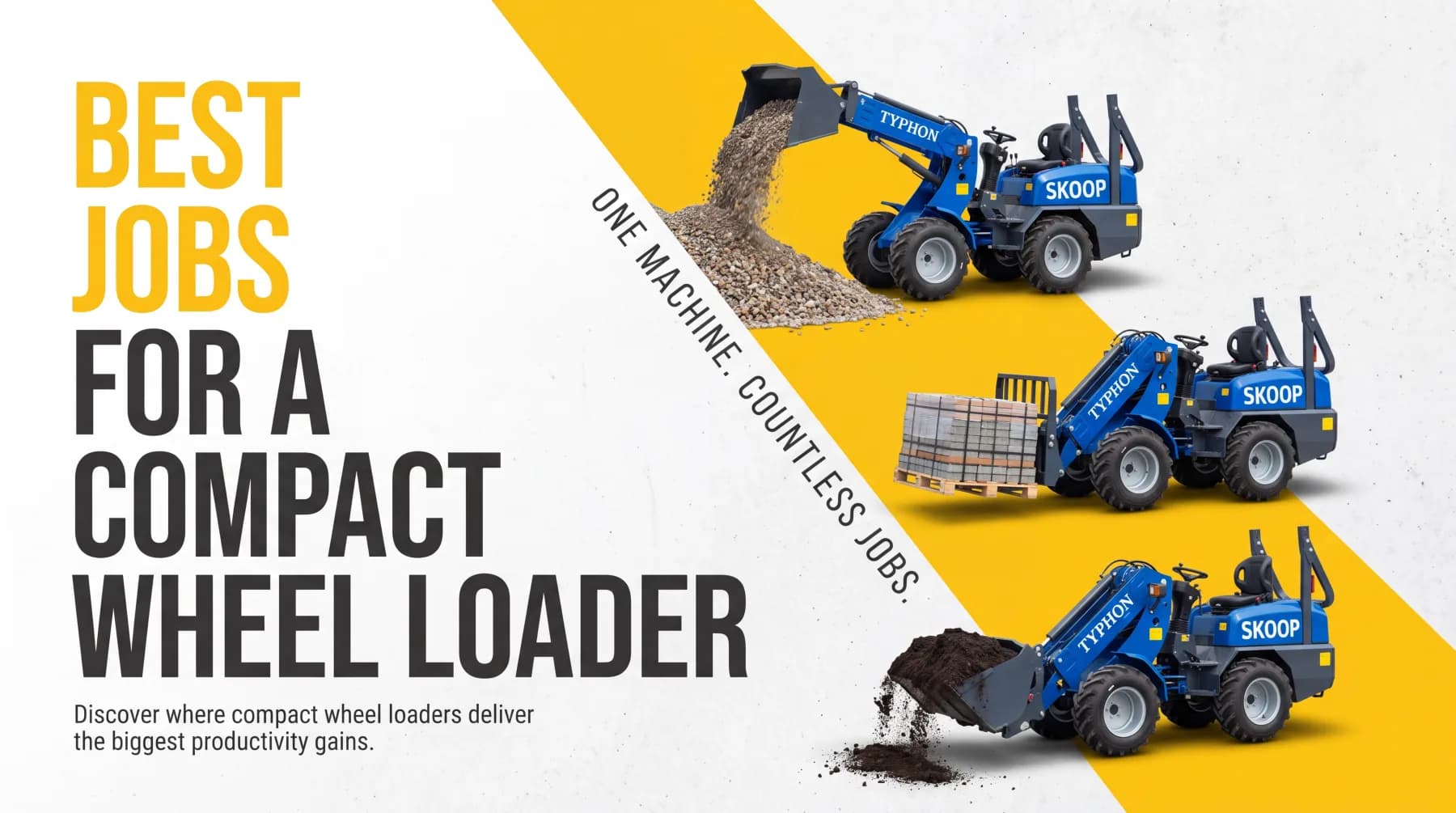
A compact wheel loader punches far above its size. It squeezes into spaces a full-size loader could never reach, yet it still moves serious material, lifts heavy loads, and switches between tasks in minutes. For contractors, farmers, landscapers, and property managers, that combination makes it one of the most useful machines you can own. But knowing where it truly shines helps you get the most from your investment. This guide walks you through what makes compact wheel loaders so versatile, the construction and material handling work they excel at, their role in landscaping and agriculture, the attachments that expand their reach, and how to choose the right model for your work.
What Makes Compact Wheel Loaders So Versatile?
The compact wheel loader earns its reputation through a rare balance of power, agility, and adaptability packed into a small frame. Despite their modest size, these machines deliver strong lifting performance, handling loads that would strain a smaller skid steer while remaining far easier to manage than a full-size loader. That lifting muscle lets you move heavy buckets of material, hoist pallets, and load trucks confidently, all from a machine that fits comfortably on tighter sites. For operators who need real capacity without excessive bulk, this is exactly the middle ground they have been looking for.
Maneuverability is where the compact wheel loader truly distinguishes itself. Most models use articulated steering, bending at a center pivot to turn within a tight radius, which lets them work cleanly in confined yards, narrow gates, and crowded job sites. This agility means you can position the machine precisely, navigate around obstacles, and operate in spaces that would leave a larger loader stranded at the entrance.
Attachment compatibility completes the picture and drives much of the machine's value across industries. A single compact wheel loader adapts to a remarkable range of work simply by swapping the tool on the front. That flexibility, combined with capable lifting and nimble handling, explains why these machines serve so many fields:
- Construction for moving material, loading, and site cleanup.
- Agriculture for handling feed, hay, manure, and bulk materials.
- Landscaping for grading, mulch, and general material work.
- Property maintenance for snow removal, cleanup, and everyday hauling.
When one machine offers strong performance, easy handling, and the ability to become many tools, it becomes a dependable partner across countless tasks. That versatility is precisely what makes the compact wheel loader such a smart, cost-effective choice for operations of every kind.
Construction and Material Handling Applications
On construction sites, the compact wheel loader proves its worth from the first day of a project to the last. Material transport is its bread and butter. With a full bucket, it scoops and carries soil, gravel, sand, and aggregate around the site quickly and efficiently, keeping crews supplied and the work moving. Its strong lifting capacity and steady travel speed mean fewer trips and faster cycles, which translates directly into more productive shifts. Where manual hauling or smaller machines would slow progress, the compact loader keeps material flowing where it is needed.
Site preparation is another area where these machines excel. Before any building takes shape, the ground must be cleared, leveled, and shaped, and the compact wheel loader handles much of that groundwork with ease. It moves excavated soil, spreads and grades fill, backfills trenches, and clears debris, all while fitting into the tighter spaces common on residential and urban job sites. Its articulated steering lets operators work close to structures, along boundaries, and around obstacles without difficulty.
Loading and cleanup round out its construction résumé. The machine loads trucks and hoppers with dense material, manages stockpiles, and clears the site of rubble and waste at the end of a job. Its compact footprint makes it especially valuable on projects where a full-size loader simply cannot maneuver. For contractors working on smaller builds, renovations, or confined urban lots, the compact wheel loader delivers the material handling capability of a larger machine without the bulk that gets in the way. It keeps schedules on track, reduces the need for extra equipment, and handles the everyday hauling, grading, and loading that every construction project depends on, making it a reliable workhorse from start to finish.
Landscaping, Agriculture, and Property Maintenance

Beyond construction, the compact wheel loader is a genuine asset on farms, residential properties, and commercial landscapes. In agriculture, it handles the daily grind of moving bulk materials with speed and reliability. Feed, hay bales, manure, grain, and silage all get shifted quickly around barns, storage areas, and fields, saving farmers hours of manual labor. The machine's compact size lets it work inside barns and navigate tight farmyards, while its lifting capacity manages heavy bales and loaded pallets that would overwhelm smaller equipment. For operations that run on tight schedules and thin margins, that efficiency matters every single day.
Landscaping crews rely on these machines just as heavily. Moving mulch, topsoil, gravel, and sod is faster and cleaner with a compact loader, and its maneuverability lets operators work carefully around plantings, hardscapes, and finished areas. Whether spreading material across a commercial property or hauling supplies through a residential backyard, the machine handles the work without tearing up the surroundings or requiring excessive space to operate.
Property maintenance is where the compact wheel loader shows its year-round value. These machines take on a wide variety of routine tasks:
- Moving mulch and soil for planting beds and grounds upkeep.
- Handling pallets of supplies, pavers, and materials with forks.
- Clearing snow from lots, drives, and walkways in winter months.
- Hauling debris during seasonal cleanup and general maintenance.
This adaptability makes the machine useful in every season, from spring landscaping to winter snow removal. A single compact wheel loader lets a farm, landscaping business, or property manager tackle dozens of recurring jobs without owning a fleet of specialized equipment. When one dependable machine keeps working across so many tasks and conditions, it becomes an investment that pays for itself through steady, reliable performance all year long.
Attachment Options That Expand Jobsite Capabilities
The true power of a compact wheel loader lies in its attachments, which transform one machine into a whole toolkit. By swapping the tool on the front coupler, operators adapt the loader to task after task, getting far more value from a single investment. This flexibility is what allows the same machine that hauls gravel in the morning to stack pallets at midday and clear snow by evening. Rather than owning and maintaining several dedicated pieces of equipment, you equip one versatile loader to handle it all.
Each attachment unlocks a distinct set of jobs, and understanding what they do reveals just how adaptable the machine becomes:
- Buckets in various sizes handle digging, scooping, grading, and moving loose material like soil, gravel, and sand.
- Pallet forks lift and transport pallets, bales, and packaged materials for loading, stocking, and delivery work.
- Grapples grab and carry logs, brush, debris, and irregular loads that a plain bucket cannot manage.
- Snow pushers and blades clear lots, drives, and walkways quickly during winter months.
Beyond these staples, specialized attachments such as sweepers, augers, and material buckets extend the machine's usefulness even further. This range is what makes the compact wheel loader so cost-effective. Instead of buying separate machines for hauling, lifting, land clearing, and snow removal, you invest in one loader and a thoughtful selection of tools.
The productivity gains are just as important as the savings. Quick-change coupler systems let operators switch attachments in minutes, keeping downtime to a minimum and the work moving. When a single machine performs the jobs of many, you reduce equipment costs, simplify maintenance, and get more done with less. For any operation focused on efficiency and value, a well-chosen set of attachments turns a capable compact loader into one of the hardest-working machines on the site.
Choosing the Right Compact Wheel Loader for Your Work
Selecting the right compact wheel loader comes down to matching the machine's capabilities to the real demands of your work. There is no single best model, only the one that fits how you actually operate. The smartest approach is to look honestly at the jobs you take on most often and let those realities guide your decision, rather than reaching for the biggest or most powerful option available. A machine well matched to your work delivers better productivity and keeps operating costs in proportion to the tasks it performs.
Start with your typical workload and lifting requirements. Identify the materials you handle most and the weight of your heaviest routine loads, since those define the lifting capacity you genuinely need. A loader that only meets your demands at its absolute limit will struggle over time, so choose a model with comfortable headroom. Consider bucket capacity and lift height too, ensuring the machine can carry a full load and reach the heights your work requires without strain.
Your attachment needs and operating environment deserve equal attention. Work through these considerations before you commit:
- Typical workload and the volume of material you move day to day.
- Lifting requirements, planning around your heaviest routine loads with margin to spare.
- Attachment needs, confirming the machine supports the tools your work demands.
- Operating environment, including site access, space, ground conditions, and indoor use.
Matching the machine to these factors is what ensures the best balance of performance and efficiency. A loader sized correctly for your tasks, fitted for your attachments, and suited to your job sites will outperform a poorly matched machine every time. Take the time to assess your work accurately, weigh it against what each model offers, and you will invest in a compact wheel loader that delivers dependable, cost-effective results for years to come.
Conclusion
The compact wheel loader stands out as one of the most versatile and dependable machines you can put to work. Its blend of strong lifting performance, tight maneuverability, and broad attachment compatibility lets it excel across construction, agriculture, landscaping, and property maintenance alike. From transporting soil and loading trucks to moving hay, stacking pallets, and clearing snow, a single machine handles a remarkable range of tasks while keeping equipment costs and site clutter down. The key to getting the most from one is choosing a model matched to your workload, lifting needs, attachment plans, and operating environment. Take an honest look at the jobs you do most often, weigh them against each machine's strengths, and select accordingly. Do that, and your compact wheel loader will reward you with efficient, reliable performance on job after job for years to come.